
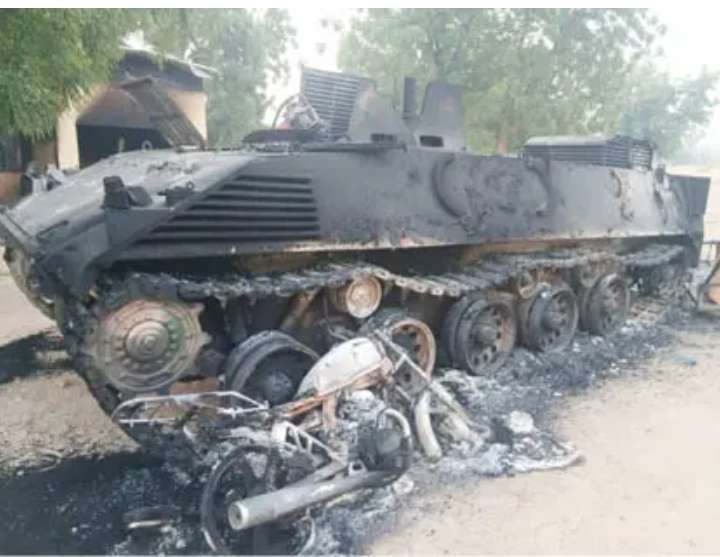
A devastating terrorist attack has once again rocked Nigeria’s troubled northeast after suspected Boko Haram/Islamic State West Africa Province (ISWAP) fighters stormed Ngoshe community in Gwoza Local Government Area of Borno State, abducting more than 100 women and children and razing parts of the community.
The attack occurred on Tuesday night, March 4, 2026, shortly after residents gathered to break their Ramadan fast.
According to local sources and security reports, the terrorists arrived in large numbers on motorcycles and gun trucks, launching a coordinated assault on the community and nearby security positions before moving into residential areas.
Military Base Attacked
Reports indicate that the insurgents first attacked a Nigerian Army formation stationed near the community, engaging troops in a fierce gun battle.
Several soldiers were reportedly killed during the attack, while the terrorists subsequently overran parts of the village.
During the raid, the attackers also killed the chief imam of the community and several residents.
Over 100 Women and Children Abducted
Eyewitnesses said the terrorists rounded up large numbers of civilians, mostly women and children, and forced them into the bush.
Community leaders estimate that over 100 residents remain missing, raising fears that they may have been taken to Boko Haram hideouts in forests and mountainous areas around Sambisa Forest and the Lake Chad region.
Mass abductions have been a recurring tactic used by Boko Haram in the insurgency that has plagued the region for more than a decade.
Houses Burned, Residents Flee
In addition to the abductions, the attackers reportedly set homes and community structures ablaze, forcing thousands of residents to flee the area.
Many displaced villagers have since moved toward Pulka and other safer communities in search of refuge.
The destruction left parts of Ngoshe deserted as terrified residents abandoned their homes.
Senator Ndume Raises Alarm
Senator Ali Ndume, who represents Borno South, confirmed the attack and described it as a serious security setback.
He warned that the continued ability of terrorists to stage such large-scale attacks shows that the insurgent groups remain a significant threat in the region.
Renewed Questions Over Security
The latest attack has again raised troubling questions about the security situation in Nigeria’s northeast, particularly how terrorists are able to move in large numbers and abduct civilians without immediate resistance.
Security analysts say the remote nature of many communities in Borno and the vast forest terrain provide militants with strategic advantages.
Boko Haram insurgency, which began in 2009, has killed tens of thousands of people and displaced millions across the Lake Chad region.
Despite years of military operations against the group, attacks and mass abductions continue to occur intermittently.
For families whose loved ones were taken during Tuesday’s raid, however, the focus remains on one painful question — whether the abducted women and children will ever return home.