


Nigeria’s opposition politics may have just witnessed one of its most calculated political realignments ahead of the 2027 presidential election.
What began as a grand opposition coalition under the African Democratic Congress (ADC) has gradually transformed into a fractured alliance plagued by internal distrust, competing ambitions, and strategic uncertainty.
Yet amid the confusion, one politician appears to have quietly emerged stronger than the rest: Peter Obi.
The former Labour Party presidential candidate, long viewed as one of the most influential opposition figures in Nigeria, has now positioned himself at the center of the emerging Nigeria Democratic Congress (NDC), effectively becoming the party’s de facto sole presidential candidate even before formal primaries begin.
Political observers say the development did not happen by accident. It was the result of careful planning, strategic patience, and timely political calculation.
More Read

The ADC Coalition Was Always Sitting on a Fault Line
From the beginning, the opposition coalition under ADC looked ambitious but unstable. Too many powerful political figures were attempting to coexist under one umbrella while nursing presidential ambitions of their own.
Among those linked to the coalition were:
More Read
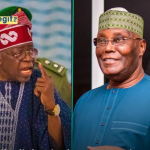
Atiku Abubakar
Rabiu Musa Kwankwaso
Rotimi Amaechi
Peter Obi
The arrangement immediately raised difficult questions:
Who would get the presidential ticket?
More Read
Would power remain in the North or shift South?
Could old political blocs genuinely trust one another?
Would personal ambition destroy collective strategy?
Those concerns eventually became impossible to hide.
Insiders within the coalition reportedly feared that unresolved leadership struggles and potential legal disputes could weaken the alliance before the 2027 election cycle fully begins.
The uncertainty created anxiety among Obi’s supporters, many of whom worried that he could become politically trapped inside endless negotiations.
Obi Read the Political Atmosphere Early
Unlike many opposition politicians who publicly invested emotional energy into coalition rhetoric, Obi reportedly focused on securing something more practical: a stable presidential pathway.
Sources close to opposition discussions indicated that Obi became increasingly uncomfortable with the ADC structure as signs emerged that northern political interests could dominate the coalition’s power-sharing arrangements.
For Obi, remaining in ADC carried major risks:
losing internal negotiations,
being pressured into compromise arrangements,
or becoming entangled in litigation capable of damaging his 2027 ambition.
Rather than wait for the coalition to implode publicly, Obi allegedly began discreet consultations with leaders of the Nigeria Democratic Congress (NDC), a platform considered more flexible and less burdened by old political rivalries.
That move may eventually prove decisive.
Presidency Forces Wanted a Divided Opposition
Many political analysts believe the ruling establishment initially benefited from the confusion inside the opposition coalition.
A divided opposition naturally weakens electoral momentum. With Obi, Atiku, Kwankwaso, and Amaechi competing for influence under one arrangement, the chances of internal collapse remained high.
But Obi’s quiet withdrawal from ADC calculations changed the political equation entirely.
Instead of remaining trapped in internal power battles, he repositioned himself early enough to preserve:
the Obidient movement,
his independent political brand,
and his negotiating strength.
In many ways, Obi escaped before the coalition crisis fully exploded into public chaos.
How Obi Became NDC’s Central Political Figure
The most significant outcome of the realignment is that Obi now appears to face little meaningful internal resistance within NDC itself.
Unlike ADC, where multiple heavyweight presidential aspirants competed for dominance,
NDC currently revolves around Obi’s national popularity, youth appeal, and electoral visibility.
Even where alliances exist within the party, none presently matches Obi’s nationwide recognition or political momentum.
That reality has effectively transformed him into the party’s unofficial presidential centerpiece long before delegates gather for formal primaries.
In political terms, that is what makes him the “de facto sole candidate.”
Not necessarily because others cannot contest but because the political structure increasingly appears to revolve around him already.
Kwankwaso Factor Strengthened Obi Further
The reported alignment between Obi and Rabiu Musa Kwankwaso also altered the northern political equation significantly.
For Obi, the partnership potentially expands his reach across key northern voting blocs, particularly in Kano and parts of North-West Nigeria.
For Kwankwaso, Obi offers:
strong youth mobilization,
southern support,
urban voter appeal,
and international political visibility.
The partnership immediately gave NDC greater national relevance and helped stabilize Obi’s standing within the new platform.
Why ADC May Struggle to Recover
ADC now faces a credibility challenge that could become difficult to reverse.
The coalition had projected itself as the vehicle capable of unifying opposition forces against President Bola Tinubu in 2027.
But once cracks widened and major figures began repositioning, the image of unity weakened rapidly.
Without Obi’s massive grassroots digital support and Kwankwaso’s northern machinery, ADC risks appearing politically diminished before the main campaign season even begins.
For many Nigerians watching developments unfold, Obi now looks like the politician who anticipated the collapse before others did.
The Bigger Political Lesson
Politics is often less about noise and more about timing.
While rivals focused on coalition headlines and elite negotiations, Obi appears to have concentrated on securing political survival first.
That decision may ultimately define the 2027 opposition landscape.
Whether NDC can truly challenge the ruling APC nationally remains uncertain. Nigeria’s electoral terrain remains unpredictable, and alliances can shift quickly.
But one reality is becoming increasingly difficult to ignore:
Peter Obi may have successfully outmaneuvered presidency forces, coalition politics, and opposition rivals alike to place himself in the strongest opposition presidential position heading into 2027.
headlineswave.ng/ remains committed to verified, accurate, balanced, and responsible journalism aimed at informing the public without sensationalism or misinformation.