
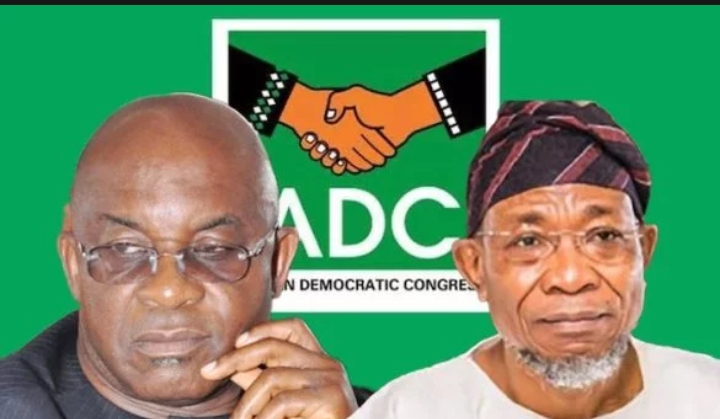
The African Democratic Congress (ADC) has insisted that its planned national convention will go ahead as scheduled on April 14, despite opposition from the Independent National Electoral Commission (INEC).
The party’s position comes amid a deepening leadership crisis and growing tension between its factional leadership and the electoral umpire.
ADC Stands Its Ground
The ADC, led by former Senate President David Mark, has constituted a 22-member National Convention Central Coordination Committee to oversee preparations for the exercise.
The committee is chaired by former Cross River State Governor Liyel Imoke, with former Sokoto State Governor Aminu Waziri Tambuwal serving as Vice Chairman. Dr. Ajuji Ahmed will act as Secretary.
Other notable members include Emeka Ihedioha, Solomon Lalong, and several senior party figures.
According to the party’s National Publicity Secretary, Bolaji Abdullahi, the convention will proceed as planned, stressing that ADC has fulfilled all necessary requirements by notifying INEC.
INEC’s Position and Rising Tensions
INEC had earlier withdrawn recognition of the David Mark-led leadership, including former Osun State Governor Rauf Aregbesola as National Secretary.
The commission’s stance has fueled internal divisions within the party, with multiple factions emerging and laying claim to legitimacy.
Despite this, ADC leaders argue that INEC lacks the constitutional authority to interfere in internal party affairs beyond regulatory oversight.
Alignment with NBA
The party also signaled alignment with the Nigerian Bar Association (NBA), which has recently cautioned against undue judicial interference in political party matters.
ADC maintains that the convention is a lawful internal process and insists that any attempt to stop it would undermine democratic principles.
Committees and Structure
To ensure a smooth convention, the party has set up multiple sub-committees covering key areas such as legal and convention processes, delegates accreditation, media and publicity, security and logistics and inance and welfare
These committees collectively include over 300 members drawn from across the country.
Implications for Nigeria’s Political Landscape
The standoff between ADC and INEC adds a new dimension to Nigeria’s evolving political dynamics ahead of future elections.
Political analysts warn that the outcome of this dispute could set a precedent for how far electoral bodies can go in regulating party leadership disputes.
For now, all eyes remain on April 14, as the ADC moves forward with a convention that could either consolidate its leadership or deepen existing cracks within the party.
This report is carefully verified and written in line with Headlineswave.ng’s commitment to accurate, balanced, and responsible journalism.







 has insisted that its planned national convention will go ahead as scheduled on April 14)