
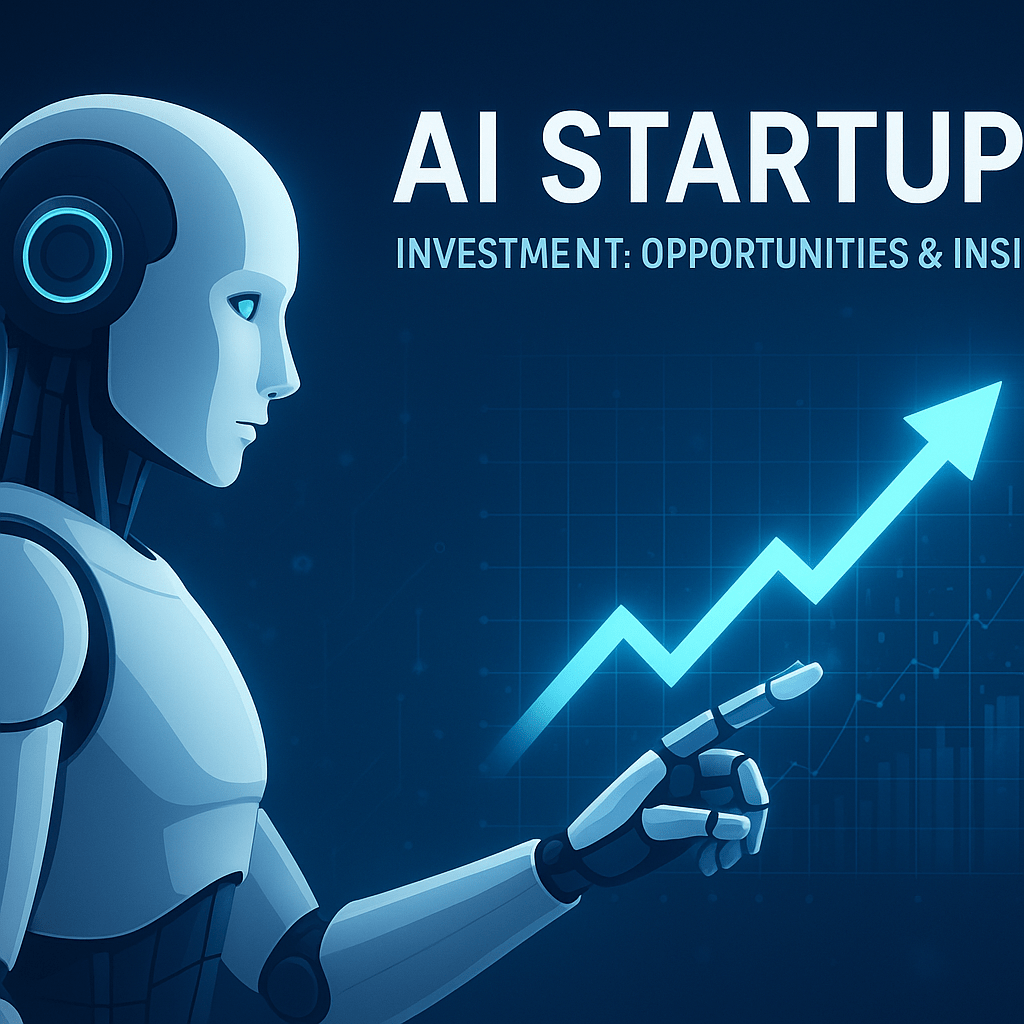
Artificial Intelligence (AI) is no longer just a futuristic concept. It is rapidly becoming an integral part of our daily lives and is reshaping entire industries. From enhancing how businesses operate to influencing our personal experiences, AI’s impact is profound and far-reaching. For investors, this presents a unique opportunity to be part of a technological revolution. Investing in AI startups is not only about backing cutting-edge technology but also about tapping into a market with enormous growth potential and transformative impact.
In this article, we will delve into the world of AI innovation, explore how it’s transforming various sectors, and identify where investors are finding value in AI startups. Understanding the dynamics of AI and its various applications can provide valuable insights into why this area is gaining traction among investors and what the future might hold.
AI has emerged as a transformative force across multiple industries. From healthcare to finance, and from logistics to entertainment, AI solutions are enhancing efficiency, improving decision-making, and creating new possibilities. The ability of AI to process vast amounts of data at unprecedented speeds allows for innovations that were previously unimaginable.
AI technologies are revolutionizing the healthcare industry by improving diagnostic accuracy and personalized treatment plans. Machine learning algorithms analyze vast amounts of medical data to identify patterns that are often invisible to the human eye. This aids in early detection of diseases and devising customized treatment protocols, ultimately leading to better patient outcomes. Additionally, AI is facilitating advancements in drug discovery by predicting how different compounds interact with the body, thus accelerating the development of new medications.
Beyond diagnostics and treatment, AI is also enhancing patient management and administrative efficiency in healthcare institutions. AI-powered systems can manage patient records, schedule appointments, and even predict patient admission rates, thereby optimizing hospital operations. By alleviating administrative burdens, healthcare professionals can focus more on patient care, improving the overall healthcare delivery system.
The financial sector is leveraging AI to optimize operations, manage risks, and enhance customer experiences. AI-powered algorithms analyze market trends and customer behavior, enabling better investment strategies and fraud detection. Robo-advisors, virtual assistants, and automated trading systems are just a few examples of how AI is influencing finance. These technologies not only provide personalized financial advice but also democratize access to sophisticated investment strategies for retail investors.
Moreover, AI is transforming the way financial institutions handle compliance and regulatory requirements. Machine learning models can quickly identify suspicious activities, reducing the time and resources spent on compliance checks. By automating these complex processes, financial institutions can improve accuracy while minimizing the risks associated with human error. This not only bolsters security but also enhances trust among clients.
In the logistics and supply chain industry, AI is streamlining operations through predictive analytics and automation. AI systems forecast demand, optimize routes, and manage inventory efficiently. This leads to cost reduction, improved delivery times, and enhanced customer satisfaction. By predicting potential disruptions and suggesting contingency plans, AI also helps companies maintain resilience in their supply chains.
Furthermore, AI-powered robotics and automation are increasingly being used in warehouses to improve efficiency and accuracy in order fulfillment. These technologies reduce human error and increase the speed of processing orders, providing a competitive edge to companies that adopt them. As e-commerce continues to grow, AI’s role in logistics will become even more critical, driving innovation and efficiency in the sector.
Investing in AI startups is not just about financial returns; it’s about being part of the next technological wave. Here are some reasons why investors are keen on AI startups:
AI startups are at the forefront of innovation, constantly developing new technologies that challenge traditional business models. By investing in AI, you are supporting disruptive ideas that could redefine entire industries. The rapid pace of technological advancement means that AI startups are often first to market with breakthrough solutions that can capture significant market share.
Moreover, AI’s potential to disrupt established industries is vast, from automating repetitive tasks to providing insights that lead to better strategic decisions. Investors who recognize the transformative potential of AI can position themselves to benefit from industries that are ripe for disruption. As AI continues to evolve, the opportunities for innovation and disruption will only expand, making it a compelling area for investment.
The AI market is projected to grow exponentially over the coming years. As companies and consumers increasingly adopt AI solutions, startups with innovative offerings have the potential to scale rapidly and deliver significant returns on investment. The versatility of AI technologies means they can be applied across numerous sectors, each with its unique growth drivers.
With advancements in computing power and data availability, AI startups are better equipped than ever to tackle complex challenges and create value. As these companies mature, they can attract more significant investments, partnerships, and acquisitions, further accelerating their growth. For investors, this presents an opportunity to be part of a rapidly expanding market with the potential for substantial financial rewards.
AI has a broad range of applications across various sectors, making it a versatile investment option. Whether it’s healthcare, finance, logistics, or entertainment, AI startups offer diverse opportunities to investors. This diversity not only mitigates risk by spreading investments across different industries but also allows investors to tap into multiple revenue streams.
Furthermore, AI’s adaptability means it can be customized to meet the specific needs of different industries, increasing its value proposition. Startups that can effectively leverage AI to address industry-specific challenges are well-positioned to capture market share and deliver value to their investors. This versatility makes AI an attractive investment for those looking to diversify their portfolios while participating in the next wave of technological innovation.
While the AI sector offers exciting opportunities, it’s important to approach investments with careful consideration. Here are some factors to keep in mind:
Before investing, ensure you have a basic understanding of the AI technology and its applications. Familiarize yourself with key concepts such as machine learning, natural language processing, and neural networks. Having a foundational knowledge of these technologies can help you evaluate the potential of AI startups more effectively.
Additionally, understanding the technological landscape can help you identify which startups have a genuine technological edge versus those that merely follow trends. This discernment is crucial for making informed investment decisions and maximizing returns. Investors should also stay updated on emerging AI technologies, as the field is constantly evolving.
Analyze the market potential of the AI startup and identify its competitors. Assess the startup’s unique value proposition and how it differentiates itself from others in the market. Understanding the competitive landscape is essential to determine whether the startup can sustain its competitive advantage over time.
Moreover, investors should consider the regulatory environment and market dynamics that could affect the startup’s growth trajectory. By comprehensively evaluating the market context, investors can better gauge the startup’s potential for success and growth. This analysis should also include an assessment of the startup’s scalability and adaptability to changing market conditions.
The success of an AI startup often hinges on the expertise and experience of its team. Evaluate the founders’ backgrounds, industry experience, and their ability to execute the business plan effectively. A strong team with a proven track record can significantly increase the likelihood of a startup’s success.
Additionally, consider the startup’s culture and its approach to innovation and problem-solving. A team that fosters creativity and collaboration is more likely to develop groundbreaking solutions. Investors should also assess the startup’s ability to attract and retain top talent, as this is critical for sustaining innovation and growth in the competitive AI landscape.
Consider the scalability of the AI solution. Does the technology have the potential to expand into new markets or verticals? Scalability is crucial for long-term success and growth. Startups that can demonstrate a clear path to scaling their operations are more likely to attract significant investment and achieve sustainable growth.
Furthermore, assess the startup’s infrastructure and business model to ensure they support scalability. Startups with flexible and adaptable business models are better positioned to capitalize on emerging opportunities and respond to market changes. Scalability should be a key consideration when evaluating the potential of AI startups to deliver long-term value to investors.
Several AI startups have already made significant strides in their respective industries. Here are a few notable examples:
OpenAI is an AI research and deployment company known for its advanced language models, such as GPT-3. Its innovative solutions are transforming natural language processing and conversational AI applications. By pushing the boundaries of what AI can achieve in language understanding and generation, OpenAI is setting new standards in the field.
OpenAI’s collaboration with various industries showcases its versatility and potential for widespread impact. From enhancing customer service with chatbots to improving accessibility through language translation, OpenAI’s technologies are influencing numerous sectors. Investors watching OpenAI can gain insights into the future direction of AI-driven language applications and their commercial potential.
UiPath specializes in robotic process automation (RPA), providing software robots that automate repetitive tasks. Its solutions are widely adopted across industries, enhancing operational efficiency and productivity. By automating mundane tasks, UiPath allows human workers to focus on higher-value activities, driving overall business performance.
UiPath’s success demonstrates the significant demand for automation solutions in today’s digital economy. Its ability to integrate with existing systems and deliver immediate value makes it an attractive proposition for businesses looking to streamline operations. Investors interested in the automation space can look to UiPath as a benchmark for innovation and market leadership.
Tempus leverages AI to improve cancer treatment by analyzing clinical and molecular data. Its data-driven approach aids in personalized treatment plans, significantly impacting patient care. By harnessing the power of AI, Tempus is revolutionizing the way healthcare providers approach cancer treatment, offering hope for better outcomes.
Tempus’s integration of AI with healthcare highlights the transformative potential of data-driven insights in medical practice. The company’s focus on personalized medicine aligns with broader trends in healthcare innovation, making it a compelling investment for those interested in the intersection of technology and medicine. As AI continues to evolve, Tempus is well-positioned to lead advancements in personalized healthcare solutions.
As AI continues to evolve, the investment landscape will also change. Investors need to stay informed about emerging trends and technologies to make informed decisions. Staying ahead of the curve in AI investment requires vigilance and a willingness to embrace new ideas and opportunities.
As AI technologies become more prevalent, ethical considerations are gaining importance. Investors should look for startups that prioritize responsible AI development and address potential biases in their algorithms. The focus on ethical AI is not only a moral imperative but also a business necessity, as consumers and regulators demand transparency and fairness.
Startups that proactively address ethical concerns are likely to gain a competitive advantage in the marketplace. By investing in companies that prioritize ethical AI, investors can support the development of technologies that benefit society as a whole. This approach aligns with the growing trend of socially responsible investing, which emphasizes the importance of sustainability and ethical business practices.
Investing in AI startups that foster collaboration and partnerships can lead to synergies and greater market reach. Strategic alliances with established companies can accelerate growth and innovation. By leveraging complementary strengths, startups can enhance their capabilities and expand their influence in the market.
Partnerships also provide startups with access to new markets, resources, and expertise, enabling them to scale more rapidly. For investors, these collaborations signal a startup’s ability to navigate complex business landscapes and seize emerging opportunities. As AI continues to permeate various industries, the ability to form strategic alliances will be a critical factor in determining a startup’s success.
Investing in AI startups offers a unique opportunity to be part of a technological revolution that is reshaping industries worldwide. With its vast potential for innovation, high growth prospects, and diverse applications, AI investment is attracting attention from investors globally. By understanding the technology, assessing market potential, and evaluating startup teams, investors can identify promising opportunities and capitalize on the AI wave.
As we move forward, staying informed about AI trends and focusing on ethical and responsible AI development will be crucial for sustainable success in AI investments. The future of AI is bright, and those who invest wisely in this rapidly evolving field stand to benefit significantly from the transformative power of AI technologies.