

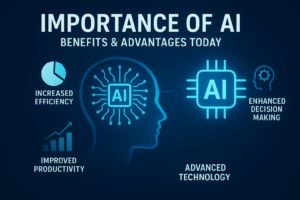
 The Crucial Role of AI in Today’s World
In recent years, Artificial Intelligence (AI) has become a buzzword, often surrounded by both awe and apprehension. But what exactly does AI bring to the table? In this article, we’ll explore the advantages and importance of AI in various sectors, highlighting how it shapes our modern world. AI is not just a technological advancement; it is a transformative force that is reshaping industries, enhancing productivity, and improving the quality of life across the globe.
Before diving into its benefits, let’s define AI. Artificial Intelligence refers to the simulation of human intelligence in machines designed to think and learn like humans. These systems can perform tasks such as problem-solving, understanding language, and recognizing patterns. AI encompasses a range of technologies, including machine learning, natural language processing, and computer vision, each contributing to its ability to mimic human cognitive functions. By leveraging vast amounts of data, AI systems can learn from experience, adapt to new inputs, and execute human-like tasks with increased efficiency.
AI is not monolithic; it varies in scope and application. Narrow AI refers to systems designed for specific tasks, such as facial recognition or language translation. General AI, on the other hand, would possess the ability to perform any intellectual task that a human can do, although this remains a theoretical concept for now. Understanding these distinctions is crucial for appreciating the diverse applications and potential of AI in different sectors.
One of the most significant impacts of AI is in healthcare. AI systems are transforming how diseases are diagnosed, treatments are personalized, and patient care is delivered. The integration of AI into healthcare processes has the potential to increase the efficiency of medical professionals, allowing them to focus on complex cases that require human judgment and empathy.
AI algorithms can analyze medical images with remarkable precision. For instance, AI tools can detect early signs of diseases like cancer in radiology scans, often more accurately than human doctors. This early detection can lead to earlier treatment and better patient outcomes. Moreover, AI systems can continuously learn and improve from new data, enhancing their diagnostic capabilities over time. This dynamic learning ability ensures that AI remains at the cutting edge of medical diagnostics, potentially reducing the burden on healthcare systems by catching diseases before they become critical.
AI also aids in identifying patterns that may be overlooked by human observers. By processing vast datasets from various sources, AI can uncover hidden correlations and predict disease outbreaks, aiding in preventive measures and public health planning. This proactive approach not only saves lives but also optimizes healthcare resources, making medical services more accessible and affordable for a broader population.
AI can process vast amounts of patient data to tailor treatment plans specific to each individual. By considering genetics, lifestyle, and other factors, AI provides more effective and personalized healthcare solutions. This personalized approach ensures that treatments are not only more effective but also reduce the likelihood of adverse reactions, as therapies are aligned with the patient’s unique biological makeup.
Beyond tailoring treatments, AI assists in drug discovery and development by identifying potential therapeutic compounds faster than traditional methods. This acceleration in drug development can lead to quicker availability of new treatments for patients, addressing unmet medical needs and improving health outcomes on a global scale. The synergy between AI and personalized medicine marks a new era in healthcare, where treatments are as unique as the individuals receiving them.
AI’s role in business and finance cannot be overstated. It enhances efficiency, reduces errors, and offers insights that drive better decision-making. Companies are leveraging AI to gain a competitive edge by optimizing operations, enhancing customer experiences, and innovating new products and services.
In the business world, AI automates repetitive tasks, allowing employees to focus on more strategic activities. This not only boosts productivity but also reduces the likelihood of human error. For example, AI-powered chatbots can handle customer inquiries, providing instant support and freeing up human agents for more complex issues. Automation also streamlines processes like data entry, invoice processing, and inventory management, leading to significant cost savings and operational efficiency.
Furthermore, AI-driven automation enables businesses to scale their operations without proportionally increasing their workforce. By handling routine tasks, AI allows companies to redirect human talent toward areas that require creativity, strategic thinking, and emotional intelligence—qualities that machines cannot replicate. This shift not only enhances business performance but also contributes to employee satisfaction by reducing mundane workloads.
AI algorithms analyze market trends and economic data to make accurate predictions. This capability is invaluable for financial institutions, helping them manage risks and make informed investment decisions. By processing real-time data, AI can identify emerging market trends and provide forecasts that guide investment strategies, enabling firms to capitalize on opportunities and mitigate potential losses.
In risk management, AI systems can detect anomalies and fraudulent activities in transactions, providing an additional layer of security for financial operations. Machine learning models continuously refine their accuracy by learning from past incidents, enhancing their ability to predict and prevent future risks. As financial markets become increasingly complex, AI’s role in providing clarity and actionable insights becomes indispensable, ensuring stability and growth in the economic sector.
The transportation sector is undergoing a revolution with AI at its helm. Self-driving cars, smart traffic management, and efficient logistics are just a few examples of AI’s transformative power. These advancements promise to enhance safety, reduce environmental impact, and improve the overall efficiency of transportation systems.
AI is the backbone of autonomous vehicles, enabling them to navigate roads safely. These vehicles use AI to interpret data from sensors and make real-time decisions, promising to reduce accidents caused by human error. By leveraging machine learning and computer vision, self-driving cars can analyze their surroundings, detect obstacles, and predict the behavior of other road users, ensuring a safe driving experience.
Beyond personal transportation, AI-driven vehicles are revolutionizing logistics and supply chain management. Autonomous trucks and drones are being deployed to enhance delivery efficiency, reduce costs, and minimize the carbon footprint of transportation operations. As technology advances, the widespread adoption of autonomous vehicles could redefine urban planning and infrastructure, paving the way for smarter and more sustainable cities.
AI systems analyze traffic patterns to optimize flow and reduce congestion. This technology can adapt to changing conditions, improving commute times and reducing pollution. By using data from various sources, such as GPS and traffic cameras, AI can predict traffic congestion and suggest alternative routes, easing the burden on heavily trafficked areas.
Moreover, AI is instrumental in developing intelligent transportation systems that integrate public transit, ride-sharing, and personal vehicles into a cohesive network. These systems aim to provide seamless and efficient travel experiences, encouraging the use of public transport and reducing reliance on private cars. By optimizing traffic flow and promoting sustainable transportation options, AI contributes to cleaner air and healthier urban environments.
Education is another field where AI is making significant strides. It personalizes learning experiences and provides educators with valuable insights into student performance. By leveraging AI, educational institutions can offer more inclusive and adaptive learning environments that cater to diverse student needs.
AI can adapt educational content to suit individual learning paces and styles. This personalized approach ensures that students grasp concepts before moving forward, leading to better educational outcomes. By analyzing student performance data, AI can identify strengths and weaknesses, allowing educators to tailor instruction and provide targeted interventions where needed.
In addition to personalized instruction, AI facilitates the creation of interactive and engaging learning materials. Virtual tutors and AI-powered educational platforms offer students immediate feedback and support, fostering a more dynamic and responsive learning experience. This adaptability not only enhances student engagement but also promotes lifelong learning by accommodating various learning preferences and needs.
AI tools help teachers identify students who may need additional support by analyzing performance data. This early intervention can prevent students from falling behind and enhance overall learning experiences. By tracking student progress and predicting potential challenges, AI empowers educators to intervene proactively, offering timely assistance and resources to those in need.
Furthermore, AI-driven analytics provide valuable insights into curriculum effectiveness and teaching strategies. By evaluating educational outcomes and identifying patterns, institutions can refine their programs to better align with student needs and industry demands. This data-driven approach ensures that education remains relevant and impactful, preparing students for future challenges and opportunities.
Beyond specific sectors, AI plays a crucial role in everyday life, enhancing convenience and efficiency. From smart gadgets to intelligent personal assistants, AI is seamlessly integrated into our daily routines, making life simpler and more connected.
Virtual assistants like Siri, Alexa, and Google Assistant use AI to understand and respond to user queries. They help with scheduling, reminders, and information retrieval, making daily tasks easier to manage. These assistants are continually learning from user interactions, improving their ability to anticipate needs and provide personalized assistance.
Moreover, virtual assistants are expanding their capabilities to include home automation, entertainment, and shopping, offering a centralized platform for managing various aspects of life. As these technologies evolve, they promise to become even more intuitive and integrated, enhancing user experiences and streamlining everyday tasks.
AI powers smart home devices, allowing for seamless control of lighting, temperature, and security. These devices learn user preferences and automate routines, making homes more comfortable and energy-efficient. By integrating with other smart technologies, AI-enabled devices create a cohesive ecosystem that enhances convenience and sustainability.
In addition to enhancing comfort, smart home devices contribute to energy conservation by optimizing resource usage. AI systems can monitor energy consumption patterns and suggest ways to reduce waste, promoting environmentally friendly practices. As smart home technology advances, it promises to play a vital role in building sustainable and resilient communities.
As AI continues to evolve, its potential is limitless. From revolutionizing industries to improving personal lifestyles, AI’s importance is undeniable. Its rapid development heralds a future where technology and human ingenuity work hand in hand to address global challenges and create new opportunities.
With great power comes great responsibility. As AI becomes more integrated into our lives, ethical considerations become paramount. Ensuring AI is used fairly and responsibly is crucial for its continued success. Issues such as data privacy, algorithmic bias, and the impact on employment require careful scrutiny to ensure that AI benefits society as a whole.
Moreover, developing regulatory frameworks and ethical guidelines is essential to guide the responsible use of AI. By fostering collaboration between governments, industries, and academia, we can create a balanced approach that promotes innovation while safeguarding human values and rights.
AI technology is advancing rapidly. New developments and improvements promise even greater benefits, making it an exciting field to watch. Innovations in areas like quantum computing, neural networks, and edge AI are poised to unlock new possibilities, pushing the boundaries of what AI can achieve.
As AI continues to evolve, interdisciplinary collaboration will be key to harnessing its full potential. By combining insights from computer science, neuroscience, and other fields, researchers can develop more sophisticated and intelligent AI systems. This ongoing progress promises to transform the future, offering solutions to some of the world’s most pressing issues.
The advantages of AI are vast and varied, touching every aspect of our lives. From healthcare to transportation, education to personal convenience, AI’s role in today’s world is crucial. As we continue to harness its potential, ensuring ethical and responsible use will be key to unlocking a future where AI benefits everyone. By embracing AI’s transformative power, we can create a world that is more connected, efficient, and equitable for all.