Nigeria’s opposition politics is once again at a turning point, as emerging political signals suggest a possible realignment involving key figures such as Peter Obi and Rabiu Musa Kwankwaso ahead of the 2027 general elections.
Although no formal defection has been officially announced by the principals involved, multiple political indicators and insider accounts point to ongoing consultations around a new political platform reportedly linked to the Nigeria Democratic Congress (NDC).
ADC Crisis Deepens Uncertainty in Opposition Bloc
The unfolding developments are coming against the backdrop of continued turbulence within the African Democratic Congress (ADC), where leadership disputes and unresolved court matters have left the party in a prolonged state of uncertainty.
Recent legal interpretations surrounding party leadership and control, including Supreme Court interventions that sent aspects of the ADC dispute back to lower courts, have further complicated internal stability. Analysts say this has weakened confidence among key stakeholders preparing for 2027.
The combination of legal ambiguity, internal mistrust, and unresolved factional battles is now believed to be accelerating conversations around alternative political structures.
Kwankwaso, Obi and Emerging NDC Alignment Talks
According to multiple political sources and stakeholder accounts, discussions have intensified around a possible migration of political forces into the emerging NDC platform.
A major development point is the claim from stakeholders within the Kwankwasiyya political network suggesting that Rabiu Kwankwaso may be preparing to exit the ADC, with talks reportedly at an advanced stage involving the NDC structure.
The same sources also suggest that Peter Obi is being courted within the broader coalition discussions, although his position remains formally unconfirmed.
While these engagements are being described as strategic and exploratory, insiders say consultations have reached a level that could significantly alter the opposition landscape if they crystallise.
Internal Pressure and Coalition Calculations
The reported momentum toward a new alignment is also being driven by broader concerns within opposition ranks, including unresolved zoning debates, leadership disagreements, and dissatisfaction with coalition management structures.
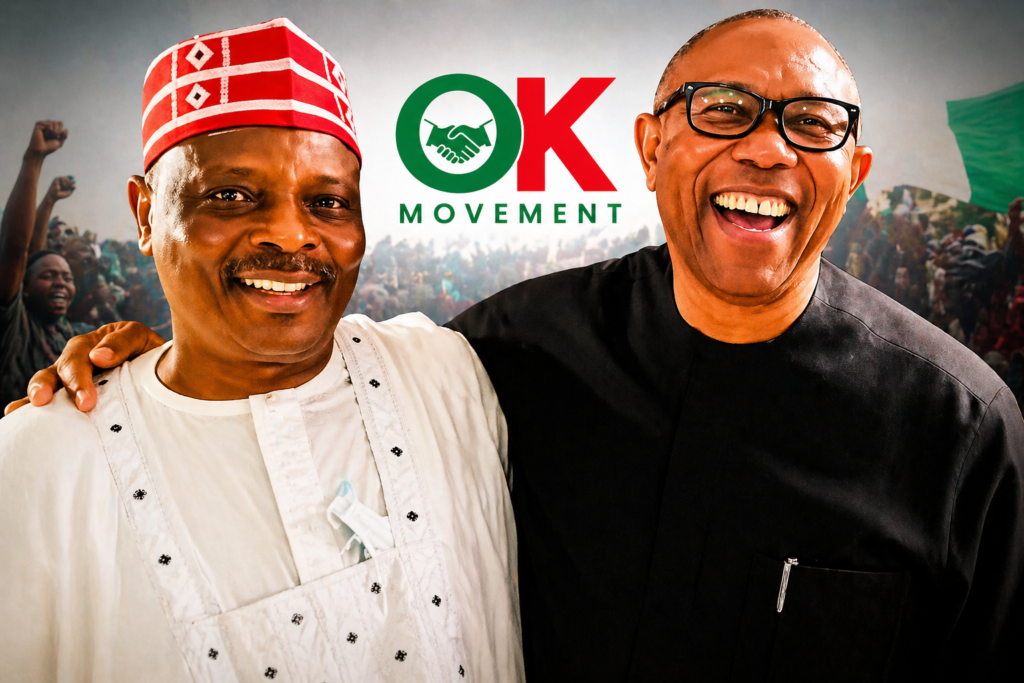
Supporters of a possible Obi–Kwankwaso political collaboration have previously floated the idea of a joint platform, often referred to in political circles as an “OK” alignment movement, aimed at consolidating electoral strength ahead of 2027.
However, divisions within existing party arrangements and competing ambitions continue to slow down consensus building.
2027: A Landscape in Motion
If the current political signals eventually translate into formal decisions, analysts believe Nigeria’s opposition structure could undergo one of its most significant realignments in recent years.
Such a shift would not only reshape party loyalties but could also redefine coalition strategies ahead of the next general election cycle.
For now, however, all discussions remain at the level of speculation and political negotiation, with no official confirmation from the key actors involved.
Nigeria’s opposition space therefore remains in a state of strategic suspense, as behind-the-scenes consultations continue to shape the early contours of the 2027 political battlefield.
Headlineswave.ng remains committed to responsible journalism, ensuring accuracy, balance, and clarity in all political reporting.