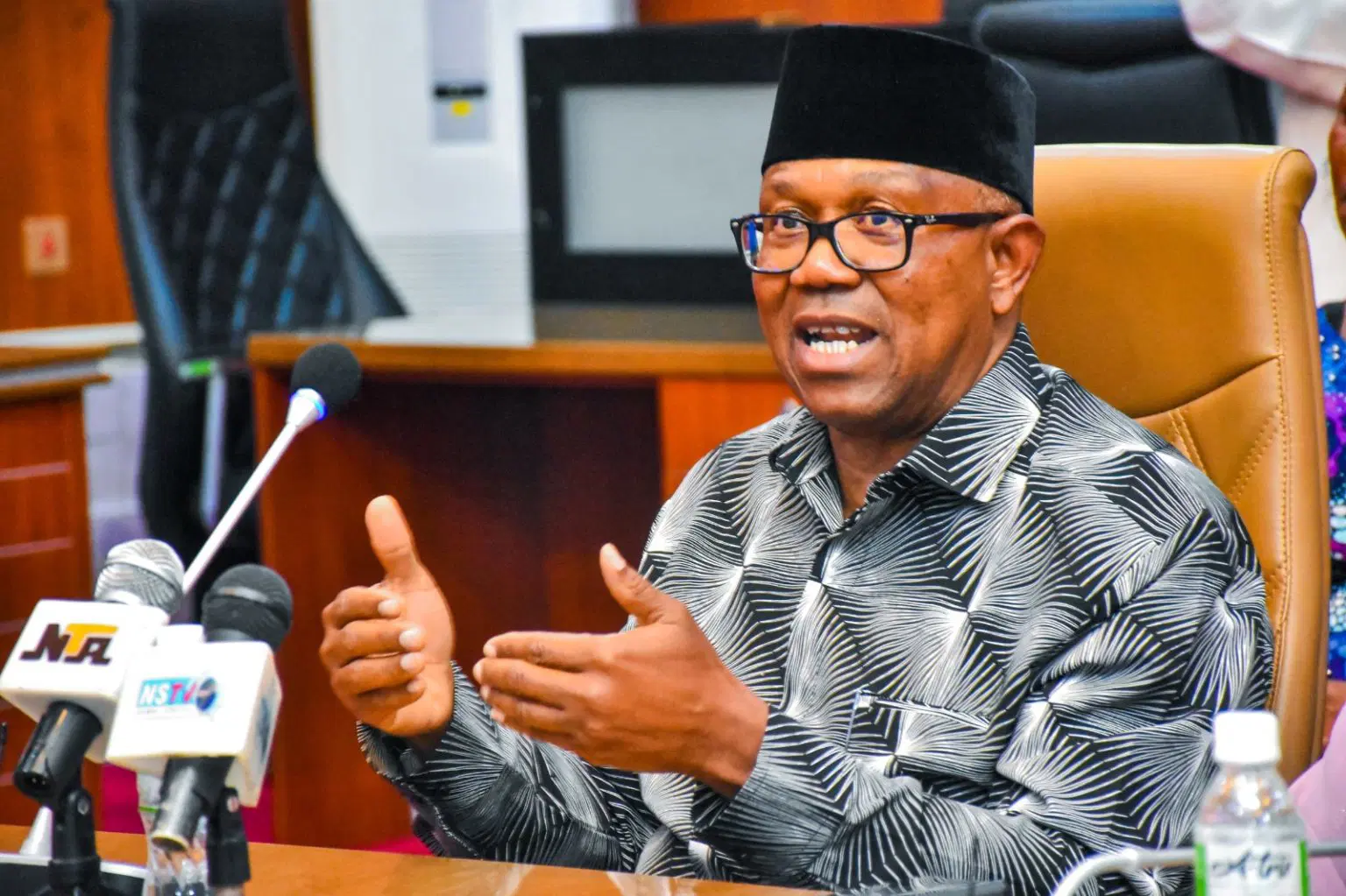
A heated debate has erupted across social media platforms following claims by former Labour Party presidential candidate, Peter Obi, that Nigeria may have moved from an era of padded budgets to one where laws are allegedly altered after legislative approval.
In a statement titled “Migrating from Padded Budgets to Forged Laws,” shared on his official X (formerly Twitter) handle, Obi alleged that there are documented discrepancies between bills passed by the National Assembly and the versions eventually published and enforced by the executive arm of government. According to him, the issue goes beyond clerical mistakes and amounts to a serious constitutional breach capable of eroding public trust and undermining the rule of law.
Obi specifically raised concerns over what he described as new enforcement and coercive provisions—including mandatory deposits before appeals, asset seizures without court oversight, and expanded arrest powers for tax authorities—which he said were not approved by the House of Representatives. He also criticised the Presidency for what he termed a troubling silence in the face of allegations involving possible forgery and abuse of process.
Following the post, reactions poured in across X, Facebook, and other online platforms, with users sharply divided along ideological and partisan lines.
On X, several users echoed Obi’s concerns, calling for the National Assembly to release side-by-side copies of the original bills and the final versions signed into law. Some described the allegation as alarming, arguing that if laws can be altered after passage, the foundation of democratic governance is at risk. Others urged civil society groups and the judiciary to take a closer look at the claims in the interest of transparency.
Conversely, critics on the same platform accused Obi of raising serious allegations without publicly providing documentary proof. Some dismissed the claim as political grandstanding, insisting that legislative drafting errors and post-passage harmonisation processes should not automatically be framed as forgery. A number of commentators also questioned why the former governor did not pursue legal action if the discrepancies were as severe as alleged.
As the debate intensified, exchanges on social media increasingly reflected Nigeria’s broader political polarisation, with discussions shifting from the substance of the claim to personal attacks, party loyalty, and lingering resentments from the 2023 general elections.
Despite the divisions, a common thread across the reactions was widespread public mistrust in governance institutions. Even among skeptics of Obi’s claims, many agreed that the controversy highlights the need for clearer communication, institutional openness, and prompt official clarification whenever questions arise about the integrity of the law-making process.
As of the time of writing, the Federal Government has yet to issue a detailed public response addressing the specific discrepancies highlighted by Obi, allowing the controversy to continue gaining traction across social Media.
Below is what he wrote on his verified X account @PeterObi
Migrating from Padded Budgets to Forged Laws
Our national shame continues to unfold, evident in the decisions made by our leaders, even at the highest levels of government. This shame is highlighted by a deeply troubling—and frankly unacceptable—issue: the documented discrepancies between what the legislature passed and what was ultimately published as law by the executive. This is not merely an administrative oversight; it is a serious matter that strikes at the core of constitutional governance and reveals the extent of our institutional decay.
We have transitioned from a Nigeria where budgets are padded to one where laws are forged—changes that impact taxpayers’ rights and, most importantly, access to justice.
Even more alarming is the introduction of new enforcement and coercive powers that the House of Representatives never approved. These include an outrageous requirement for a mandatory 20% deposit before appeals can be heard in court, asset sales without judicial oversight, and the granting of arrest powers to tax authorities.
Perhaps most disturbing is the silence of the Presidency on a matter involving allegations of forgery, institutional sabotage, and abuse of process. Who made these alterations?
All of this must be made public. Nigerians need to understand what was signed, what was passed, and what was formally recorded. We cannot continue to ask citizens to pay more taxes while trust in governance collapses.
We need leadership that follows due process, embraces transparency and accountability, and respects the rule of law. No nation can thrive where laws are forged and silence replaces leadership.
A New Nigeria is POssible. -PO