

FG Rejects IMF Off-Budget Spending Claims, Says Reports Misrepresented
The Federal Government has rejected claims that it spent more than ₦8 trillion outside the approved national budget, insisting that reports based on the latest assessment by the International Monetary Fund (IMF) have been misinterpreted.
The rebuttal comes after widespread public debate triggered by comments attributed to the IMF's Resident Representative in Nigeria, Christian Ebeke, who said Nigeria had public expenditure equivalent to about 2 percent of its Gross Domestic Product (GDP) that was not captured in recent official budgets.
According to the IMF, the omission made the country's reported fiscal deficit appear lower than its actual financing needs.
In a statement issued on Sunday, the Minister of Finance and Coordinating Minister of the Economy, Taiwo Oyedele, dismissed suggestions that the government operates a "shadow budget" or spends public funds outside constitutional and legal procedures.
More Read
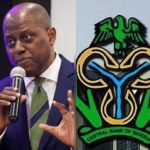
"The Federal Government does not operate a shadow budget or spend public funds outside the constitutional and statutory framework governing public finance," Oyedele said.
Government Explains the Figures
Oyedele said the reports failed to distinguish between expenditures contained in the annual Appropriation Act and other categories of government spending that are legally authorised under Nigerian law.
More Read
He stressed that these expenditures are lawful, publicly disclosed and subject to legislative oversight and auditing, adding that differences in reporting formats should not be interpreted as illegal or hidden spending.
The Finance Minister argued that the IMF's observation related primarily to the comprehensiveness and presentation of Nigeria's fiscal reporting rather than the legality of government expenditure.
He noted that Nigeria is already implementing reforms aimed at aligning its fiscal reporting with international standards and improving budget transparency.
Oyedele also recalled that President Bola Ahmed Tinubu, while presenting the 2026 Appropriation Bill, called for a harmonised budget framework to eliminate overlapping budget structures across government institutions.
Political Reactions
The IMF disclosure had earlier prompted criticism from opposition leaders, including former Vice President Atiku Abubakar, who called for investigations by the Economic and Financial Crimes Commission, EFCC, Independent Corrupt Practices, ICPC and Other Related Offences Commission, the National Assembly and the Auditor-General over the alleged off-budget spending.
Former Anambra State Governor Peter Obi also urged greater transparency and accountability in public finance management.
However, the Federal Government insists that the allegations stem from a misunderstanding of the IMF's findings and do not indicate unlawful expenditure.
Why It Matters
The controversy has intensified scrutiny of Nigeria's public finances and fiscal transparency. While the IMF has encouraged improvements in the country's budget reporting, the Federal Government maintains that all public spending is carried out within the framework of the Constitution and existing financial laws.
headlineswave.ng/ Credibility Note: We are committed to verified, accurate and responsible journalism.
This report is based on official statements from the Federal Government and the IMF, with all claims clearly attributed to their respective sources.