

7 Major Headlines That Shaped Nigeria’s Week: Mass Kidnapping, Tinubu–Atiku Clash, NFF Crisis and More
From the mass kidnapping in Niger State to the Tinubu–Atiku economic battle and NFF leadership crisis, these seven stories dominated Nigeria’s news cycle this week
READ MORE
7 Major Headlines That Shaped Nigeria’s Week: Mass Kidnapping, Tinubu–Atiku Clash, NFF Crisis and More
Nigeria’s news cycle this week was dominated by insecurity, economic hardship, political realignment and institutional crises.

From the shocking abduction of hundreds of people in Niger State to the intensifying battle between President Bola Tinubu and former Vice-President Atiku Abubakar over fuel subsidy policy, the week produced headlines with serious implications for Nigeria’s political and economic future.
The resignation of Nigeria Football Federation President Ibrahim Gusau also sent shockwaves through the country’s sporting community, while President Tinubu ordered a forensic audit of the federal payroll system over alleged ghost workers and fake government agencies.
Here are seven major stories that shaped Nigeria’s week.
More Read
1. Mass Kidnapping in Niger State Sparks Fresh National Security Alarm
The week opened with Nigerians confronting yet another terrifying reminder of the country’s worsening kidnapping crisis.
A video surfaced showing what residents said were approximately 600 women, children and elderly people abducted during attacks on communities in Niger State.
Reuters reported that the captives were allegedly taken after gunmen attacked worshippers during Friday prayers at a mosque in Dekara village. The exact number of abductees had not been independently verified at the time, but residents identified relatives in the video.
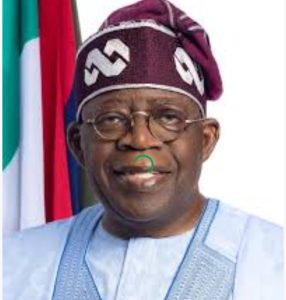
President Bola Tinubu subsequently ordered security agencies to launch an immediate rescue operation.
The incident was particularly disturbing because it demonstrated the scale and audacity of armed groups operating across parts of northern and central Nigeria.
The crisis was further underscored by a new SBM Intelligence report showing that 7,825 people were kidnapped in Nigeria between July 2025 and June 2026, a 66 percent increase from the previous year.
More Read

At least 1,142 people were killed during the period, while confirmed ransom payments amounted to approximately ₦7.78 billion, or $5.79 million.
The figures have raised a troubling question:
Has kidnapping become an industry that Nigeria’s security architecture is struggling to dismantle?
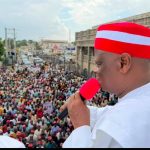
2. Atiku Takes Aim at Tinubu Over CNG and Fuel Subsidy Policy
The economic debate became increasingly political this week after Atiku Abubakar criticised the Tinubu administration’s fuel subsidy policy and its much-publicised CNG programme.
Atiku argued that the conversion of about 120,000 vehicles to CNG over three years should not be presented as evidence that the consequences of subsidy removal have been adequately addressed.
The former vice-president’s argument was essentially that cheaper fuel for some converted vehicles does not automatically translate into cheaper living costs for ordinary Nigerians.
The debate is significant because fuel prices affect virtually every sector of the Nigerian economy.
Transport costs influence food prices.
Food prices affect household budgets.
Logistics costs affect businesses.
And all of these factors feed directly into the political conversation ahead of 2027.
The Federal Government, however, continues to defend its economic reforms and its drive toward alternative fuels and greater use of Nigeria’s abundant gas resources.
The argument is therefore becoming much bigger than CNG.
It is now a contest over which economic philosophy can deliver genuine relief to Nigerians.
3. Ibrahim Gusau Resigns as NFF President After Nigeria’s Football Setbacks
Nigeria’s football administration suffered a major earthquake this week.
Nigeria Football Federation President Ibrahim Musa Gusau, General Secretary Mohammed Sanusi and members of the NFF executive committee resigned on August 27.
The development followed intense criticism over Nigeria’s recent failures on the international stage.
The Super Eagles failed to qualify for the 2026 FIFA World Cup, while the Super Falcons also failed to qualify for the 2027 Women’s World Cup.
The latter was particularly painful.
The Super Falcons had appeared at every edition of the Women’s World Cup since the competition began in 1991.
That record has now ended.
The resignations came just weeks before the NFF’s scheduled elective congress on September 27, throwing the federation’s leadership and electoral process into fresh uncertainty.
For Nigerian football fans, the crisis goes beyond the departure of individual officials.
It raises fundamental questions about the management, financing and long-term direction of Nigerian football.
4. Tinubu Orders Forensic Audit of IPPIS Over Ghost Workers and Fake Agencies
President Tinubu also ordered a comprehensive forensic audit of the Integrated Personnel and Payroll Information System and federal government agencies.
The objective is to uncover alleged ghost workers, fake entities and other irregularities within the federal public service.
The move is potentially significant because Nigeria has repeatedly struggled with payroll fraud and leakages in government expenditure.
If the exercise uncovers substantial irregularities, it could strengthen the government’s argument that public finances require deeper reform.
But it also creates another test for the administration.
Nigerians will want to know not only what the audit discovers, but what happens to those responsible.
An audit without consequences risks becoming another government report that disappears into the bureaucracy.
5. Nigeria’s Kidnapping Economy Reaches a Disturbing New Level
The mass kidnapping in Niger State was not an isolated security headline.
It came against the backdrop of evidence that kidnapping has increasingly become an organised criminal economy.
The SBM Intelligence figures released this week indicate that kidnappers collected nearly $5.8 million in confirmed ransom payments over a 12-month period.
The organisation warned that the figures were conservative because many ransom payments are never publicly disclosed.
The implications extend far beyond the victims.
Kidnapping disrupts farming.
It disrupts education.
It forces communities to abandon their homes.
It discourages investment.
It increases transportation costs.
And it creates fear that affects virtually every aspect of economic life.
In other words, insecurity is not simply a security problem.
It is an economic problem.
Until Nigeria can significantly reduce kidnapping and protect rural communities, the country’s economic reforms will continue to operate under enormous pressure.
6. Tinubu’s 2027 Political Battle Begins to Take Shape
If there was any doubt that Nigeria had entered the early stages of the 2027 political contest, this week provided more evidence.
The Tinubu administration’s economic record is increasingly becoming one of the major battlegrounds between the governing APC and opposition figures.
Atiku has continued to attack policies surrounding fuel subsidies, while the Presidency and APC supporters have defended the administration’s reforms.
The political camps are also increasingly positioning themselves around the issues likely to dominate the election:
Economy.
Security.
Cost of living.
Governance.
Jobs.
For voters, these debates will ultimately matter less as political slogans than as questions of everyday survival.
Can Nigerians afford food?
Can they afford transportation?
Can businesses survive?
Can farmers work safely?
Can families plan for the future?
Those questions could prove more powerful at the ballot box than the political speeches surrounding them.
7. The CNG Debate Becomes a Symbol of Nigeria’s Economic Argument
The CNG debate deserves its own place among the week’s major stories because it captures the wider disagreement over how Nigerians should judge Tinubu’s reforms.
The administration sees CNG as part of the transition away from dependence on petrol and as a way of reducing transportation costs.
Critics argue that the benefits remain too limited when compared with the wider increase in the cost of living.
And there is an important distinction.
A cheaper fuel source can reduce the operating cost of a bus.
But the driver still has to buy tyres.
He still buys spare parts.
He still pays for maintenance.
The trader still pays transportation costs.
The farmer still has to move produce.
And the passenger still has to find the money to board the bus.
That is why the real economic question is not simply:
“How many vehicles have been converted?”
It is:
“How much has the average Nigerian’s cost of living actually fallen?”
That distinction will likely remain central to the political argument as Nigeria moves closer to 2027.
The Week That Was: What These Headlines Tell Us
Taken together, the week’s biggest stories reveal a Nigeria facing several interconnected challenges.
The Niger State kidnapping crisis demonstrated that insecurity remains a major national concern.
The new kidnapping figures showed that the problem is becoming increasingly organised and financially rewarding for criminal groups.
The Tinubu–Atiku economic confrontation demonstrated that the cost of living will remain a major political weapon.
The NFF crisis exposed another institutional failure in an area Nigerians care deeply about.
And the IPPIS audit raised fresh questions about waste, accountability and the management of public resources.
But perhaps the biggest story of all is the growing connection between these issues.
Security affects the economy.
The economy affects household welfare.
Household welfare affects politics.
And politics determines who gets the opportunity to govern.
As Nigeria heads toward 2027, the question for politicians will increasingly be less about who can make the loudest promise and more about who can convince Nigerians that life will actually become better.
Because at the end of the day, the Nigerian voter does not live inside government statistics.
The Nigerian voter lives inside the economy those statistics are supposed to describe.