

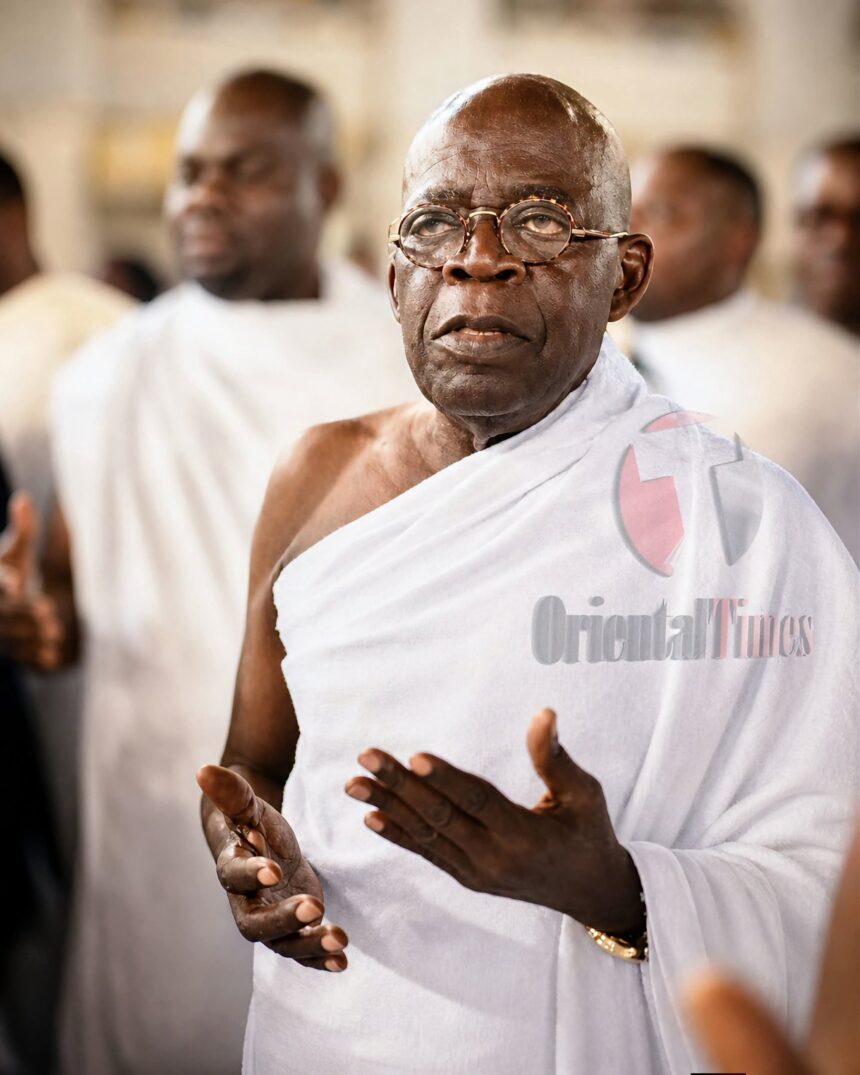
Tinubu’s Saudi Arabia Trip Explained: Why He Visited Makkah, Entered the Holy Kaaba and What It Means for Nigeria
FACT-CHECK: Did INEC Display the Voters’ Register from October 9 to 15 as Promised?
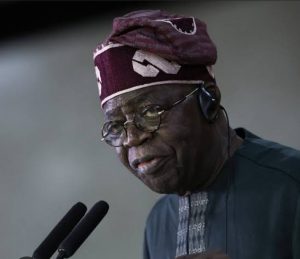
President Bola Ahmed Tinubu has concluded his four-day visit to Saudi Arabia, where he performed the Islamic lesser pilgrimage, Umrah, and was granted the rare privilege of entering the Holy Kaaba in Makkah to offer prayers for Nigeria.
The visit, which began with his departure from Abuja on Thursday, October 29, and ended on Monday, November 2, 2026, has attracted attention because of its religious significance, the unusual access granted to the Nigerian leader and the political conversations surrounding its timing.
But what exactly was the purpose of the trip, why was entering the Kaaba significant, and what should Nigerians understand about the visit?
More Read
Headlineswave explains.
1. Why did Tinubu travel to Saudi Arabia?
According to the Presidency, Tinubu travelled to the Kingdom of Saudi Arabia primarily to perform Umrah, an Islamic pilgrimage to Makkah that can be undertaken at different times of the year, unlike the annual Hajj, which takes place during a specific Islamic calendar period.
The President was also expected to use the spiritual exercise to pray for Nigeria’s peace, unity, stability and development.
More Read
He arrived in Jeddah on October 29 before proceeding to Makkah for the religious activities.
The Presidency described the journey as an opportunity for spiritual reflection, devotion and seeking divine guidance for the country.
2. What is the Holy Kaaba, and why is entering it significant?
The Kaaba is a cube-shaped sacred structure located at the centre of Masjid al-Haram, the Grand Mosque in Makkah, Saudi Arabia.
It is the most sacred site in Islam and the direction towards which Muslims around the world face during their five daily prayers.
During Umrah and Hajj, Muslims perform Tawaf, which involves circling the Kaaba seven times as part of the pilgrimage rites.
More Read
However, entering the interior of the Kaaba is a rare privilege. Access is restricted and generally granted by Saudi authorities to selected individuals and dignitaries.
Tinubu disclosed that he and members of his delegation were allowed inside the sacred structure following approval by Saudi Arabia’s King Salman bin Abdulaziz Al Saud and Crown Prince Mohammed bin Salman.
Sheikh Dahlulah Muthawal of Masjid al-Haram led the Nigerian delegation into the structure.
The President described the experience as historic and deeply significant.
3. What did Tinubu pray for inside the Kaaba?
Beyond expressing gratitude for the privilege of serving as Nigeria’s President, Tinubu said he specifically asked Allah for wisdom and resilience to continue leading the country.
He also prayed for Nigeria’s peace, unity, stability and prosperity.
Reflecting on the experience on November
2, the President said his commitment to what he called Project Nigeria had become stronger.
He invoked Qur’an 3:26, which speaks about Allah’s ultimate sovereignty and authority to give and take power.
According to Tinubu, political authority is a trust that must be exercised responsibly, with humility and in the interest of the people.
He also reiterated his administration’s commitment to economic development and investment in the future of Nigerian youths.
4. Was this the first time a Nigerian President entered the Kaaba?
No.
Although Tinubu’s access has attracted considerable attention, he is not the first Nigerian President to enter the Holy Kaaba.
Former President Muhammadu Buhari was also granted access during a visit to Saudi Arabia in 2016.
Therefore, the significance of Tinubu’s visit lies in the privilege extended to him and his delegation, rather than the claim that he was the first Nigerian leader to enter the sacred structure.
5. Who accompanied the President?
Tinubu’s delegation included senior government officials, state governors and prominent Nigerian business figures.
Among those identified by the Presidency were:
Attorney-General of the Federation, Lateef Fagbemi (SAN).
Coordinating Minister of Health and Social Welfare, Professor Ali Pate.
Governors of Borno, Sokoto, Jigawa, Kaduna, Yobe and Kwara states.
BUA Group Chairman, Abdulsamad Rabiu.
Oando Chief Executive Officer, Wale Tinubu.
Their participation gave the visit a wider Nigerian delegation profile beyond the President’s personal religious exercise.
6. Was the trip also a diplomatic mission?
The visit highlighted Nigeria’s longstanding relationship with Saudi Arabia, particularly in religious affairs, trade, investment and diplomatic cooperation.
Tinubu specifically thanked King Salman and Crown Prince Mohammed bin Salman for their hospitality and for granting the Nigerian delegation access to the Kaaba.
However, the publicly available announcements surrounding the trip primarily identified it as an Umrah pilgrimage.
There has been no official announcement in the cited statements of a new bilateral agreement or major economic deal arising directly from the visit.
It is therefore important to distinguish the religious significance and diplomatic goodwill associated with the journey from a formal state visit involving announced agreements.
7. Why has the visit generated political conversations?
The timing of the pilgrimage has also attracted political attention because Nigeria is approaching another presidential election cycle.
Tinubu has already commenced his re-election campaign, and his Saudi trip has generated discussions about the relationship between religion, political leadership and electoral politics.
However, presidential aide Ademola Oshodi dismissed suggestions that the pilgrimage was designed to secure Northern votes ahead of the 2027 election.
Speaking on Channels Television’s Politics Today, he argued that the visit should be understood from a broader religious and national perspective.
The Presidency has maintained that Tinubu’s journey was a spiritual exercise.
What does the visit mean for Nigerians?
Ultimately, Tinubu’s Saudi Arabia trip was principally a religious pilgrimage that also offered an opportunity to reinforce Nigeria’s longstanding relationship with the Kingdom of Saudi Arabia.
The President returned expressing renewed determination to serve Nigerians, build the economy and invest in the future of young people.
However, while prayers and spiritual commitments may provide personal strength and inspiration to a nation’s leader, Nigerians will ultimately measure the administration’s performance through tangible improvements in security, economic conditions, employment opportunities, infrastructure and general living standards.
For millions of Nigerians facing daily economic and security challenges, the expectation remains that the wisdom and resilience Tinubu says he sought in Makkah will translate into better governance at home.
This report is based on statements from Nigeria’s State House, the Voice of Nigeria and reports by established Nigerian media organisations. Political interpretations are distinguished from officially confirmed details.
Source: State House, Voice of Nigeria, Premium Times, Punch and The Guardian.