


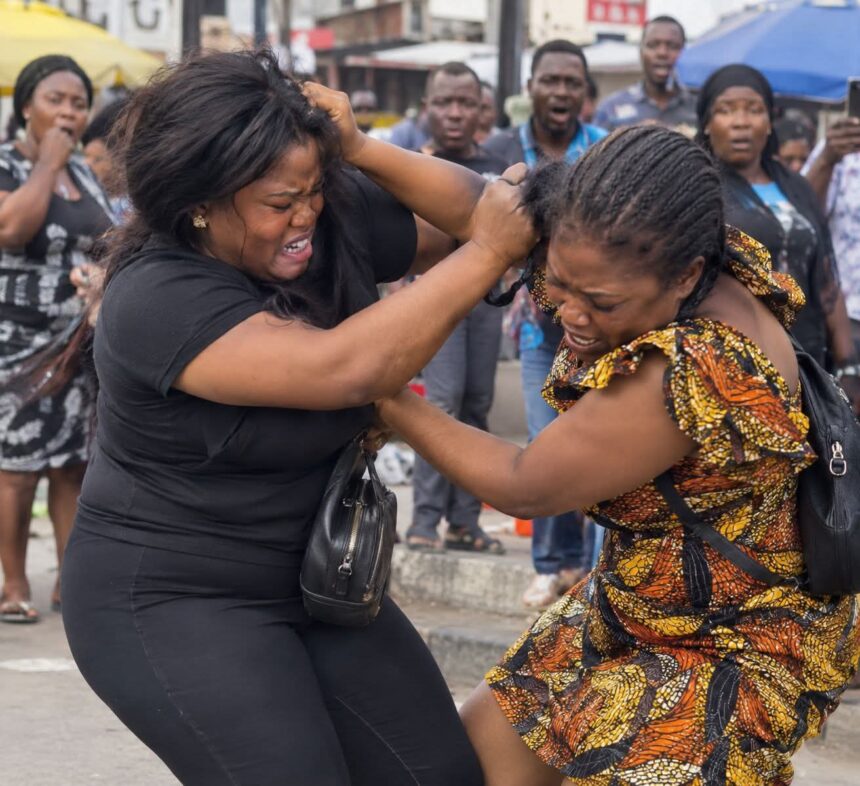
KNOW YOUR RIGHTS: PUBLIC FIGHTING IS A CRIMINAL OFFENCE – WHAT DOES THE LAW SAY?
Also Read Know Your Rights: That Document You Are Signing May Put You in Trouble
A street argument can end in a police station or courtroom. Knowing your rights could save you from unnecessary trouble.
How often do we see two adults turn a minor disagreement into a public spectacle?
A disagreement over money, a commercial transaction, a parking space, a relationship, a traffic incident or even an exchange of insults can quickly degenerate into slapping, punching, kicking and sometimes the use of dangerous weapons.
More Read

Some people believe that because two individuals willingly engage in a fight, the matter is strictly between them. Others assume that unless somebody sustains serious injuries, the police have no business intervening.
Both assumptions are wrong.
WHAT DOES THE LAW SAY ABOUT FIGHTING IN PUBLIC?
More Read

Under Section 83 of Nigeria’s Criminal Code Act, taking part in a fight in a public place constitutes the offence of affray, punishable by imprisonment for up to one year.
The law does not give participants a free pass simply because they are both willing to fight.
A public place generally includes streets, highways, marketplaces and other places to which members of the public have access.
This means that a fight in a market, on a public road, at a motor park or in another public gathering place can attract criminal liability.
WHAT ABOUT PLATEAU STATE?
Residents of Plateau State should also take note that public fighting is not treated as a harmless disagreement under the applicable criminal law.
In June 2024, an Area Court in Jos sentenced two bus conductors, Isah Abubakar and Abdulrazak Salihu, to three months’ imprisonment each for fighting in public and constituting a nuisance. The court offered them an option of a ₦10,000 fine each.
The prosecution cited Section 83 of the Plateau State Penal Code Law of Northern Nigeria.
More Read
The case demonstrates that public fighting can result in actual prosecution and conviction, not merely a warning from the police.
CAN BOTH PEOPLE BE ARRESTED?
Yes. The fact that one person started the argument does not automatically absolve the other person who willingly participates in the physical fight.
However, the circumstances matter. A person who uses reasonable force to defend himself against an unlawful attack may have a defence under the law.
Self-defence is not a licence for revenge.
Continuing to beat someone after the danger has passed, or using excessive force, can create separate criminal liability.
WHAT IF SOMEBODY IS INJURED?
The legal consequences can become more serious.
Depending on the nature and extent of the injury, the circumstances and the applicable law, a participant may face additional charges relating to assault or causing bodily harm.
The use of a knife, bottle, stick or firearm can also introduce more serious offences.
WHAT SHOULD YOU DO WHEN YOU WITNESS A PUBLIC FIGHT?
Avoid joining the fight or encouraging the participants.
Do not attempt to settle a dangerous confrontation with physical force.
Alert the police or other appropriate security personnel.
If it is safe, help protect vulnerable bystanders and seek medical attention for injured persons.
Preserve relevant video evidence and provide truthful information to investigators.
Recording a fight is not an excuse to obstruct emergency intervention or put yourself in danger.
YOUR RIGHTS AND YOUR RESPONSIBILITIES
You have the right to defend yourself against an unlawful attack using reasonable and necessary force. You also have the right to report an assault and seek legal redress.
But you do not have the right to turn a public space into a boxing ring simply because someone insulted, provoked or offended you.
The next time somebody challenges you to a fight in public, remember that walking away may be wiser than winning the fight and losing your freedom.
KNOW YOUR RIGHTS. OBEY THE LAW. PROTECT YOURSELF AND OTHERS.
Headlineswave.ng – Know Your Rights Series
This publication is for public legal education and general information. It is not a substitute for advice from a qualified legal practitioner.
The specific offence and applicable penalty depend on the jurisdiction and circumstances of each case.