

Opposition Coalition Seals Agreement Against Tinubu, Six Political Parties Set November Date for Historic Signing
Nigeria’s opposition politics may be entering a decisive new phase as six political parties have reportedly reached an agreement to formalise their cooperation ahead of the 2027 general election, setting the stage for a potentially formidable challenge to President Bola Ahmed Tinubu and the ruling All Progressives Congress (APC).
Political organiser and former APC National Vice Chairman (North Central), Salihu Lukman, has confirmed that the participating parties have agreed on a coalition framework, with a public signing ceremony scheduled for November 30, 2026, in Abuja.
The development signals a significant movement away from months of political consultations and informal negotiations towards a formal arrangement backed by written commitments.
More Read
Six Political Parties Begin Opposition Alliance
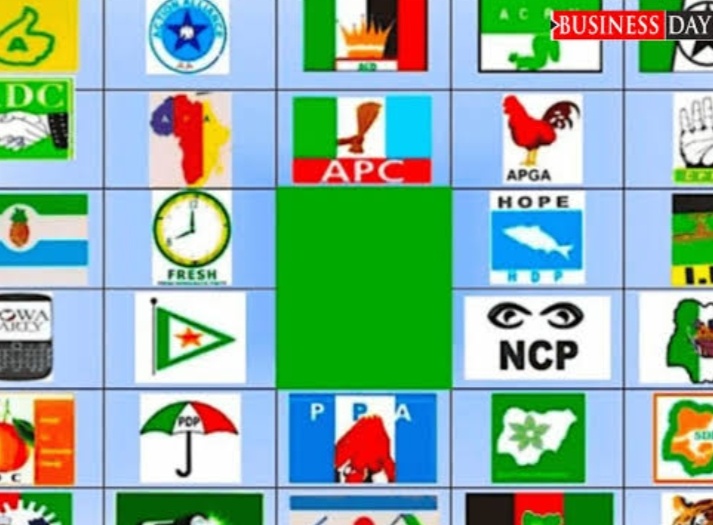
According to Lukman, six political parties and political groups initiated the coalition process. They include:
African Democratic Congress (ADC).
More Read
Allied Peoples Movement (APM).
Nigeria Democratic Congress (NDC).
Tanimu Turaki-led faction of the Peoples Democratic Party (PDP).
Peoples Redemption Party (PRP).
Social Democratic Party (SDP).
Lukman explained that the coalition remains open to other opposition parties willing to study the proposed documents, accept the principles and formally commit to the arrangement.
More Read
The November 30 gathering is expected to provide an opportunity for the national chairmen of participating parties to sign the agreement, with presidential candidates and their running mates also expected to attend.
The signing was initially scheduled for November 23 but was shifted by one week to accommodate the schedules of political leaders.
Three Documents to Guide the Coalition
The coalition has developed three major documents intended to provide the foundation for its proposed political cooperation.
They include:
National Covenant for Democratic Renewal: To establish the principles and commitments guiding the coalition.
Framework for Opposition Unity: To provide mechanisms for cooperation and resolving disagreements among participating parties.
National Reform Programme: A proposed minimum policy agenda that any government emerging from the coalition would be expected to implement.
Lukman described the National Reform Programme as a collective manifesto reflecting areas of agreement among the participating political parties.
Importantly, the arrangement does not require participating parties to dissolve their structures or abandon their individual political identities.
The documents are expected to be made available to Nigerians and the media at the November 30 event.
The Biggest Question: Who Will Fly the Presidential Ticket?
Despite the progress, one major political question remains unresolved: whether the participating parties can agree on a single presidential candidate for the 2027 election.
The question of a common presidential candidate remains sensitive because of competing political interests and presidential ambitions within the opposition.
The NDC, for instance, has its own political considerations regarding the proposed Peter Obi-Rabiu Kwankwaso political alliance.
Consequently, the formal agreement should not yet be interpreted as confirmation that all six parties have endorsed one presidential candidate.
The ability of the coalition to reconcile these competing interests will ultimately determine whether the arrangement becomes a genuinely formidable electoral alliance or merely another agreement among political parties.
Tinubu and APC Face a Different Political Equation
For President Tinubu and the APC, the emerging development presents a political challenge that cannot be dismissed.
The 2023 presidential election demonstrated the consequences of opposition fragmentation. Peter Obi, Atiku Abubakar and Rabiu Kwankwaso contested separately, dividing opposition votes among different political platforms.
The three leading opposition candidates collectively polled more than 14.5 million votes, although Tinubu emerged victorious with 8,794,726 votes.
The political calculation ahead of 2027 could therefore be considerably different if opposition leaders succeed in building a coordinated electoral structure.
However, numbers alone do not guarantee victory. Political organisation, candidate acceptability, public trust, campaign strategy and the credibility of the electoral process will all matter.
For Tinubu, the possibility of facing a more coordinated opposition introduces a new dimension to the 2027 contest.
Will Tinubu Return to Lagos Without the Aso Rock Title?
The political message emerging from the opposition camp is unmistakable: the ambition is no longer simply to criticise the APC government but to build an alternative capable of taking power.
Tinubu may yet have to confront a political reality in which the opposition is no longer divided into competing camps but is working towards a common objective.
Should the coalition overcome its internal differences, agree on a credible presidential candidate and build an effective nationwide electoral structure, the 2027 election could become a much tougher contest for the incumbent.
Indeed, Tinubu may have to return to Lagos the same way he arrived in Abuja, but without the Aso Rock title.
That remains a political aspiration, not an established electoral outcome.
The Real Test Is Beyond Signing Documents
Nigerians have witnessed several political alliances and high-profile declarations that eventually collapsed under the weight of personal ambitions, distrust and disagreements over power.
The emerging coalition must therefore prove that it is different.
Its success will depend on whether its leaders can move beyond individual presidential ambitions, establish a credible common agenda, build genuine political unity and defend every vote from the polling unit to the final collation centre.
The November 30 signing will be an important milestone. But the real test will be what happens afterwards.
For a country yearning for democratic renewal and accountable leadership, opposition unity could offer a significant political alternative.
The question is no longer whether the opposition wants to unite. The question is whether its leaders have the political courage to make that unity work
This report is based on public statements attributed to Salihu Lukman concerning the proposed opposition coalition and reports by Nigerian media. The November 30 signing is scheduled, not yet completed. No common presidential candidate has been formally agreed upon by all participating parties.
Pro-people journalism. Holding power accountable and keeping Nigerians informed.