
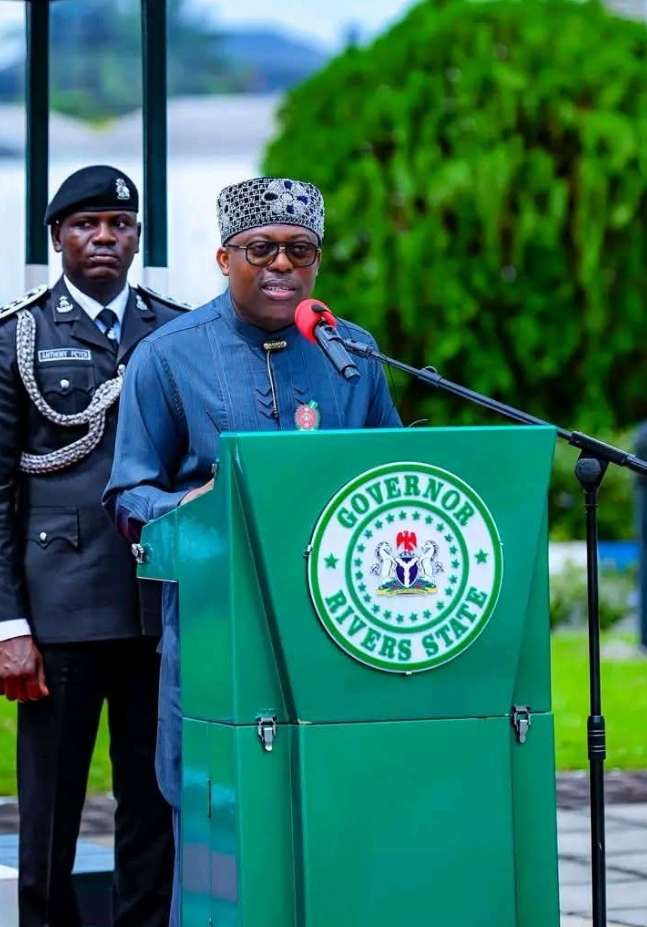
Can the Courts Halt the Impeachment of Governor Fubara? The Constitution, Not Politics, Must Decide
The renewed impeachment moves against Rivers State Governor Siminalayi Fubara have once again exposed a persistent fault line in Nigeria’s constitutional democracy: the uneasy tension between legislative power and judicial oversight.
At the centre of the debate is a deceptively simple question that has animated legal minds, politicians, and citizens alike: Can a court stop an impeachment process once it has commenced?
The answer, as always in constitutional matters, is not emotional, not political, and not absolute. It lies squarely within the 1999 Constitution (as amended) and the body of judicial precedents interpreting it.
Impeachment Is Political — But the Procedure Is Legal
Section 188 of the Constitution clearly vests impeachment powers in the State House of Assembly. That much is settled. What is equally settled, however, is that the exercise of that power is not immune from judicial scrutiny.
Nigerian courts have repeatedly drawn a clear line:
They will not interrogate the political motives for impeachment,
But they will rigorously examine compliance with constitutional procedure.
This principle was firmly established in landmark decisions such as Inakoju v. Adeleke and Dapialong v. Dariye.
In those cases, the Supreme Court made it clear that any deviation from the strict sequence laid down in Section 188 renders the entire process unconstitutional.
is There a “Point of No Return”?
One of the most contested issues in the Rivers situation is whether the courts can intervene midstream—especially after the House of Assembly has invited the Chief Judge to constitute an investigative panel.
Contrary to some popular assertions, there is no constitutional doctrine of inevitability in impeachment.
The process does not become irreversible simply because it has advanced to a particular stage. What matters is whether every step complies with the Constitution.
Where there is credible evidence of:
improper constitution of the House,
lack of quorum,
disputed membership of lawmakers,
denial of fair hearing,
rushed timelines, or
bad faith actions,
the courts are empowered to intervene, including issuing restraining orders to preserve the status quo.
This is not judicial overreach. It is constitutional guardianship.
Court Orders Are Not Optional
Another dangerous misconception exposed in the public debate is the idea that a legislature may ignore a court order on the ground that impeachment is a “constitutional duty.”
That position is legally untenable.
Under Nigerian law, court orders must be obeyed until set aside, regardless of disagreement with the ruling. Disobedience does not strengthen constitutional authority; it undermines the rule of law and invites institutional chaos.
If a competent court restrains a Chief Judge from acting on an impeachment notice, the process is legally frozen until the order is vacated or overturned on appeal. Anything done in defiance of such an order is null, void, and contemptuous.
But Courts Will Not Rescue Every Governor
This must also be said clearly: the judiciary is not a political shield.
If the Rivers State House of Assembly is properly constituted, observes quorum, follows every procedural step under Section 188, and respects fair hearing, the courts are unlikely to interfere. In such circumstances, impeachment—however controversial—will be allowed to run its constitutional course.
The courts are arbiters of legality, not saviours of political careers.
What Is at Stake Is Bigger Than Fubara
The Rivers crisis is not just about Governor Fubara. It is about whether impeachment in Nigeria will remain a constitutional safeguard or degenerate into a tool of political vendetta.
A democracy where impeachment is immune from judicial oversight risks legislative tyranny. A democracy where courts casually stop lawful impeachment risks judicial overreach. The Constitution demands balance.
The Bottom Line
Impeachment is neither above the law nor outside the courts. The National Assembly, State Houses of Assembly, governors, and judges are all bound by the same supreme document.
Whether Governor Fubara survives or falls will depend—not on street noise, online passion, or political muscle—but on strict constitutional discipline.
That is how democracies mature.
That is how institutions endure.
And that is how Nigeria must choose to govern itself.
— Editorial Board, Headlineswave.ng
For enquires, you can send mails to headlineswave2024@gmail.com