By Headlineswave Review Desk
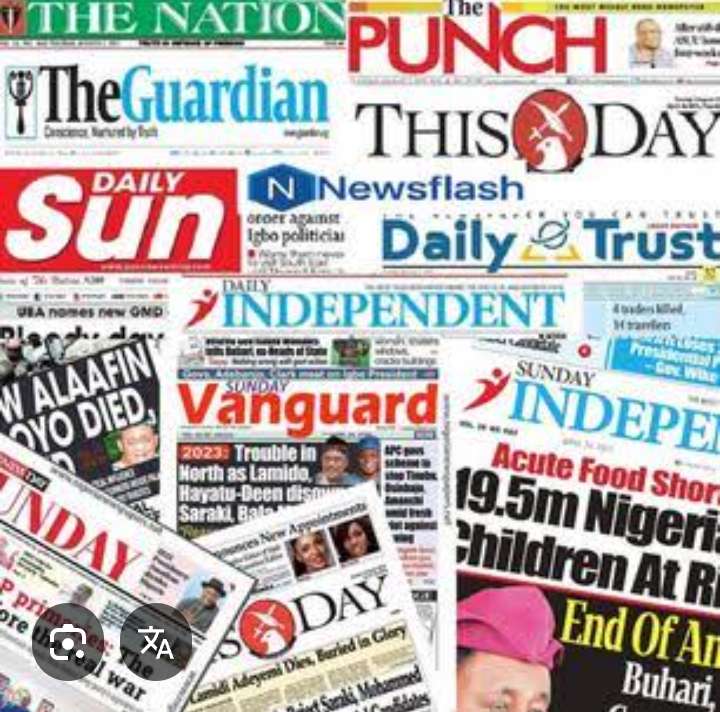
Nigeria’s major newspapers between Monday, January 26 and Saturday, January 31, 2026, were dominated by five major themes: the 2026 national budget, worsening security concerns, high-profile corruption trials, international diplomacy, and shifting political alignments.
1. 2026 Budget Takes Centre Stage at the National Assembly
Newspapers led the week with extensive coverage of the 2026 Appropriation Bill, as the Senate fixed March 17, 2026, for the final passage of the budget.
Reports highlighted lawmakers’ focus on:
Increased security funding
Infrastructure development
Debt servicing and revenue projections
Editorials across The Guardian, ThisDay and Daily Trust questioned the sustainability of Nigeria’s borrowing culture, while urging transparency in budget implementation.
Why it matters:
The 2026 budget is being framed as a test of President Bola Tinubu’s economic reform agenda amid inflationary pressures and public dissatisfaction.
2. Security Operations and Terrorism Dominate Front Pages
Security stories remained unavoidable. The Defence Headquarters announced that dozens of terrorists were neutralised and over 100 suspects arrested within one week, as military operations intensified across the North-East and North-West.
At the same time, newspapers reported that the United States pledged increased intelligence and equipment support to Nigeria’s armed forces.
While tabloids praised military successes, opinion columns warned that insecurity remains deeply entrenched and requires political solutions beyond force.
3. Diezani Alison-Madueke’s UK Trial Reignites Corruption Debate
One of the most widely reported stories of the week was the appearance of former Petroleum Minister Diezani Alison-Madueke in a UK court over alleged bribery and corruption charges.
The case revived national conversations on:
Looted assets
Political accountability
Nigeria’s dependence on foreign courts to prosecute elite corruption
Several editorials described the trial as a “mirror reflecting Nigeria’s unresolved corruption crisis.”
4. Nigeria–Turkey Relations and Trade Expansion
Foreign affairs pages focused on Nigeria’s growing international engagements after Turkey announced plans to raise bilateral trade volume with Nigeria to $5 billion.
The development was widely interpreted as:
A boost for Nigeria’s non-oil exports
A sign of renewed investor confidence
A strategic diplomatic win for Abuja
Business pages highlighted potential opportunities in construction, defence manufacturing and agriculture.
5. Political Realignments and Domestic Tensions
Political stories were marked by:
Party defections, including the high-profile movement of former Cross River governor Donald Duke to the ADC
Rising regional tensions, especially in the South-East, where Anambra State temporarily shut down Onitsha Market over sit-at-home compliance issues
These developments underscored the fragile relationship between federal authority, state governments and grassroots political sentiment.
6. Culture, Economy and Human Interest Stories
Beyond politics and security, newspapers also carried lighter but significant stories:
Nigeria’s domestic bond market recorded heavy oversubscription, reflecting investor appetite
Afrobeat legend Fela Anikulapo-Kuti received renewed global recognition through a posthumous Grammy honour
Rising cost-of-living stories continued to dominate human-interest pages
Weekly Verdict
Key Takeaways from Nigerian Newspapers (Jan 26–31, 2026):
Government policy remains under intense public scrutiny
Security remains Nigeria’s most urgent challenge
Corruption cases continue to damage political credibility
International partnerships are becoming more economically strategic
Public frustration is increasingly visible in local governance issues