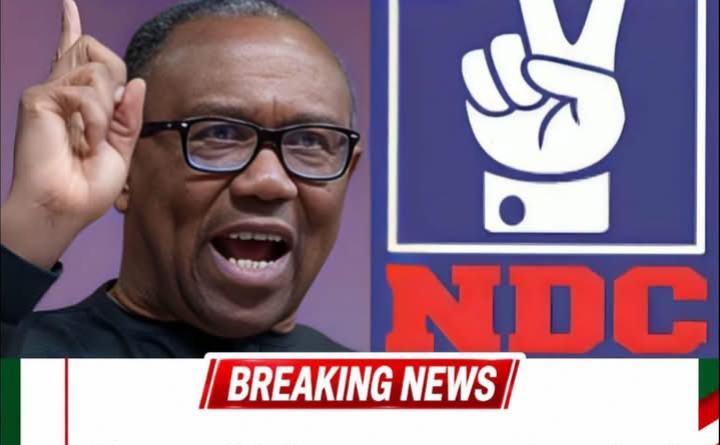
The 2027 Presidential candidate of the National Democratic Congress NDC, Peter Obi, has unveiled the second part of his proposed roadmap for rebuilding Nigeria, placing education and healthcare at the centre of his vision for a productive and prosperous nation.
In a statement titled “Roadmap to a New Nigeria That Is Possible – Part II: Education and Healthcare: The Foundation of a Renewed Nigeria,”
Obi said Nigeria’s transformation must begin with strategic investments in its people, insisting that no nation can achieve sustainable development without quality education and accessible healthcare.
The former Anambra State governor recalled that in the first part of his roadmap, released on July 1, he outlined a broad framework for national renewal, promising to provide detailed proposals on key sectors in subsequent editions.
According to Obi, education and healthcare remain the bedrock upon which prosperous nations are built, arguing that they provide opportunities for social mobility while reducing poverty, unemployment and insecurity.
He dismissed the growing notion among some young Nigerians that “education is a scam,” describing such a belief as misguided.
“Education, when combined with good health, provides the ladder for individual upward mobility and drives economic growth for the nation,” he stated.
Drawing examples from countries such as Singapore and China, Obi said Nigeria must intentionally align its educational system with national development priorities.
He referenced Singapore’s education reforms and China’s rapid transformation under Deng Xiaoping as models worthy of study.
Obi proposed strengthening collaboration among the federal, state and local governments through dedicated commissions to improve education delivery.
Under his plan, primary education would be managed at the community and local government levels, with greater parental participation and curricula tailored to local economic opportunities.
He also advocated increased support for state governments to expand Technical and Vocational Education and Training (TVET) alongside quality secondary education through targeted grants and incentives.
For tertiary education, Obi said universities should be encouraged to specialise in specific fields of teaching and research to become globally competitive while producing graduates equipped for the demands of the modern economy.
The former presidential candidate maintained that investing in education and healthcare would not only improve living standards but also reduce the number of vulnerable youths who are often recruited into criminal activities and insecurity.
Obi concluded by reaffirming his belief that Nigeria can achieve lasting progress through purposeful leadership and sustained investment in human capital.
“A New Nigeria is Possible,” he declared.