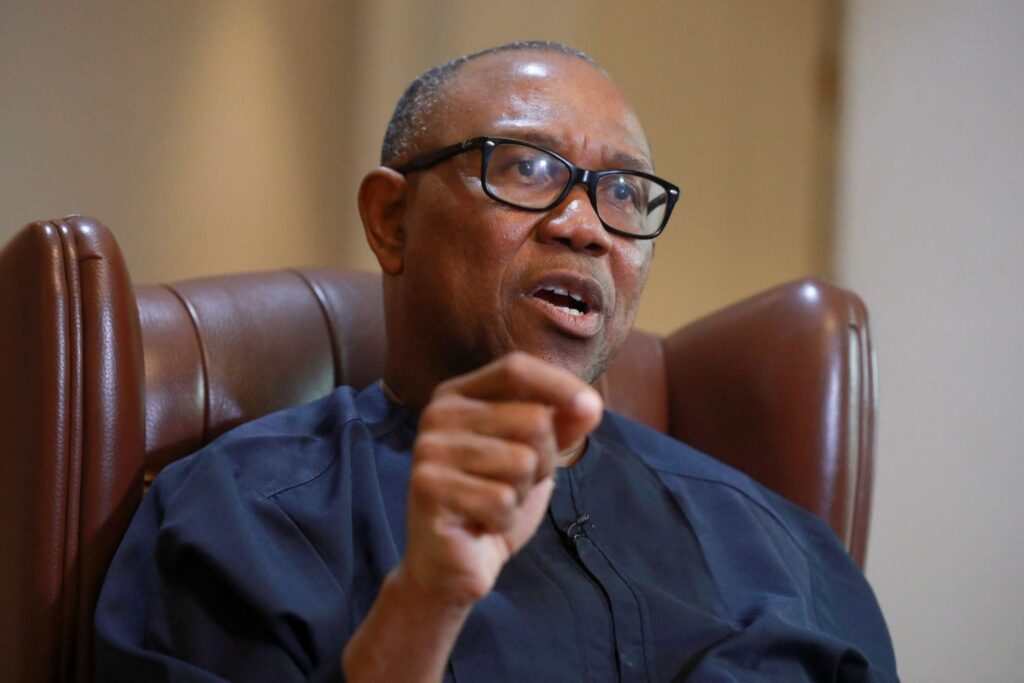
The 2027 presidential candidate of rhe National Democratic Congress, NDC, Peter Obi, has expressed deep concern over the court-ordered remand of activist and publisher, Omoyele Sowore, in Kuje Correctional Centre, warning that the development could signal a dangerous trend for Nigeria’s democracy.
In a statement released on Tuesday, Obi said he received the news of Sowore’s remand with concern, stressing that democratic societies must protect the rights of citizens to express dissenting opinions without fear of persecution.
While acknowledging that the judiciary remains the ultimate arbiter of justice, Obi cautioned against any situation that creates the impression that state institutions are being used to suppress opposition voices, journalists, activists, or civic engagement.
“A thriving democracy does not survive on the silencing of opposing voices; rather, it is anchored on the robust protection of fundamental human rights, most notably the freedoms of expression and peaceful assembly, as enshrined in our Constitution,” Obi stated.
The former presidential candidate further argued that Nigeria’s current challenges, including economic hardship and insecurity, require inclusive dialogue and accountability rather than actions that could deepen public distrust in democratic institutions.
According to him, treating citizen critics, activists, and journalists as threats rather than partners in nation-building risks pushing the country toward authoritarian tendencies.
Obi therefore called on relevant authorities to ensure strict adherence to the rule of law and guarantee that Sowore’s constitutional rights are fully protected throughout the judicial process.
Mixed Reactions Trail Obi’s Position
Peter Obi’s statement quickly generated widespread reactions across social media, with Nigerians sharply divided over both Sowore’s remand and Obi’s intervention.
Supporters of the former Labour Party presidential candidate commended him for speaking out on what they described as a matter of civil liberties and democratic rights.
Many argued that criticism of government policies and institutions should not be criminalized in a democracy and that activists play an important role in promoting accountability.
Some users described Obi’s comments as timely and necessary, warning that any action perceived as shrinking civic space could undermine public confidence in democratic governance.
However, critics of Obi’s position argued that the matter remains before the courts and should be allowed to proceed without political commentary.
They maintained that every citizen, regardless of political affiliation or public profile, must be subject to the same legal process and judicial scrutiny.
Others called for caution in drawing conclusions before the full facts of the case emerge, emphasizing the need to respect the independence of the judiciary while safeguarding the rights of all parties involved.
Political observers say the controversy has reignited broader conversations about freedom of expression, judicial independence, civic activism, and the balance between state authority and individual rights in Nigeria’s democracy.
As public debate continues, many Nigerians are closely watching developments in the case, viewing it as an important test of the country’s commitment to democratic values, human rights, and the rule of law.
For now, Sowore’s remand and Obi’s reaction have added another layer to the national conversation on governance, accountability, and the future of democratic freedoms in Nigeria.
This report is based on Peter Obi’s publicly released statement and reactions expressed by Nigerians on public platforms.
Headlineswave.ng remains committed to verified, accurate, balanced, and responsible journalism, ensuring that all parties are treated fairly and that legal matters are reported with respect for due process and the rule of law.