World Cup Final Ends in Chaos
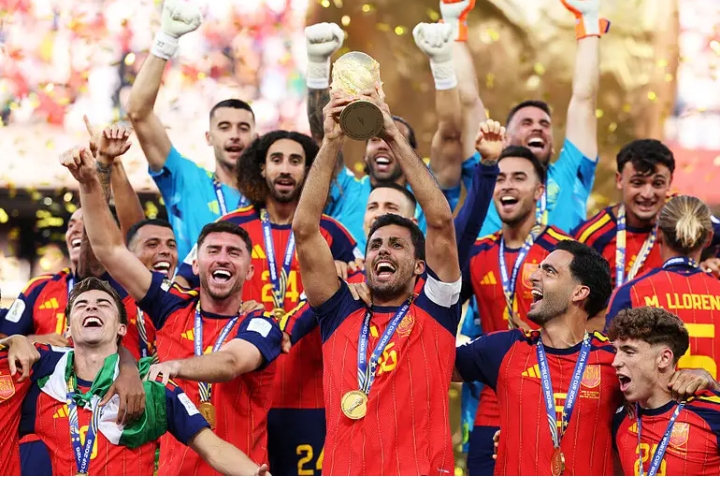
Spain’s historic 1-0 victory over Argentina in the 2026 FIFA World Cup final should have been remembered solely as the crowning moment of a dazzling new generation. Instead, the final whistle was followed by ugly scenes that overshadowed parts of La Roja’s greatest triumph in over a decade, as frustrated Argentina players lost their discipline in a mass confrontation.
Ferran Torres’ extra-time winner sealed Spain’s second World Cup title after Luis de la Fuente’s side dominated possession and controlled much of the tactical battle against the defending champions. Argentina, led by Lionel Messi in what is widely expected to be his final World Cup appearance, struggled to create meaningful chances and finished the match empty-handed.
Celebrations Turn Violent
As Spanish players sprinted onto the pitch to celebrate, emotions boiled over among the Argentine camp.
Television replays showed defender Nahuel Molina apparently swinging a punch at Spain captain Rodri, sparking a melee involving players from both teams. Moments later, midfielder Leandro Paredes became the central figure in the confrontation.
Paredes was seen kicking Spain defender Eric Garcia to the ground before grabbing him around the neck as Garcia attempted to confront him. He also exchanged heated words with Gavi and was eventually shown a straight red card after the final whistle for violent conduct.
Former England captain Alan Shearer condemned the scenes during the television broadcast.
“Paredes threw two or three haymakers into someone’s face. He went for them. There is no place or space for that.”
Former England goalkeeper Joe Hart also described Argentina’s behaviour as “disgusting,” saying the players allowed frustration to destroy the dignity expected on football’s biggest stage.
Why Argentina Lost Their Composure
The chaotic ending reflected more than just the pain of defeat.
For over 120 minutes, Argentina found themselves chasing shadows against a younger, technically superior Spanish side. Rodri dictated midfield, Lamine Yamal constantly stretched the defence, while Spain’s relentless pressing denied Messi and his teammates the space they usually thrive in.
Spain completed around 90 percent of their passes and conceded only one goal throughout the entire tournament, underlining the dominance of their campaign.
For Messi, the defeat was particularly heartbreaking.
At 39, the Argentine legend had hoped to finish his remarkable World Cup journey by successfully defending the trophy won in Qatar four years earlier. Instead, cameras captured an emotional Messi in tears after the final whistle as Spain celebrated around him.
From Frustration to Disgrace
Argentina have built a reputation for fighting until the very end, but many observers believe that determination crossed the line after the final whistle.
Rather than accepting defeat, several players confronted Spain’s stars during their celebrations, turning what should have been football’s greatest celebration into an ugly spectacle.
Paredes’ dismissal means FIFA is expected to review the incidents, with further disciplinary action possible after examining match footage.
Spain’s Golden Generation Arrives
Despite the disorder, the final ultimately belonged to Spain.
Their triumph capped an extraordinary era that has already produced a European Championship and now a World Cup. Led by Rodri, Lamine Yamal, Nico Williams, Pau Cubarsí and Ferran Torres, Spain demonstrated that patient possession, intelligent pressing and tactical discipline can still conquer the world’s biggest stage.
For Argentina, however, the night ended in bitter disappointment. The defending champions not only surrendered their crown but also saw their final memories of the tournament stained by post-match violence—an unfortunate ending to Lionel Messi’s final quest for another World Cup crown.