


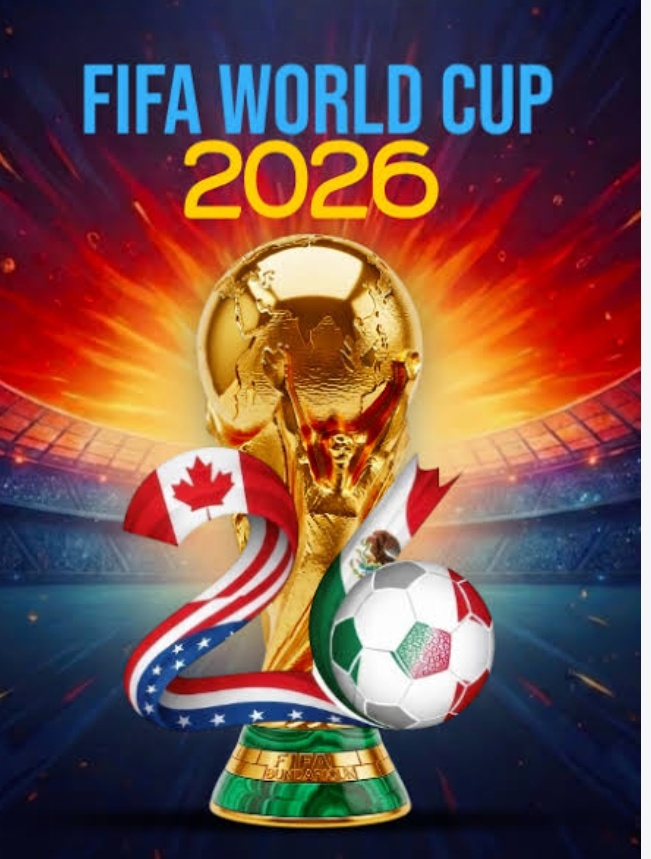
How FIFA’s Own Lawyers Fllagged DR Congo Player — And Nigeria Lost Its World Cup Lifeline
Nigeria’s painful failure to qualify for the 2026 FIFA World Cup has taken a dramatic turn following revelations that FIFA’s own legal officials reportedly identified an eligibility problem involving a DR Congo player who featured in the qualification campaign.
The revelation has raised a troubling question: Could Nigeria have been given another route to the World Cup if FIFA had enforced its own rules?
According to an investigation by Le Monde, based on internal FIFA documents, FIFA lawyers discovered in March 2026 that DR Congo goalkeeper Lionel Mpasi had not completed the required process to switch his international sporting affiliation from France to DR Congo.
Mpasi had previously represented France at youth level before playing for DR Congo. The report says FIFA’s legal officials concluded that the required change-of-association procedure had not been properly completed.
More Read
Yet Mpasi had already appeared in several of DR Congo’s 2026 World Cup qualifying matches.
One of those matches was the decisive African playoff final against Nigeria.
The Super Eagles drew 1-1 with DR Congo after extra time in Rabat on November 16, 2025, before losing 4-3 on penalties. The defeat ended Nigeria’s direct route to the World Cup and sent DR Congo into the intercontinental playoff.
Nigeria subsequently challenged the eligibility of DR Congo players before FIFA.
The Nigeria Football Federation (NFF) later announced that FIFA had rejected its complaint and said it would appeal the decision.
But the latest revelations have put that decision under renewed scrutiny.
According to Le Monde, FIFA’s legal department reportedly concluded that Mpasi was ineligible and considered the possible disciplinary consequences of his participation.
The report says FIFA’s internal legal analysis examined the possibility of forfeiting matches in which an ineligible player had participated. Such a decision could have dramatically altered the qualification pathway.
Most significantly for Nigeria, the analysis reportedly considered consequences that could have opened the door for the Super Eagles to replace DR Congo in the intercontinental playoff.
Instead, DR Congo continued its campaign and ultimately secured qualification for the 2026 World Cup.
Was Nigeria denied a fair chance?
More Read

That is now the biggest question.
It is important, however, to distinguish between evidence of FIFA’s handling of the eligibility issue and proof of deliberate collusion.
There is currently no conclusive evidence establishing that FIFA deliberately conspired with DR Congo to eliminate Nigeria.
What the new reporting does establish is that FIFA’s internal legal officials reportedly identified a potentially serious eligibility problem and considered sanctions, while FIFA ultimately did not apply the consequences that could have changed the qualification picture.
That raises legitimate questions about consistency and transparency.
Why would FIFA’s regulations be strictly applied in some cases but apparently treated differently in another?
The controversy is also complicated by reported relationships between senior FIFA officials and figures in Congolese football.
FIFA has rejected any suggestion that President Gianni Infantino interfered with the disciplinary process and maintains that FIFA’s judicial bodies operate independently.
For Nigeria, however, the issue goes beyond football rivalry.
The Super Eagles lost their decisive match on penalties. Nigerians accepted the defeat, painful as it was.
But if FIFA’s own legal department had identified an eligibility breach capable of changing the qualification outcome, Nigerians are entitled to demand clear answers.
Was the rule broken? Was FIFA aware? What action did FIFA take? And why was Nigeria not given the opportunity to benefit from the applicable regulations?
Until those questions are satisfactorily answered, the controversy surrounding Nigeria’s 2026 World Cup elimination will not disappear.
Headlineswave monitored the developing controversy.

This is total bulshit of it highest corruption order by FIFA and DR Congo officials.
2. The world cup had come and gone but Nigeria must press for full investigation and possibly get compensations, get DR Congo and all FIFA officials involved in that Armed Robbery severely punished.
3. Super Eagles of Nigeria was not good for that world cup. They would have disgrace the country if they had been given the opportunity to qualify.
4. Next time, Super Eagles must prepare to win their own matches to avoid this kind of embarrassment to it’s citizens especially football lovers, instead of relying on other nations errors or rules of football associations.
5. If they are not ready, let’s not be wasting tax payers and nations resources on them.