Sunday Special Report:
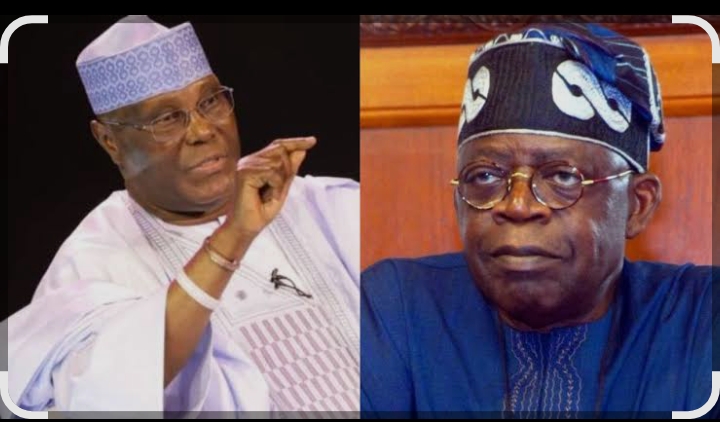
Former Vice President Atiku Abubakar has called for an extensive investigation into Nigeria’s public finances after citing findings contained in the latest Article IV Consultation by the International Monetary Fund, alleging that the administration of President Bola Ahmed Tinubu executed public expenditures amounting to about ₦8.8 trillion outside the country’s official budget framework.
In a strongly worded statement released on Saturday, Atiku described the IMF’s observations as raising fundamental questions about fiscal transparency and accountability under the current administration.
The former vice president argued that the IMF’s report indicated government expenditures equivalent to approximately 2 percent of Nigeria’s Gross Domestic Product (GDP) were not captured in recent federal budgets because they related to projects carried out outside the formal appropriation process.
Using Nigeria’s estimated GDP, Atiku calculated the amount at roughly ₦8.8 trillion, describing it as public spending that should be subjected to legislative scrutiny and public accountability.
IMF’s Findings
The IMF, in its latest Article IV Consultation on Nigeria published this week, acknowledged progress in some aspects of Nigeria’s economic reforms but also noted weaknesses in fiscal reporting.
According to the Fund, certain government expenditures linked to major projects were executed outside the regular budget process. It recommended stronger public financial management, improved budget transparency, and the inclusion of such expenditures within the formal budget framework going forward.
However, the IMF did not state that the expenditures were stolen or accuse the Federal Government of corruption. Instead, it urged reforms aimed at strengthening fiscal governance and accountability.
Atiku’s Allegations
Building on the IMF’s observations, Atiku alleged that the off-budget spending represented a pattern of fiscal opacity that deserved immediate investigation.
He further linked the issue to the recent controversy surrounding a reported ₦1.3 billion allocation in the 2026 Appropriation Act for the Presidential Foreign Investment Promotion Council, an office whose legal status later became the subject of public debate.
The former vice president also alleged that approximately ₦800 billion had been deducted from statutory allocations due to state governments without constitutional backing, arguing that both issues warranted independent scrutiny.
Atiku claimed the combined figures pointed to what he described as a “shadow treasury” and called on relevant institutions to investigate the circumstances surrounding the expenditures.
Calls for Investigation
Among his demands, Atiku urged:
The National Assembly to immediately open investigative hearings into the IMF’s findings.
The Auditor-General of the Federation to conduct a comprehensive audit of all off-budget expenditures referenced in the IMF report.
The Federal Government to publicly disclose every project, contractor, procurement process and approval connected to the expenditures.
The restoration of any funds found to have been unlawfully deducted from state allocations.
Anti-corruption agencies, including the Economic and Financial Crimes Commission and the Independent Corrupt Practices and Other Related Offences Commission, to independently examine the allegations.
Tinubu Government Yet to Respond
As of the time of filing this report, the Presidency had not issued a formal response to Atiku’s latest statement.
The IMF report has nevertheless renewed debate over fiscal transparency, public accountability and the management of government expenditure at a time Nigeria continues to implement far-reaching economic reforms.
Political observers say the development could intensify scrutiny of public finances ahead of the 2027 general elections, with opposition parties expected to use the IMF’s recommendations to press for greater transparency.
Why This Matters
The controversy has become significant because it touches on issues beyond politics, including constitutional oversight, public finance management, legislative accountability and the confidence of investors and development partners in Nigeria’s fiscal governance.
Whether the allegations ultimately lead to official investigations or policy reforms, analysts agree that the IMF’s recommendations have placed renewed focus on the need for transparent budgeting and stronger public financial management.
This report distinguishes verified findings from political allegations. The IMF confirmed concerns about off-budget expenditures and recommended stronger fiscal transparency.
However, allegations of illegality, diversion of funds, political motives, or corruption are claims made by Atiku Abubakar and have not been established by any court or independent investigative authority.
As always, Headlineswave.ng remains committed to verified, accurate and responsible journalism.