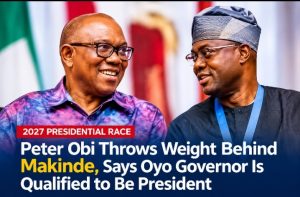


More Than a State Election
As Osun voters head to the polls, political observers across Nigeria are paying close attention.
While the election will determine who governs Osun State for the next four years, its implications extend far beyond the state’s borders.
Political analysts widely regard the Osun governorship election as the last major off-cycle electoral test before the 2027 general elections, making it an important indicator of voter sentiment, party strength, and the readiness of political structures ahead of the presidential contest.
A Referendum on Tinubu’s Influence in the Southwest
More Read

President Bola Tinubu’s political strength has traditionally rested on the Southwest. Osun, therefore, offers an opportunity to assess whether that dominance remains intact.
Should the APC secure victory, the ruling party will likely present the result as evidence that Tinubu’s political machinery remains formidable in his home region.
However, a defeat could embolden opposition forces and raise questions about the APC’s ability to retain its traditional strongholds ahead of 2027.
More Read

Testing the Power of Political Defections
One of the biggest questions in Nigerian politics today is whether politicians can successfully transfer their supporters when they switch parties.
The Osun election provides a real-world test of that theory. With several politicians across the country changing political platforms ahead of 2027, the outcome will reveal whether voters remain loyal to individual politicians or to established party structures.
The answer could significantly influence calculations by both the ruling party and opposition coalitions in the run-up to the presidential election.
A Barometer for Opposition Momentum
Opposition parties and emerging political coalitions are closely watching Osun. A strong showing by non-APC forces would strengthen claims that the ruling party can be challenged in 2027.
More Read
Conversely, an APC victory could discourage some opposition alliances and reinforce perceptions of the party’s electoral dominance. In politics, momentum often matters almost as much as numbers, and Osun may provide the narrative that shapes the next eighteen months.
Lessons for INEC and Electoral Stakeholders
Beyond party politics, the election will serve as a critical assessment of electoral preparedness. Election observers are expected to scrutinize voter turnout, security arrangements, result transmission systems, and the effectiveness of measures against vote-buying.
The performance of electoral institutions in Osun may either boost public confidence or deepen concerns ahead of the much larger 2027 elections.
Read Also: Why Millions of Nigerians Remain Poor Despite Economic Reforms – Finance Minister