


Democrats Vow to Rein In Trump After Sweeping Midterm Victory, Take Control of Congress
“You Think Too Much of Yourself,” Oshiomhole Slams APC National Youth Leader
The Democratic Party has vowed to use its sweeping victory in the United States midterm elections to rein in President Donald Trump, marking a major political setback for the Republican leader and setting the stage for a potentially turbulent final two years of his presidency.
Democrats secured control of both chambers of Congress – the Senate and the House of Representatives – in Tuesday’s elections, November 3, delivering a significant electoral rebuke to Trump’s administration.
The victory represents the first time during Trump’s second presidency that Democrats will control both chambers, giving the opposition party considerable power to scrutinise his administration, challenge controversial policies and block key presidential appointments.
More Read

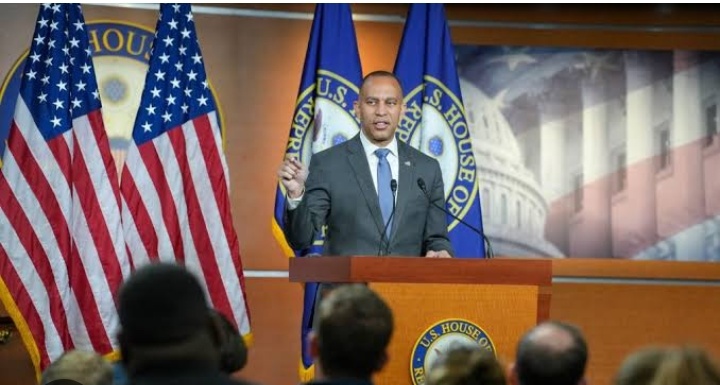
House Democratic Leader Hakeem Jeffries declared that the incoming Democratic majority would prioritise accountability and the economic concerns of ordinary Americans.
“We don’t work for Donald Trump. We work for the American people,” Jeffries said, signalling a more confrontational relationship between Congress and the White House.
The Democratic victory was driven largely by voter dissatisfaction with rising living costs, Trump’s economic policies, controversial tariffs and the administration’s handling of the war involving Iran.
The electoral setback was particularly significant because Democrats made historic gains in traditionally Republican strongholds.
In Texas, Democrats secured their first Senate victory in the state since 1988 and defeated three-term Governor Greg Abbott. Kansas also elected its first Democratic senator in nearly a century, while Democrats frustrated Trump’s preferred candidate in South Carolina.
The party secured at least 54 Senate seats and gained at least 30 seats in the House, with some closely contested races still awaiting final determination.
Beyond the congressional victories, the elections also produced historic milestones, including Abdul El-Sayed becoming the first Muslim elected to the US Senate. Democrats Keisha Lance Bottoms and Deb Haaland also recorded historic gubernatorial victories in Georgia and New Mexico respectively.
Following the results, Democratic leaders indicated that their new congressional majority would investigate the Trump administration and its allies, demand greater transparency and use legislative oversight powers to challenge policies they consider detrimental to Americans.
The Senate majority will also give Democrats the power to block presidential nominees, potentially including appointments to the Supreme Court should vacancies arise.
Trump, however, has signalled that he is prepared for confrontation, reminding reporters that he retains presidential veto powers.
He also acknowledged that the war with Iran contributed to the Republican losses but defended his administration’s position.
Vice President JD Vance similarly attributed the electoral defeat to the war, describing it as a major factor behind the party’s poor performance.
Meanwhile, the defeat has triggered leadership uncertainty among congressional Republicans, with House Speaker Mike Johnson indicating that he would not continue leading the Republican caucus next year.
With Democrats preparing to assume control of Congress in January, Washington is heading towards a period of heightened political confrontation.
For Trump, the election results represent more than a midterm setback. They signal that voters have handed his political opponents significant institutional powers to challenge his administration, scrutinise its decisions and demand accountability during the remaining years of his presidency.
This report is based on election developments and reporting by Reuters and RTÉ. Congressional seat figures reflect reported results available as of November 6, 2026.