


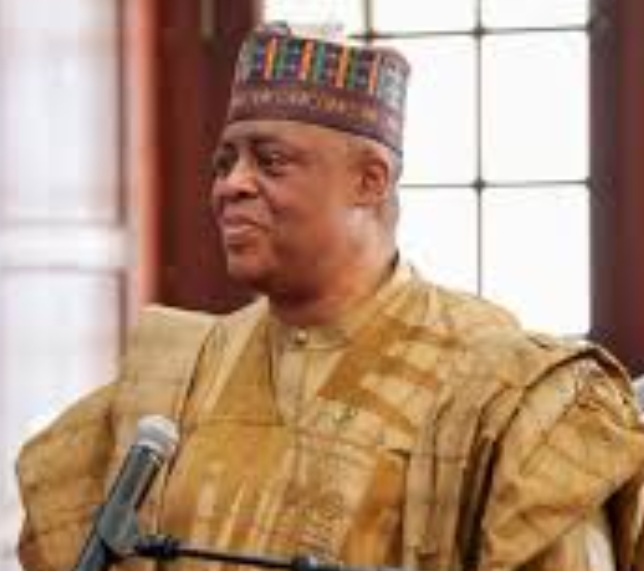
SOUTH AFRICAN FOREIGN AFFAIRS MINISTRY HAS DEMARCHED FEMI FANI-KAYODE
Pretoria invokes Vienna Convention, cautions Nigerian High Commissioner over diplomatic conduct and social media remarks
South Africa’s Department of International Relations and Cooperation (DIRCO) has formally demarched Nigeria’s High Commissioner to South Africa, Femi Fani-Kayode, following concerns over events surrounding the presentation of his Letters of Credence to President Cyril Ramaphosa and subsequent comments on social media.
The development occurred on Tuesday, November 17, 2026, when DIRCO Director-General, Zane Dangor, met with the Nigerian envoy in Pretoria to convey the South African government’s concerns.
More Read

According to an official statement issued by DIRCO, the meeting addressed events that followed the presentation of Fani-Kayode’s Letters of Credence to President Ramaphosa, as well as remarks subsequently made by the Nigerian diplomat on social media.
The South African government used the meeting to reaffirm the importance of preserving the longstanding bilateral relationship between Nigeria and South Africa, founded on mutual respect, friendship and cooperation.
VIENNA CONVENTION AT THE CENTRE OF THE DISAGREEMENT
More Read
During the meeting, Dangor specifically recalled Article 41 of the 1961 Vienna Convention on Diplomatic Relations, which requires diplomatic agents to respect the laws and regulations of their receiving country and conduct official business through the appropriate government channels.
DIRCO emphasised that official communication between diplomatic representatives and the host government should be conducted through established diplomatic channels, including the Department of International Relations and Cooperation.
The reference to Article 41 underscores South Africa’s position that diplomatic disagreements should be addressed through recognised institutional procedures rather than public exchanges on social media.
HOW THE CONTROVERSY STARTED
The diplomatic disagreement followed Fani-Kayode’s presentation of his Letters of Credence to President Ramaphosa.
The Nigerian envoy subsequently expressed displeasure over the manner in which the South African Broadcasting Corporation (SABC) covered the ceremony, alleging that his introduction and remarks were excluded from the broadcast while other diplomats were featured.
He also raised concerns about the treatment of Nigeria during the event, triggering public exchanges and reactions from South African officials.
More Read

The controversy has since drawn attention to the responsibilities of diplomatic representatives and the protocols governing relations between accredited diplomats and their host countries.
WHAT A DEMARCHE MEANS
A diplomatic démarche is a formal representation by one government to another, usually to communicate concern, protest, disagreement or a particular position on an issue.
It is an established diplomatic instrument and does not automatically amount to an expulsion or a declaration of a diplomat as persona non grata.
Consequently, South Africa’s action should be understood as a formal diplomatic expression of concern rather than an order for Fani-Kayode to leave the country.
NIGERIA-SOUTH AFRICA RELATIONS IN FOCUS
The development comes against the background of the historically significant relationship between Nigeria and South Africa, two major African countries with considerable economic, political and diplomatic influence on the continent.
Nigeria played an important role in supporting the anti-apartheid struggle in South Africa, while both countries have maintained strategic relations despite occasional disagreements, including tensions arising from xenophobic attacks against Nigerians living in South Africa.
The latest development therefore raises questions about how diplomatic representatives can vigorously defend their country’s interests while observing the protocols and conventions governing international relations.
HEADLINESWAVE ANALYSIS
There is an important distinction between defending Nigeria’s national interest and observing the diplomatic rules governing engagement with a host country. Both responsibilities are fundamental to effective diplomacy.
A Nigerian High Commissioner has a duty to protect the dignity and interests of Nigeria. However, the effectiveness of that responsibility also depends on sound judgment, diplomatic restraint and the ability to deploy appropriate institutional channels when disagreements arise.
Equally, diplomatic protocol should not become an excuse to dismiss legitimate grievances. If a Nigerian representative believes that the country has been unfairly treated, such concerns deserve appropriate attention and a proper response through established channels.
For now, South Africa has formally communicated its displeasure, but has also reiterated its commitment to strengthening relations with Nigeria.
The critical task before both countries is to prevent an individual diplomatic disagreement from undermining a relationship built on decades of shared history, solidarity and cooperation.
This report is based on the statement attributed to South Africa’s Department of International Relations and Cooperation (DIRCO), dated November 17, 2026, and the diplomatic provisions cited therein. The distinction between a démarche and expulsion is based on established diplomatic practice.
Source: South Africa’s Department of International Relations and Cooperation (DIRCO).