

Kwankwaso Condemns Jingir’s Remarks, But Nigeria’s Bigger Problem Is Religious Politics
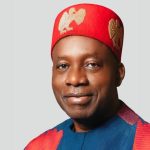
Former Kano State Governor Rabiu Musa Kwankwaso has condemned the reported remarks by Islamic cleric Sheikh Sani Yahaya Jingir, describing them as divisive and warning political and religious leaders against statements capable of undermining national unity.
Kwankwaso’s intervention is significant, particularly coming at a time when the debate over religion, political representation and the 2027 presidential election is becoming increasingly intense.
But the controversy should not end with condemnation.
It should force Nigeria to confront a much bigger and uncomfortable question: why has religion become such a powerful instrument in the country’s struggle for political power?
More Read
Jingir’s reported description of Christians as “infidels”, alongside his apparent call for Muslims to deploy their numerical strength politically and support the continuation of a Muslim-Muslim presidential ticket, is deeply troubling.
In a country as religiously sensitive as Nigeria, such rhetoric from a prominent cleric is reckless.
It should be condemned.
More Read
Firmly.
But the principle must be applied consistently.
Religious bigotry does not become acceptable because it comes from a politician, cleric or political movement whose ideology happens to be convenient.
And neither should condemnation become selective depending on whose political interests are being affected.
Representation Matters
The controversy surrounding the Muslim-Muslim ticket has never been simply about the private religion of President Bola Tinubu and Vice President Kashim Shettima.
More Read
It is also about perception, representation and political balance in a country where religion remains deeply intertwined with identity and political mobilisation.
A Christian is perfectly entitled to vote for a Muslim candidate.
A Muslim is equally entitled to vote for a Christian candidate.
Democracy does not require Nigerians to vote according to their religion.
But it is also unrealistic to pretend that religious representation has no political significance in Nigeria.
For decades, political actors understood the importance of balancing the country’s major religious and regional interests. That arrangement was not perfect, but it reflected an understanding of Nigeria’s peculiar political environment.
The abandonment of that convention has inevitably generated debate.
And Christians who question the political implications of a Muslim-Muslim ticket should not automatically be dismissed as religious bigots.
At the same time, Christians who choose to support such a ticket are exercising their democratic rights.
The problem begins when political preference is transformed into religious superiority.
That is precisely where Jingir’s reported comments become dangerous.
But Christians Must Also Look Inward
There is, however, another uncomfortable conversation Nigerian Christians need to have.
Political influence does not come from population alone.
It comes from organisation, strategic voting, coalition-building and the ability to translate numbers into political leverage.
For too long, Nigeria’s political space has been dominated by ethnic calculations, personality politics and fragmented interests.
Christian political participation is not immune to these divisions.
Too often, Nigerians who share the same faith are divided along ethnic, regional and partisan lines, even when confronting issues that affect them collectively.
Meanwhile, religious and political actors elsewhere have demonstrated a greater willingness to organise around common interests.
The lesson is not that Christians should engage in religious politics.
The lesson is that no group should surrender its political agency and expect others to protect its interests out of goodwill.
Political representation must be earned through participation.
The Role of Religious Leaders
This is also a moment for Nigeria’s religious leadership to examine itself.
Pastors, bishops, imams and sheikhs wield enormous influence over millions of Nigerians.
That influence comes with responsibility.
Religious leaders should be building bridges, not erecting political walls.
They should be reminding their followers that a Muslim Nigerian is not an enemy of a Christian Nigerian, just as a Christian Nigerian is not an enemy of a Muslim Nigerian.
The pulpit should not become a platform for electoral mobilisation based on religious superiority.
And politicians should stop encouraging religious leaders to do their political dirty work.
Kwankwaso Must Go Beyond Condemnation
Kwankwaso is right to condemn divisive rhetoric.
But Nigerians are entitled to demand consistency from every political actor.
The standard must remain the same regardless of who makes the statement or whose political ambition it serves.
If describing fellow Nigerians in religiously derogatory terms is wrong, it is wrong.
If using religion to intimidate, mobilise or divide citizens is dangerous, it is dangerous.
And if political leaders genuinely believe Nigeria’s unity must be protected, that commitment must extend beyond election season.
Jingir’s reported remarks have therefore opened a much larger national conversation.
Nigeria does not need competing religious majorities fighting for political supremacy.
It needs citizens capable of organising politically without dehumanising one another.
It needs leaders who understand that the presidency belongs to Christians and Muslims, Northerners and Southerners, minorities and majorities alike.
And it needs a political culture where citizenship comes before creed.
That is the real test.
Because Nigeria cannot continue condemning religious intolerance on Monday while rewarding religious mobilisation at the ballot box on Tuesday.
If religious bigotry is wrong, it must be wrong whoever expresses it.
And if national unity is genuinely the objective, the standard must apply to everyone.