

100 Days to 2027 Election: INEC Raises Fresh Alarm Over Funding, Staff Welfare
With exactly 100 days to Nigeria’s 2027 presidential and National Assembly elections, the Independent National Electoral Commission (INEC) has raised fresh concerns over funding and the welfare of its personnel, while outlining the scale of preparations for what will be one of the country’s biggest electoral exercises.
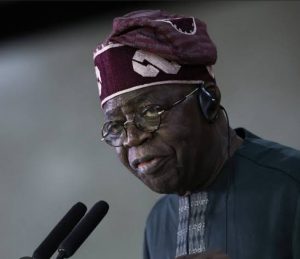
INEC Chairman, Prof. Joash Amupitan, made the disclosures on Tuesday, October 6, 2026, during a World Press Conference and National Stakeholders’ Meeting in Abuja to mark the 100-day countdown to the 2027 general elections.
Amupitan acknowledged that the Federal Government had released statutory allocations to the commission, but appealed for the prompt release of the remaining part of INEC’s approved budget.
According to him, the outstanding funds are necessary for the commission to execute the remaining electoral activities without disruption.
More Read

He said the resources already released had enabled INEC to meet international vendor obligations, produce critical election technology, upgrade infrastructure and sustain its nationwide operations.
INEC Staff Are the Least Paid, Chairman Says
One of the most striking revelations from the briefing concerned the welfare of INEC personnel.
Amupitan said INEC staff are the least-paid workers in Nigeria, explaining that the situation could make it difficult for the commission to demand the highest level of responsibility and accountability from its personnel.
More Read

He said the commission had therefore taken what he described as “radical steps” to prioritise staff welfare.
According to him, INEC has been removed from the conventional civil-service payment structure because its personnel are not core civil servants.
The commission is now working towards a separate electoral and salary structure designed to provide better remuneration for its workers.
Amupitan linked the move to the broader need to strengthen the electoral system and address institutional weaknesses ahead of the 2027 elections.
More Than 1.4 Million Ad-Hoc Workers Required
The scale of the 2027 election is also reflected in INEC’s manpower requirements.

The chairman disclosed that the commission would require 707,384 ad-hoc personnel for the presidential and National Assembly elections scheduled for January 16, 2027.
The same number will be required for the governorship and State Houses of Assembly elections scheduled for February 6.
That brings the total requirement to 1,414,768 engagements across 176,846 polling units, compared with about 1.2 million personnel used in 2023.
The National Youth Service Corps (NYSC) is expected to provide a significant portion of the temporary election workforce.
Voter Register Hits 103 Million
INEC also announced that Nigeria’s National Register of Voters has risen to 103 million following the completion of three phases of Continuous Voter Registration.
The commission said 10,772,421 new voters were registered during the exercise.
INEC is scheduled to display the voter register for public scrutiny from October 9 to 15, while the distribution of Phase One Permanent Voter Cards is expected to begin on October 9.
The commission says the exercise is intended to give Nigerians an opportunity to scrutinise the register and identify possible errors or irregularities before the election.
INEC Brings Artificial Intelligence Into Election Monitoring
Another major development announced at the briefing was INEC’s move to incorporate artificial intelligence into aspects of its electoral processes.
Amupitan disclosed that the commission had established a dedicated Artificial Intelligence Division within its ICT Department.
He said automated AI auditing tools were being integrated into the results-verification process under a five-pillar AI governance framework, with mandatory human oversight.
INEC also plans to use AI-driven anomaly detection tools to monitor database traffic and protect its public portals against cyber intrusions and unauthorised alterations.
But the chairman warned that the same technology could create new dangers for elections.
He pointed to the growing use of generative AI, voice cloning and deepfake videos to fabricate statements by election officials, doctored result sheets and fake official documents.
He urged journalists and media organisations to strengthen their fact-checking systems and verify election-related information with INEC before publication.
100 Days to Decide Whether Preparations Will Deliver
INEC says it has moved from planning into the execution phase, with election materials in production, technology undergoing quality assurance and personnel training continuing nationwide.
The commission is preparing for an election involving more than 103 million registered voters, nearly 177,000 polling units and more than 1.4 million ad-hoc personnel.
But the revelations on funding and staff welfare underline the enormous institutional demands facing the electoral umpire.
With only 100 days remaining before Nigerians begin voting, the bigger question is no longer simply whether INEC has a timetable.
It is whether the commission will have the resources, personnel, technology and institutional independence required to deliver an election Nigerians can trust.