

BREAKING: ‘Stop Deceiving Nigerians’ — Emir of Katsina Confronts Tinubu’s Campaign DG Over Insecurity, Hardship
The monarch questions politicians’ priorities as banditry disrupts farming and education, urging leaders to confront the realities facing ordinary Nigerians ahead of the 2027 elections.
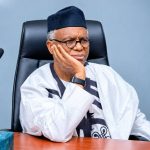
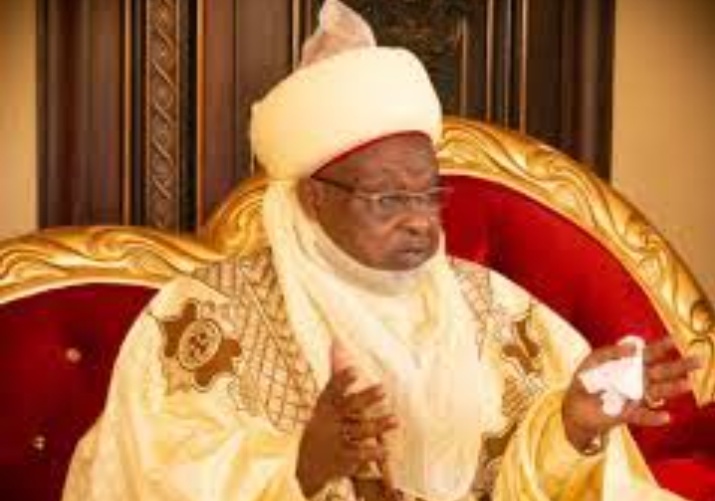
The Emir of Katsina, Alhaji Dr Abdulmumini Kabir Usman, has delivered a blunt message to senior All Progressives Congress (APC) politicians, challenging them to tell Nigerians the truth about the country’s condition instead of concentrating on political ambitions ahead of the 2027 general elections.
The monarch made the remarks during a visit to his palace by Senator Abdulaziz Abubakar Yari, Director-General of President Bola Ahmed Tinubu’s 2027 Presidential Campaign Council, alongside Katsina State Governor Dikko Umaru Radda and other political leaders.
The visit, reported by Katsina-based media and other news outlets on October 19 and 20, was part of political consultations ahead of the 2027 elections.
More Read
However, remarks attributed to the Emir in a circulating Hausa-language video have shifted attention from political mobilisation to the urgent questions of insecurity, hunger, economic hardship and the responsibilities of public officeholders. Source: NaijaOnPoint.
‘Tell Nigerians the Truth’
Addressing Senator Yari, the Emir stressed that political leaders must recognise their responsibility to the people and communicate the realities facing Nigerians to those in positions of authority.
More Read

He challenged the campaign chief to stand for the truth and reject political dishonesty, arguing that leadership should be about persuading people through dialogue and addressing their concerns rather than attacking opponents or pursuing personal interests.
The monarch’s message was direct: politicians cannot claim to be working for the people while ignoring the hardship and insecurity affecting their daily lives.
His intervention raises an important question for the political class: what is the value of campaign preparations when communities are still struggling with threats to their lives, livelihoods and access to basic services?
Insecurity and the Plight of Farmers
The Emir also raised concerns about insecurity and its consequences for farming communities, particularly the inability of farmers in affected areas to access their farmlands safely.
For rural communities, the consequences extend beyond fear. When farmers cannot cultivate their land, household incomes suffer, food production is threatened and the wider food supply chain comes under pressure.
More Read

These challenges are especially significant in a country where the cost of living and food affordability remain major concerns for millions of households.
Details circulating alongside the video claim that 52 schools are closed within the Emirate and that farming has been disrupted across 12 local government areas.
Headlineswave has not independently confirmed those specific figures and therefore does not present them as established facts.
Nevertheless, the broader security concerns are consistent with previous reports of school closures linked to banditry in Katsina State.
In December 2023, Governor Radda acknowledged that insecurity had forced the closure of schools in some frontline local government areas. Source: Channels Television.
Political Ambitions Versus Public Welfare
The Emir’s intervention comes at a time when political activities are intensifying ahead of the 2027 general elections.
The concern is not whether political parties should prepare for elections. It is whether political mobilisation is receiving greater attention than the problems citizens expect their leaders to solve.
For families living under the threat of bandit attacks, parents worried about interrupted education and farmers unable to work their land, campaign slogans alone offer little immediate relief.
The public deserves clear answers on security, food affordability, employment, education and the economic pressures confronting households.
Political leaders must also explain what concrete steps are being taken to address these problems and how citizens can measure progress.
Internal Rivalries Must Not Eclipse the People
The Emir’s broader message also addressed political divisions, hostility and the pursuit of personal advantage.
He urged political actors to embrace consultation, dialogue and persuasion instead of backbiting, envy and efforts to undermine one another.
His criticism is particularly relevant as political alignments and rivalries develop within parties ahead of the next election cycle.
When political disagreements dominate public attention while insecurity and economic hardship persist, citizens have every reason to demand that governance and public welfare remain the priority.
The challenge facing political leaders is to demonstrate that their competition for power is connected to tangible improvements in the lives of the people they seek to represent.
The 2027 Election and Vote Buying
The account circulating alongside the video also attributes to the Emir a warning that voters may accept food or money offered during campaigns but still make their own choices at the ballot box.
Food items and cash distributed during election campaigns cannot substitute for effective governance, public safety, accessible education or policies that improve living standards.
Nigerians have a legitimate interest in evaluating candidates on their records, programmes, accountability and ability to address the challenges facing their communities.
The credibility of an election depends not only on the conduct of political parties but also on the freedom of voters to make choices without inducement or intimidation.
HEADLINESWAVE POSITION: THE PEOPLE MUST COME FIRST
Headlineswave stands for people-centred journalism, accountability and the public interest.
The concerns raised in the reported remarks attributed to the Emir of Katsina speak to an essential principle of democratic governance: political power is a public responsibility, not a personal entitlement.
The people should not have to wait until another election season before their concerns receive attention. Security, education, food affordability and the ability to earn a living are not campaign favours; they are matters that demand sustained attention from those entrusted with public authority.
The administration and the ruling party should be judged through verifiable actions, policy outcomes and their response to the difficulties facing ordinary Nigerians—not merely through political declarations or campaign structures.
Equally, every opposition party seeking power should be prepared to explain how it intends to address these challenges.
As the country approaches the 2027 elections, the central question should remain straightforward: what are political leaders doing today to improve the lives of Nigerians?
The Emir’s reported intervention has brought that question into sharper focus.
For Headlineswave, the principle remains clear: the people must come before political ambition, and accountability must come before campaign promises.
This report draws on published coverage of the Emir’s meeting with the APC delegation and previous reporting on insecurity-related school closures in Katsina State.