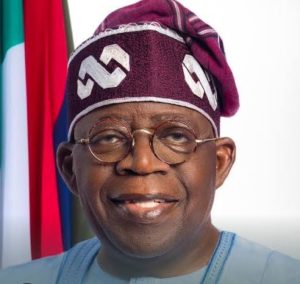



Monday Editorial: State Police Before 2027 — A Security Revolution or a New Political Weapon?
Nigeria may be on the verge of a historic policing reform. But with the 2027 general elections approaching, the country must confront an uncomfortable question: Can politicians be trusted with another powerful instrument of state authority?
For decades, the establishment of State Police has remained one of Nigeria’s most controversial political and constitutional debates.
Successive administrations have faced calls to decentralise the country’s policing structure, particularly as insecurity has exposed the limitations of relying on a centrally controlled police force to address security challenges across a country of
Nigeria’s size and diversity.
Today, that debate appears to be approaching a defining moment.
More Read

The National Assembly has passed the proposed constitutional amendment establishing State Police and forwarded it to the 36 State Houses of Assembly for consideration.
With the required constitutional threshold now reportedly surpassed, the National Assembly is preparing to transmit the amendment to President Bola Ahmed Tinubu this week.
If the remaining constitutional processes are completed, Nigeria could enter a new era of decentralised policing before the 2027 general elections.
More Read

But while the security argument for State Police is compelling, the political implications deserve equal attention.
Are we preparing to strengthen security at the grassroots, or could we inadvertently create another instrument for political control in the hands of state governors?
The long journey to State Police
The agitation for State Police did not begin with the current administration.
For years, the proposal has featured prominently in discussions about restructuring Nigeria’s federal system, improving internal security and reducing the burden on the Nigeria Police Force.
The argument has always been straightforward: a country with 36 states, different security challenges, diverse communities and a rapidly growing population should not depend entirely on a policing structure controlled from Abuja.
The debate gained renewed urgency as kidnapping, banditry, terrorism, communal violence and other criminal activities overwhelmed security arrangements in different parts of the country.
More Read

President Tinubu subsequently made the establishment of State Police a major component of his security reform agenda.
In June 2026, the Presidency announced significant progress following consultations involving the executive, National Assembly and security authorities.
A Presidential Working Group, chaired by Chief of Staff Femi Gbajabiamila, worked on the proposed National Policing Bill and the supporting legal framework.
On June 24, the Senate passed the State Police constitutional amendment proposal, while the House of Representatives passed its version on July 23 following further consideration.
The House proceedings were not without controversy, as members of the Minority Caucus staged a walkout over concerns about the voting process.
On September 16, the National Assembly transmitted the constitutional amendment to all 36 State Houses of Assembly for the constitutionally required ratification.
The process gathered momentum in November.
On November 3, the Clerk to the National Assembly, Kamoru Ogunlana, announced that 28 state assemblies had formally approved the amendment, exceeding the constitutional requirement of 24 states.
By November 15, Senate Leader Opeyemi Bamidele reported that 32 state assemblies had approved the proposal, while four were yet to submit their reports.
The National Assembly has indicated that it intends to proceed with transmission to the President this week.
The journey that began as a longstanding constitutional debate is therefore approaching a major milestone.
What exactly is being proposed?
The proposed constitutional amendment seeks to establish a dual policing structure comprising a Federal Police Service and State Police Services.
The Federal Police Service would retain responsibility for federal policing functions, including interstate and organised crime, terrorism, cybercrime, border security and federal institutions.
State Police Services would handle policing responsibilities within their respective states, including public safety, local law enforcement and the protection of lives and property.
The proposal also provides for State Police Service Commissions, national minimum policing standards, independent accountability arrangements and federal intervention under specified circumstances.
Importantly, a state police formation cannot commence operational policing merely because the constitutional amendment is approved.
It must first be established under a state law and certified as meeting national minimum standards under an Act of the National Assembly.
This means presidential assent, or completion of the constitutional alteration process, should not be confused with the immediate deployment of operational State Police across Nigeria.
The 2027 political question nobody should ignore
Here lies the most important aspect of this debate.
Nigeria is approaching another general election, and the possibility of State Police becoming operational around the same period introduces a new dimension to the country’s political calculations.
Governors are not neutral actors in electoral contests. They are often influential political leaders with candidates, parties and interests they want to protect.
In several states, sitting governors are deeply involved in determining who succeeds them, which political structures remain influential and which opposition forces are allowed to challenge their political dominance.
What happens when such political interests intersect with the authority to direct a state policing institution?
Imagine a governor whose preferred candidate is facing a strong opposition challenge.
Could the governor be tempted to use state police to frustrate opposition rallies, intimidate political organisers, harass campaign coordinators or restrict legitimate political gatherings?
Could security operatives be deployed selectively to create an atmosphere of fear in communities considered opposition strongholds?
Could election agents and political supporters become vulnerable to intimidation?
These are legitimate questions, particularly in a country where allegations of political interference in security operations have repeatedly featured in public discourse.
Election manipulation does not begin and end with ballot papers.
An election can be compromised long before voting day if opposition candidates cannot campaign freely, political supporters are intimidated, voters are threatened and citizens are denied the freedom to make independent choices.
A state police formation that is susceptible to partisan control could potentially become a powerful instrument for influencing the electoral environment.
This is the danger Nigeria must confront before the new system becomes operational.
The governor’s power versus the people’s rights
The proposed framework recognises the governor’s role in state policing.
It provides for the appointment of a State Commander of Police by the governor, subject to the recommendation of the National Police Council and confirmation by the State House of Assembly.
It also permits governors to issue lawful written directions on general policy relating to public safety and public order.
However, the proposed amendment contains important safeguards.
For instance, a governor’s directive cannot lawfully demand the arrest, detention, investigation or deployment of officers against a named individual or political party outside the law.
The proposal also prohibits the use of State Police to suppress lawful political activity, violate fundamental rights or advance partisan, ethnic, religious or personal interests.
Furthermore, the proposed framework provides for federal intervention where there is substantial evidence of serious abuse, including partisan or electoral intimidation.
These are important protections.
But the real question is whether they will be sufficiently independent, enforceable and effective when political interests are at stake.
A constitutional provision is only as strong as the institutions and people responsible for enforcing it.
Could poorer states create another security imbalance?
There is also an economic and social dimension to this proposal.
Nigeria’s 36 states do not have equal financial capacity.
Some states may be able to establish well-equipped police formations, recruit qualified personnel, provide modern surveillance technology and maintain effective training institutions.
Others may struggle to pay salaries, provide vehicles, maintain facilities and sustain professional training.
If the funding structure is not properly designed, State Police could create another inequality in which wealthy states enjoy relatively sophisticated security services while financially weaker states remain dependent on an overstretched Federal Police Service.
There is also the danger of recruitment becoming another avenue for political patronage, nepotism and ethnic favouritism.
A credible State Police system must therefore guarantee professional recruitment, adequate funding, national standards and equal protection for residents, regardless of their state of origin, ethnicity, religion or political affiliation.
The danger of ethnic and political policing
Nigeria is a country of diverse ethnic, religious and cultural communities.
In states where political competition overlaps with ethnic or religious divisions, a poorly supervised State Police formation could deepen existing tensions.
Minority communities may fear selective enforcement. Political opponents may question the impartiality of security operations. Residents who disagree with their governors may become suspicious of the very institution expected to protect them.
This is why State Police must be designed as an institution belonging to the entire state, not the political party controlling the Government House.
A governor is elected to administer a state for a limited period. The police institution must remain independent of that governor’s personal political ambitions.
What must happen before the 2027 elections?
The National Assembly must ensure that the consequential National Policing Bill and other supporting legislation address the following issues:
Operational independence: Governors must not have unrestricted authority to deploy police officers against political opponents or individual citizens.
Independent oversight: State Police Service Commissions must have sufficient institutional independence to supervise recruitment, promotion, discipline and professional standards.
Electoral neutrality: There must be enforceable protections against the use of state police to intimidate candidates, political parties, election observers and voters.
Federal intervention: The proposed constitutional safeguards against serious abuse must be supported by clear procedures that can be activated without partisan manipulation.
Human rights protection: Citizens must have accessible and independent channels for reporting police misconduct and obtaining justice.
Transparent funding: State Police must not become dependent on the personal goodwill or political interests of governors.
Public scrutiny: The final legal framework should be made available to Nigerians for informed debate before operational implementation.
INEC must also work with the relevant security institutions to establish clear election security protocols that guarantee impartial protection for all political parties and voters.
Our position: Security reform must not endanger democracy
Headlineswave recognises the argument for decentralising Nigeria’s policing structure.
The current security challenges demand serious institutional reforms, better intelligence gathering and a policing system capable of responding to local realities.
However, the establishment of State Police must not be treated as a political trophy or an achievement to be rushed into operation simply because the 2027 elections are approaching.
The timing makes caution even more necessary.
The same institution that could help a community confront kidnappers and criminal gangs could become a source of fear if placed under excessive political influence.
The same police formation that could protect citizens from violent criminals could be misused to intimidate political opponents if its independence is compromised.
Nigeria must not exchange one security challenge for a potentially greater democratic danger.
President Tinubu and the National Assembly have an opportunity to advance a major constitutional reform. But the success of that reform will depend not merely on its passage, but on the quality of the safeguards that accompany it.
We must remember that today’s governors will not remain in office forever. Today’s ruling parties may become tomorrow’s opposition. Today’s political opponents may become tomorrow’s elected leaders.
The policing institution must therefore be designed to protect everybody, including those who disagree with the government of the day.
The 2027 elections must not become the first experiment in testing whether governors can be trusted with politically powerful police formations.
Nigeria needs State Police that protect the people, not the political interests of those in power.
We need a security reform that strengthens federalism without weakening democracy.
And before the new policing structure becomes operational, Nigerians deserve convincing assurances that the police uniform will never become a campaign uniform.
State Police may be the next chapter in Nigeria’s security history. Let it not become the beginning of a dangerous chapter in our democratic history.