


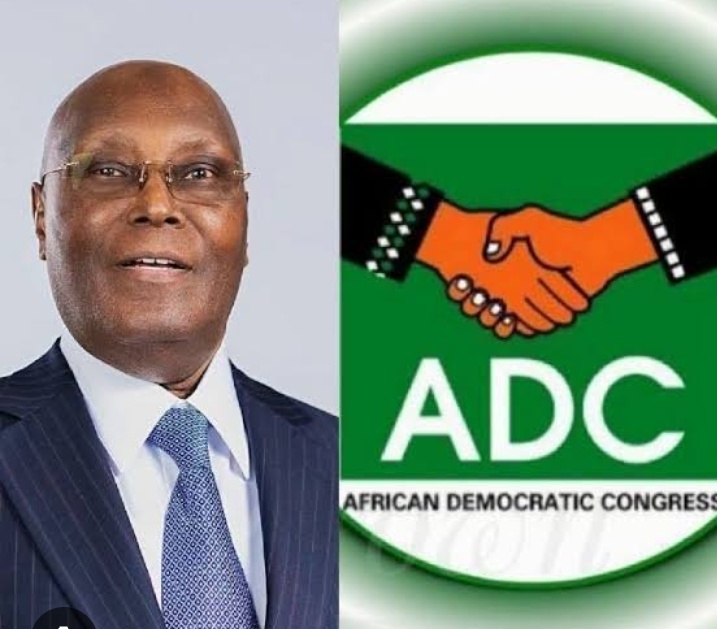
ADC’s 2027 Ambition Hits a Legal Wall: How One Court Judgment Puts Atiku, David Mark and 1,503 Candidates in Limbo
Nigeria’s opposition politics has entered another uncertain chapter following a Federal High Court judgment in Abuja that removed the David Mark-led leadership of the African Democratic Congress (ADC), invalidated the party’s presidential ticket held by former Vice President Atiku Abubakar and nullified the nominations of its other candidates for the 2027 general elections.
The November 5 judgment, delivered by Justice Peter Lifu, is significant not merely because of the political personalities affected, but because of its potentially far-reaching consequences for an opposition party that had become a major platform for politicians seeking an alternative to the ruling All Progressives Congress (APC).
In one judicial decision, the political arrangements through which the ADC had been preparing for the 2027 elections were thrown into serious uncertainty.
More Read

But what exactly happened, and what does it mean for Nigeria’s democracy?
The dispute behind the judgment
The case originated from a leadership disagreement within the ADC following the resignation of its former National Chairman, Ralph Nwosu.
More Read

Former Deputy National Chairman of the party, Nafiu Bala Gombe, challenged the emergence of former Senate President David Mark and his associates as the party’s new leadership.
Gombe argued that following Nwosu’s resignation, he was constitutionally entitled to assume the party’s leadership and that the process through which Mark and other officers emerged violated the ADC constitution and relevant electoral laws.
Justice Lifu upheld the plaintiff’s claims, declaring the Mark-led caretaker committee illegal and invalidating decisions taken under its authority.
These included the emergence of Rauf Aregbesola as National Secretary, the party’s presidential primary that produced Atiku Abubakar, and the nominations of other ADC candidates for the 2027 elections.
The court also directed INEC not to recognise decisions arising from the party’s 99th National Executive Committee meeting of July 27, 2025, and subsequent actions.
The implications are enormous. The judgment potentially affects 1,503 ADC candidates across different elective positions, according to reports on the ruling.

Why Atiku’s candidacy is affected
Atiku Abubakar’s problem is not simply that a court has questioned his qualification to contest a presidential election.
The central issue is the legal authority of the party structure that organised the primary election which produced him as its presidential candidate.
In other words, the court’s position strikes at the foundation of the process through which the ticket was obtained.
This distinction is important.
The judgment does not amount to a judicial determination that Atiku is personally disqualified from contesting Nigeria’s presidency. Rather, it invalidates the party leadership and processes through which his ADC nomination was secured.
That leaves his political ambition dependent, at least for now, on the outcome of further legal proceedings and the ability of the party to resolve its leadership dispute within the law.
Atiku has rejected the judgment and vowed to challenge it.
The question of conflicting court decisions
One particularly important aspect of the controversy is the existence of an earlier Federal High Court judgment concerning the ADC leadership dispute.
On July 2, 2026, Justice Musa Liman dismissed a separate suit brought by House of Representatives member Leke Abejide challenging the emergence of the Mark-led leadership.
Atiku has argued that the latest decision raises serious questions because of the earlier judgment.
However, the two cases were instituted by different plaintiffs. Their legal implications and the extent to which their decisions conflict will require careful examination by the appellate courts.
There is also an important procedural history. In April 2026, the Supreme Court directed the Federal High Court to conclude proceedings in the leadership dispute.
That direction should not be mistaken for a final Supreme Court judgment affirming the substantive legality of every action taken by the Mark-led leadership.
This distinction matters because the latest ruling is not necessarily the end of the legal battle.
What happens to the 1,503 candidates?
Perhaps the most consequential aspect of the judgment is its impact beyond the presidential contest.
The ADC had attracted politicians across the country, many of whom had secured or were pursuing tickets for governorship, senatorial, House of Representatives and state assembly elections.
With the court nullifying the party’s nominations, these candidates now face considerable uncertainty.
For politicians who have invested time, resources and political capital in securing ADC tickets, the development could mean returning to the drawing board.
For the party, it creates a much bigger organisational challenge: how to maintain its political structures, resolve its leadership crisis and protect its electoral participation while legal proceedings continue.
The situation also places INEC in a difficult position, particularly concerning which party leadership and subsequent nominations it can lawfully recognise.
A test for opposition politics and internal party democracy
The ADC crisis raises a broader question about the state of opposition politics in Nigeria.
Political coalitions are often built around shared electoral objectives, prominent personalities and the desire to challenge an incumbent government.
But political agreements and public declarations of unity cannot substitute for compliance with party constitutions and electoral laws.
A party seeking to provide an alternative government must first demonstrate that its own internal processes are credible, transparent and legally defensible.
The ADC’s current predicament illustrates the danger of allowing unresolved leadership disagreements to become prolonged legal battles, particularly when election preparations are already underway.
It also raises questions about how political parties manage leadership transitions, succession arrangements and the rights of existing party officials when new political alliances enter their structures.
These are institutional questions that extend beyond the immediate interests of Atiku, David Mark or Nafiu Bala Gombe.
Is this the end of ADC’s 2027 ambition?
Not necessarily.
The ADC has indicated that it will appeal the judgment. Atiku has also promised to challenge the decision, while his campaign team says it is preparing to seek appropriate interim legal relief.
The appellate courts will therefore become central to determining the next chapter of the dispute.
However, the timing is particularly consequential. With the 2027 elections approaching, prolonged litigation could create practical difficulties even if the party eventually secures favourable decisions.
The outcome will depend not on political declarations or competing press statements but on the decisions of the courts and the applicable electoral timetable.
There is also a broader democratic consideration. Nigeria benefits from a political environment in which opposition parties can organise, compete and present candidates within the law. Equally, political parties must be accountable to their constitutions and the laws governing elections.
Neither principle should be sacrificed.
The bigger picture
The most important lesson from the ADC judgment is that political ambition cannot outrun institutional legitimacy.
Atiku’s presidential ambition, David Mark’s leadership position and the aspirations of thousands of party members have become entangled in a dispute over who has the lawful authority to lead the ADC.
For now, the party faces a serious legal and organisational challenge.
Whether the judgment survives appeal, whether the ADC can restore its electoral arrangements and what happens to the affected candidates will determine the future of the party’s 2027 project.
Beyond the personalities involved, the unfolding dispute is a reminder that Nigeria’s democratic process depends not only on who wants to govern but also on whether the institutions and procedures through which political candidates emerge can withstand legal scrutiny.
For the ADC, the battle for 2027 may now depend as much on the courtroom as on the campaign trail.

This report is an independent analysis based on available reporting of the November 5, 2026 Federal High Court judgment, the parties’ reactions and the history of the ADC leadership dispute.
The judgment remains subject to appellate proceedings. Allegations of political interference by the ADC and its allies have not been established as judicial findings.