

Headlineswave Analysis: 8 Key Takeaways from Tinubu’s October 1 Independence Day Speech — What It Means for Nigerians
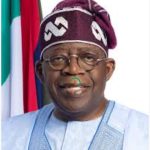
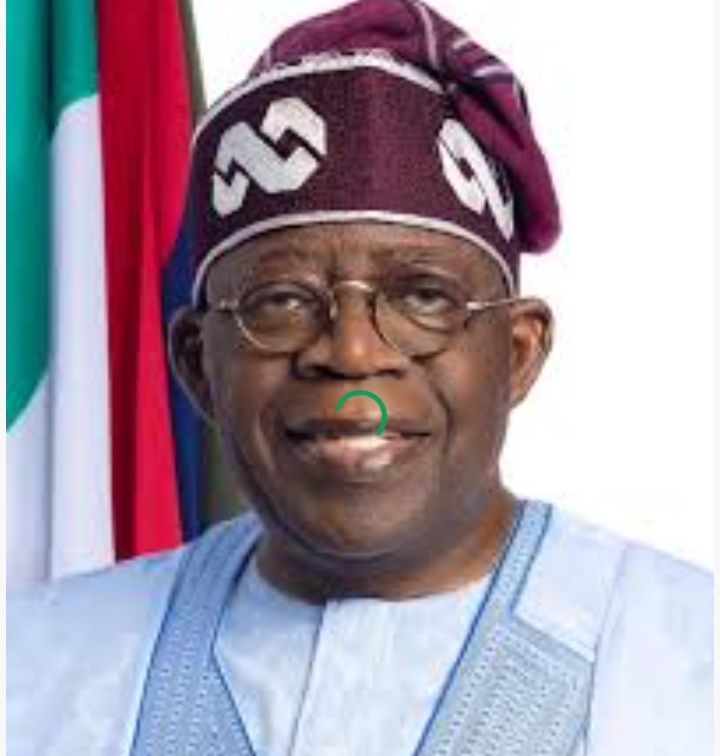
President Bola Ahmed Tinubu’s October 1, 2026 Independence Day address was not simply a celebration of Nigeria’s 66 years of independence.
It was also an attempt to close one chapter of his administration’s economic story and open another.
Under the theme “From Reform to Prosperity,” Tinubu declared that the difficult phase of his economic reforms was over and that Nigeria had entered what he described as an “age of prosperity.”
But beyond the presidential optimism, what does the speech actually mean for the Nigerian who is struggling with food prices, transportation, school fees, rent, electricity and healthcare?

Headlineswave examines eight key takeaways.
1. Tinubu says the era of painful reforms is over
The President’s central message was unmistakable: Nigeria has passed through the difficult stage of economic restructuring.
He argued that his administration spent the past three years correcting what he described as deep economic distortions, including the petrol subsidy regime and weaknesses in the foreign-exchange system.

His message now is that government must move from economic correction to economic reward.
That is a significant change in the administration’s narrative.
For three years, Nigerians were repeatedly asked to endure hardship because the reforms were expected to produce future benefits.
Now, the President says that future has arrived.
The challenge is therefore no longer simply to explain the reforms.
It is to demonstrate their benefits.
2. The President says the economy is stabilising
More Read

Tinubu pointed to more than 4 per cent economic growth, lower inflation from its previous peak, improved foreign reserves, greater stability in the foreign-exchange market, reduced oil theft and more than $6 billion in non-oil export revenue recorded in 2025.
These are important macroeconomic indicators.
The Federal Government has also previously said that the next phase of its economic programme is intended to turn this stability into jobs, higher incomes, lower costs and wider opportunities.
But there is an important distinction Nigerians should keep in mind:
A stronger economy on paper does not automatically mean a richer household.
The real test is whether economic stability eventually translates into greater purchasing power for ordinary Nigerians.
3. Tinubu’s biggest promise is lower cost of living
Perhaps the most important part of the speech for the masses was the President’s promise to make the cost of living a priority.
Tinubu said the government would attempt to reduce prices by lowering the cost of producing and transporting goods.
His strategy includes mechanised agriculture, irrigation, better access to farm inputs, storage, roads, railways and ports.
The logic is straightforward: if farmers produce more cheaply, less food is wasted, electricity becomes cheaper for manufacturers and transportation becomes more efficient, the savings should eventually reach consumers.
This is where Nigerians will be watching most closely.
Because Nigerians do not buy GDP.
They buy rice, beans, yam, bread, medicine and fuel.
4. Jobs are now a major test of the “prosperity” promise
Tinubu acknowledged that prosperity cannot simply mean better economic statistics.
He spoke of factories returning to production, expanded digital connectivity, skills development, business finance and opportunities for young Nigerians.
This is particularly important in a country where millions of young people enter the labour market every year.
For the unemployed graduate, prosperity is not a foreign-reserve figure.
It is a job.
For the young entrepreneur, it is affordable credit, reliable electricity and a market where customers can still afford to buy.
For the small manufacturer, it is an environment where production costs do not make locally produced goods uncompetitive.
The success of the next phase will therefore depend heavily on whether growth creates productive employment rather than simply improving headline economic indicators.
5. The President admits that millions are still struggling
One of the more significant passages in the speech was Tinubu’s acknowledgement that millions of Nigerians still struggle with basic needs.
He specifically mentioned families struggling to provide the next meal, pay school fees, settle medical bills or even afford transportation to work.
That acknowledgement matters.
It means the government recognises that macroeconomic improvements have not yet translated into universal economic comfort.
Tinubu attributed much of the hardship to problems accumulated over decades and argued that four years cannot erase problems that developed over generations.
There is truth in the fact that Nigeria’s structural problems did not begin in 2023.
But the political and economic responsibility of the current administration is equally clear:
Nigerians will judge the next phase by what changes while this government is in charge.
6. Social support is being presented as a bridge, not a permanent solution
Tinubu highlighted direct support for poorer households, improvements to the National Social Register, student financing through NELFUND and consumer credit through CREDICORP.
He was careful to describe these programmes as a bridge towards prosperity rather than substitutes for prosperity.
That distinction is important.
Cash transfers, student loans and consumer credit may provide relief or expand access to opportunities, but they cannot permanently replace an economy capable of generating decent incomes and affordable essential services.
The ultimate goal has to be an economy where Nigerians can earn enough to live with dignity, rather than one where government intervention is constantly required to cushion economic hardship.
7. “The sacrifices must now yield results”
This may be the most important underlying message of the entire speech.
Tinubu repeatedly framed the last three years as a period of sacrifice and difficult choices.
He now says Nigeria has reached the point where those sacrifices should begin producing tangible rewards.
That creates a new expectation.
The question Nigerians are entitled to ask is:
If the foundation has been repaired, when will the house become more comfortable to live in?
When will food become more affordable?
When will transport costs ease?
When will businesses have reliable electricity?
When will wages provide meaningful purchasing power?
When will young Nigerians find productive jobs?
These are the questions that will determine whether the President’s “age of prosperity” becomes more than a compelling phrase.
8. The real test: can Nigerians actually feel the recovery?
Ultimately, Tinubu’s Independence Day speech has established a new benchmark for his administration.
The President says Nigeria has corrected its economic course and that the era of reform has done its work.
Now comes the harder part.
The benefits must reach the people.
The government itself has previously acknowledged that the next phase must translate economic gains into improved living conditions for ordinary Nigerians.
This is where the difference between economic recovery and economic relief becomes crucial.
A trader does not measure prosperity by foreign reserves.
A farmer measures it by what remains after production costs.
A worker measures it by what his salary can buy.
A family measures it by whether there is enough money for food, rent, school fees and medical care.
A young Nigerian measures it by whether there is a decent opportunity to build a future at home.
The Headlineswave Verdict
President Tinubu’s October 1 speech presents a clear argument: Nigeria has endured the painful medicine, the economic foundation has been repaired, and the country should now expect prosperity.
There is evidence of improving macroeconomic stability, and those gains deserve recognition.
But there is also a reality that cannot be ignored: millions of Nigerians are still measuring the economy from the marketplace, the filling station, the transport park, the classroom, the hospital and the family kitchen.
That is why the next phase will be different.
The government has spent three years asking Nigerians to believe that the sacrifices would eventually produce results.
Now, Nigerians will be looking for those results.
The success of the “age of prosperity” will ultimately not be determined by how impressive the economic numbers sound in Abuja.
It will be determined by whether the Nigerian people can finally say:
“Life is becoming easier.”
This analysis is based on President Tinubu’s October 1, 2026 Independence Day address and supporting information from the Federal Government, National Bureau of Statistics and contemporary reporting.
Headlineswave distinguishes the President’s claims and policy promises from its independent analysis of their implications for ordinary Nigerians.