


Peter Obi’s ‘Elite Conspiracy’ Remark Sets X Ablaze as Nigerians Debate Ethnicity, Religion and Nigeria’s Future
Also Read FactCheck: Did Ambassador Fani Kayode Cross the Line of Diplomatic Protocol in South Africa?
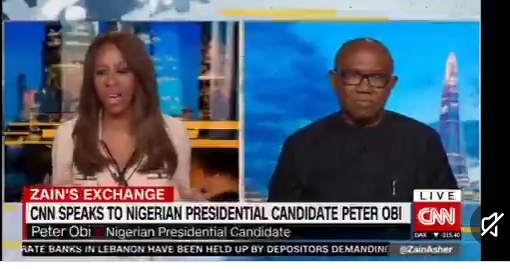
A powerful statement by former Anambra State Governor and Nigeria Democratic Congress (NDC) presidential hopeful, Peter Obi, has reignited a fierce conversation about Nigeria’s political culture, with Nigerians on X debating his assertion that ethnicity, religion, political connections and the politics of entitlement have become instruments for keeping the country underdeveloped.
The statement, which resurfaced on Tuesday, November 17, 2026, through a video of Obi’s CNN interview with Zain Asher, has attracted considerable engagement, drawing applause from supporters and provoking wider discussions about the country’s leadership crisis ahead of the 2027 general elections.
In the interview, Obi declared:
“All you hear about ethnicity, religion, connection, my turn, is elite conspiracy to keep Nigeria underdeveloped.”
More Read
It is a statement that goes beyond ordinary political rhetoric. At its heart is a challenge to a political system in which the identity of a candidate, rather than the substance of his leadership credentials, can become the dominant consideration in the struggle for political power.
The argument behind Obi’s controversial statement
During the CNN conversation, Obi argued that Nigeria must abandon the practice of electing leaders on the basis of ethnicity, religion, personal connections and other forms of bias.
More Read

He advocated an electoral culture driven by character, capacity, competence and commitment to doing what is right.
His argument was that these identity-based calculations have consistently distracted Nigerians from the fundamental questions of governance and accountability.
The former governor also maintained that the country’s developmental challenges affect citizens across regional and religious boundaries.
His point was particularly significant: insecurity, poor infrastructure, poverty and economic hardship are not exclusive to any ethnic group or geopolitical zone.
For Obi, political elites benefit when Nigerians remain divided along these lines instead of collectively demanding better governance.
Nigerians react: What commentators are saying on X(Former Twitter)
The video shared by Ramotu Olaniyi (@ramotuolaniyi) generated substantial engagement. At the time captured in the screenshot, her post had recorded approximately 97,700 views, 2,300 reposts and 6,000 likes.
The reactions reveal different dimensions of the political conversation.
Oz (@nextlevel71) appeared to capture the central message of Obi’s argument, writing:
“Elite conspiracy to keep Nigeria underdeveloped.”
He added that many people unfortunately still fail to see beyond the statement.
TheRealArinze praised Obi for refusing to allow ethnic identity to dominate his conversation with CNN anchor Zain Asher.
He specifically highlighted Obi’s decision not to make their shared Igbo identity the focus of the interview, arguing that the former governor remained focused on the larger Nigerian question.
KweKwe001 offered a more direct interpretation of the statement, arguing that when politicians have little to offer citizens, they resort to religious and ethnic sentiments to conceal their shortcomings.
According to the commentator, such tactics help keep the country disorganised and underdeveloped.
tmm_ezekiel drew attention to the importance of Obi’s international media engagements, suggesting that Nigerians in the diaspora could play a significant role in influencing the country’s political future through their numbers, energy and support.
Splendour offered a striking political comparison, declaring that removing
Tinubu and the APC from power would be like Nigeria gaining another independence.
Ipreferpatrick questioned whether other prominent political figures, including President Bola Tinubu and former Vice-President Atiku Abubakar, could command a similar presence in such an international television setting.
The commentator also wondered why the South-West had not presented Professor Yemi Osinbajo as a potential political alternative.
Engr-Savvy praised Obi’s fluency and ability to articulate his thoughts, making a comparison with Tinubu’s public communication style.
Christian Ilodigwe expressed confidence in Obi’s political prospects, insisting that the APC should not underestimate the political challenge ahead.
Ing. Onokhual… was equally enthusiastic, writing:
“That’s my president on CNN. Man you must rule this country.”
Elaig expressed optimism about the possibility of a Peter Obi and Rabiu Kwankwaso political partnership, predicting that the combination could pose a serious challenge to the APC.
Alex (@ifeanyi_jib…) argued that tribalism could lose its political influence when the current political order changes.
Other commentators, including Retard checker, Daughter of Mos… and Sam Sam, also contributed to the discussion, reflecting the different expectations, frustrations and political calculations surrounding the next general election.
While many of the reactions were supportive, they also exposed the extent to which Nigerians remain divided over the country’s political direction.
Beyond the applause: Is Nigeria trapped in identity politics?
Perhaps the most important aspect of the renewed conversation is the question of whether Nigeria can genuinely move beyond the politics of ethnic and religious entitlement.
For decades, political competition in the country has frequently been influenced by arguments about regional representation, religious balancing and whose turn it is to occupy the highest political office.
Although diversity and equitable representation are legitimate considerations in a plural society, they become dangerous when used to shield political leaders from scrutiny or to discourage citizens from demanding accountability.
A political candidate should not automatically enjoy public support simply because he shares an ethnic identity or religious affiliation with voters.
Equally, no competent candidate should be rejected simply because he comes from a different part of the country.
The Nigerian farmer struggling with insecurity, the trader battling inflation, the unemployed graduate searching for opportunities and the family struggling with the rising cost of living all have expectations that transcend ethnic and religious boundaries.
The real question should be whether those seeking political power have the competence, integrity, experience and commitment required to address these challenges.
The 2027 test: Will Nigerians choose competence over identity?
With the 2027 general elections approaching, Obi’s argument raises an important challenge for political parties, candidates and the Nigerian electorate.
Will the next election be determined by the familiar calculations of ethnicity, religion and political entitlement, or will Nigerians insist on a serious assessment of candidates’ records, policies and capacity to govern?
It is not enough for politicians to preach national unity during election campaigns. They must demonstrate it through their conduct, political choices and commitment to equitable development.
Similarly, voters must be willing to hold political leaders accountable, irrespective of their ethnic or religious affiliations.
Obi’s statement may resonate strongly with his supporters, but its underlying message deserves consideration beyond partisan boundaries.
Nigeria cannot overcome its developmental challenges if citizens are continually persuaded to defend political identities instead of demanding results.
The country needs a political culture in which public office is regarded as a responsibility, not an entitlement; leadership is judged by performance, not ancestry; and national development takes precedence over sectional interests.
Ultimately, the 2027 election will offer Nigerians another opportunity to demonstrate what kind of political future they want.
THE BIG QUESTION:
Are ethnic and religious sentiments genuinely being exploited by political elites to keep Nigerians divided, or have citizens themselves become willing participants in a system that rewards identity over competence?
We want to hear your views.
Join the conversation and share this report.
The quotation attributed to Peter Obi is from his CNN interview with Zain Asher on September 16, 2022. The video resurfaced on X on November 17, 2026, generating renewed engagement.
The social media reactions featured in this report are drawn from the supplied screenshots. They represent individual opinions and should not be interpreted as a scientific representation of nationwide public opinion.
Sources: CNN interview with Peter Obi; TheCable’s September 16, 2022 report; reactions on X.