

MONDAY EDITORIAL
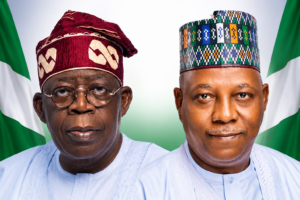
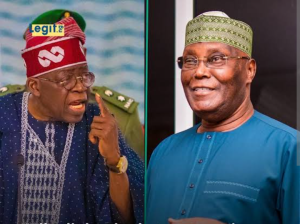
As Nigeria gradually enters the 2027 election season, one issue has once again returned to the centre of national discourse: the decision of the ruling All Progressives Congress (APC) to retain a Muslim-Muslim presidential ticket.
The debate has generated passionate arguments from both supporters and critics. For some, it is a settled matter. The same-faith ticket won in 2023, proving that Nigerians are capable of looking beyond religion.
To others, however, the issue was never simply about winning an election. It was—and remains—about national inclusion, political symbolism and the long-term stability of one of the world’s most diverse democracies.
That is the question the APC must answer before Nigerians return to the polls.
More Read
This editorial is not an attack on Islam. Neither is it a suggestion that Muslims are less qualified to lead Nigeria. Such an argument would be both unconstitutional and unjust. Nigeria belongs equally to Christians, Muslims and adherents of every other faith.
Every Nigerian has an equal right to aspire to the presidency.
The real issue is whether political wisdom sometimes demands more than constitutional legality.
More Read
Throughout history, the strongest democracies have recognised that leadership is not merely about exercising power; it is also about inspiring confidence among diverse populations.
The United States offers a useful lesson. Although its Constitution does not require political balance on presidential tickets, parties have traditionally considered geography, ideology, race, gender and experience when selecting running mates.
Democrats and Republicans alike understand that representation helps broaden national appeal and reassures different constituencies that they have a place in government.
India, the world’s largest democracy, has similarly relied on inclusive politics to manage its extraordinary religious, linguistic and ethnic diversity.
South Africa’s post-apartheid democratic transition was built on deliberate inclusion because its leaders understood that reconciliation required every major community to feel represented.
Nigeria is no less complex.
More Read
With over 250 ethnic groups and two major religions, ours is perhaps Africa’s most diverse nation. It is this diversity that inspired the Federal Character Principle in Section 14(3) of the 1999 Constitution.
Although the Constitution does not compel religious balancing on presidential tickets, its underlying philosophy is unmistakable: no section of the country should feel permanently excluded from national leadership.
That principle has helped preserve the delicate balance upon which Nigeria’s unity rests.
For more than two decades after the return to democracy in 1999, major political parties generally reflected this unwritten understanding by balancing presidential tickets between North and South and between Christianity and Islam.
The APC departed from that tradition in 2023 when it fielded Bola Ahmed Tinubu and Kashim Shettima. The party argued that competence, political chemistry and electoral strength were more important than religious considerations. Nigerians voted, and the ticket won.
That victory settled one argument.
It demonstrated that a same-faith ticket can secure electoral success.
But it did not settle another, perhaps more important, question.
Has it strengthened national unity?
Reasonable Nigerians answer that question differently.
Supporters insist that government appointments, economic reforms and security policies should be the true measure of leadership—not the religion of elected officials. They argue that competence, not identity, should define democratic choices.
Critics, however, maintain that in a nation as sensitive as Nigeria, perception matters almost as much as policy.
They fear that another same-faith ticket could deepen feelings of political exclusion among sections of the country, regardless of the government’s intentions.
Both perspectives deserve to be heard.
Competence is indispensable. Nigeria cannot afford leadership chosen merely to satisfy symbolic expectations.
Yet inclusion is also a form of competence.
The world’s most successful organisations—from governments to multinational corporations—have increasingly embraced diversity because people are more likely to trust institutions in which they can see themselves represented.
Nigeria today faces enormous challenges: inflation, unemployment, insecurity, declining purchasing power, educational decline, brain drain and widespread public frustration.
These problems demand visionary leadership, but they also require leadership that unites rather than inadvertently divides.
A presidential ticket that visibly reflects Nigeria’s diversity will not automatically solve these crises.
It will not reduce food prices overnight.
It will not defeat terrorists by itself.
It will not create millions of jobs.
But it can strengthen the sense of shared ownership that every stable democracy depends upon.
That is why the debate over the APC’s Muslim-Muslim ticket is larger than one political party or one election cycle.
It is about the future character of the Nigerian state.
The APC has every constitutional right to nominate whoever it chooses. That right should never be questioned.
Likewise, Nigerians have every democratic right to ask whether those choices advance not only electoral victory but also national cohesion.
As campaigns begin to gather momentum, every political party—not only the APC—should remember a timeless lesson from history: elections are won through numbers, but nations endure through inclusion.
The greatest leaders are remembered not merely because they won power, but because they built bridges across divisions and inspired confidence among people who differed in religion, ethnicity and political persuasion.
That is the higher calling of leadership.
And that is the question before the APC—and indeed every party seeking power in 2027:
Will your ticket merely win an election, or will it strengthen the Nigerian nation?
— Headlineswave Editorial Board