

EndSARS at Six: Tear Gas Disrupts Lagos Memorial as Justice Questions Remain Unanswered
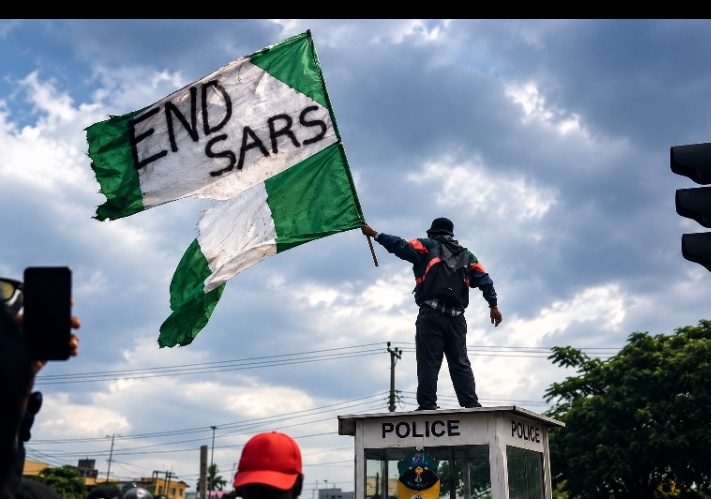
Six years after thousands of Nigerians took to the streets to demand an end to police brutality, the sixth anniversary of the #EndSARS protests has renewed questions about police accountability, the right to peaceful assembly and justice for victims of the October 2020 demonstrations.
In Lagos, Tuesday’s anniversary commemoration at the Lekki Toll Gate ended in a confrontation after police officers fired tear gas to disperse participants gathered to remember those who died or went missing during the protests.
The incident disrupted a planned wreath-laying ceremony organised by the Enough is Enough (EiE) movement. Among those present were Gbadebo Rhodes-Vivour, the Lagos State governorship candidate of the African Democratic Congress (ADC), and Funso Doherty of the Nigeria Democratic Congress (NDC).
Reports by Channels Television, Premium Times and The Guardian Nigeria reported the disruption, making the Lekki Toll Gate the central documented flashpoint of the sixth-anniversary commemoration.

But beyond the confrontation, the anniversary raises a larger question: six years after the government disbanded the Special Anti-Robbery Squad (SARS), what progress has Nigeria made in addressing the grievances that brought protesters onto the streets?
Lagos: Tear Gas Brings Memorial to an Abrupt End
The Lekki Toll Gate remains one of the most recognisable symbols of the #EndSARS movement because of the shooting of protesters there on October 20, 2020.
More Read
For the sixth anniversary, organisers planned a wreath-laying ceremony to honour people who lost their lives or went missing during the protests.
According to Premium Times, the planned ceremony was scheduled for 11 a.m. and included 15 wreaths for victims and people reported missing in connection with the protests.
However, the commemoration was disrupted when police fired tear gas, forcing participants to flee before they could complete the ceremony.
Channels Television also reported that Rhodes-Vivour and Doherty were among those at the gathering.
The incident revived concerns about the treatment of peaceful demonstrators and the extent to which citizens can exercise their constitutional right to assemble and commemorate victims of alleged abuses.
Although the use of tear gas and the disruption were reported by multiple news organisations, the reports reviewed do not establish a confirmed number of people injured or arrested during Tuesday’s incident.
More Read
The Lagos State Police Command’s explanation for the operation, including the precise grounds for dispersing the gathering, is important to a complete assessment of the incident.
Abuja and Other Cities: The Nationwide Picture Remains Incomplete
The #EndSARS movement was never confined to Lagos. The original protests spread across Nigeria in October 2020, drawing young people and other citizens into demonstrations against police brutality, extortion and alleged extrajudicial killings.
However, the nationwide significance of the movement should not be confused with evidence that physical protests occurred in every major city during the 2026 anniversary.
The reports reviewed for this article did not establish a sufficiently corroborated, city-by-city account of anniversary rallies in Abuja, Port Harcourt, Enugu, Ibadan, Benin City and other major urban centres on Tuesday.
But despite the disruption in Lagos, the anniversary demonstrated the continuing significance of the #EndSARS movement in Nigeria’s public debate.
1. The victims have not been forgotten
The planned wreath-laying ceremony was an attempt to preserve the memory of those who died or went missing during the 2020 protests.
The organisers’ decision to identify victims and plan individual wreaths gave the commemoration a specific purpose beyond general political statements.
The continued remembrance also reflects the concerns of families and survivors who want the circumstances surrounding the deaths, injuries and disappearances associated with the protests properly investigated.
2. Police reform remains a public concern
The disbandment of SARS in October 2020 was a major government response to the protests.
However, the original movement demanded more than the dissolution of one police unit. Its demands included accountability for officers implicated in abuses, compensation for victims, an end to unlawful detention and extortion, and changes to policing practices.
The sixth anniversary therefore provides an opportunity to assess whether those broader objectives have been achieved.
3. Civil-society organisations continue to press for justice
The Corporate Accountability and Public Participation Africa (CAPPA) has called for an apology to victims, compensation and prosecution where investigations establish criminal responsibility.
Such demands show that the anniversary remains a platform for pressing the authorities to address outstanding issues rather than merely recalling the events of 2020.
The Lows: Why the Anniversary Raises Difficult Questions
1. A memorial was disrupted by the police
The most immediate setback was the dispersal of participants before they could complete their planned ceremony.
Section 40 of Nigeria’s Constitution protects the right to peaceful assembly and association, subject to lawful limitations.
The circumstances surrounding the use of tear gas therefore raise questions about the grounds for the operation, the necessity of the force used and whether less intrusive alternatives were available.
Those questions require an explanation from the relevant police authorities and a careful assessment of the evidence.
2. The dispute over Lekki has not been conclusively resolved in the public mind
The October 20, 2020, shooting at the Lekki Toll Gate remains one of the most contested episodes in recent Nigerian history.
The Lagos State Judicial Panel of Inquiry investigated the incident and reported that protesters were shot at, injured and killed.
The Lagos State Government subsequently challenged important aspects of the panel’s findings through its White Paper.
The differing positions have contributed to continuing disputes over casualties, responsibility and accountability.
A responsible assessment must distinguish the panel’s findings, the government’s response, eyewitness accounts and other independently documented evidence.
Disagreement over aspects of an investigation does not make the underlying questions of responsibility and accountability disappear.
3. The wider allegations of police abuse remain a concern
In its October 20, 2026, coverage, Premium Times highlighted concerns raised by the Rule of Law and Accountability Advocacy Centre (RULAAC) about continuing allegations of torture, unlawful detention, extortion, extrajudicial killings and enforced disappearances.
These allegations should be investigated individually and assessed against available evidence. They should not be treated as proof that every police officer or command engages in such conduct.
Nevertheless, the persistence of complaints about police misconduct makes independent investigations, transparent disciplinary processes and accessible remedies for victims essential to rebuilding public trust.
What Happened in October 2020?
The anniversary is rooted in the nationwide demonstrations that began in October 2020, when Nigerians demanded an end to abuses associated particularly with SARS.
Protesters raised concerns about alleged extortion, arbitrary arrests, torture and extrajudicial killings. Demonstrations spread across several cities, turning
#EndSARS into a major national movement.
On October 20, 2020, soldiers opened fire on protesters at the Lekki Toll Gate. The incident generated widespread outrage and calls for an independent investigation.
Amnesty International documented killings by security forces during the protests, including at Lekki and the Alausa protest ground in Lagos.
The Lagos judicial panel subsequently issued findings on the Lekki incident, which the state government disputed in important respects.
These historical findings should be distinguished from events on October 20, 2026. The latest tear-gas incident was a separate event during a memorial, not evidence that the same events or casualties occurred again.
What Has Changed Since SARS Was Disbanded?
Nigeria has taken institutional steps since the protests, including the enactment of the Police Act 2020, which provides a framework for policing, accountability and respect for human rights.
However, the existence of legislation does not, on its own, establish how effectively it is being implemented.
A meaningful assessment of police reform would examine:
How many complaints against police officers have been investigated and resolved.
Whether officers found responsible for abuses have faced appropriate disciplinary or criminal proceedings.
Whether victims and affected families have received compensation where ordered or agreed.
Whether recommendations from judicial panels have been implemented.
Whether safeguards against unlawful detention, torture and excessive force are working in practice.
Whether Nigerians can report police misconduct without fear of retaliation.
Publishing reliable figures on these issues would provide a stronger basis for judging progress than relying solely on official assurances or anniversary speeches.
The Unfinished Business of #EndSARS
The sixth anniversary is a reminder that the movement’s demands were not limited to the disbandment of SARS.
They included the need for security agencies to respect citizens’ rights, for credible investigations into alleged abuses, and for victims to obtain justice.
The disruption at Lekki does not, by itself, establish the full state of police reform across Nigeria. It does, however, raise legitimate questions about how the authorities balance public safety with peaceful assembly and the right to commemorate victims.
The answers must come from transparent evidence, official explanations and accountability where wrongdoing is established.
Conclusion: Six Years On, Remembrance Is Not Enough
Six years after #EndSARS shook Nigeria, the movement’s central questions remain relevant: how should police misconduct be investigated, how should victims obtain justice, and what safeguards will prevent abuses from recurring?
In Lagos, the sixth-anniversary memorial was disrupted by tear gas before participants could complete their planned wreath-laying ceremony. The incident renewed concerns about peaceful assembly and the relationship between citizens and security agencies.
Ultimately, the measure of progress is not simply that SARS was disbanded. It is whether citizens can seek justice, whether credible allegations are investigated impartially, and whether institutions are held accountable when violations are established.
For the families of those killed or missing during the 2020 protests, the search for answers remains deeply personal.
For Nigeria, the challenge is to ensure that remembrance leads to accountability, and that the demand for police reform produces measurable changes in the lives of ordinary citizens.
Six years after #EndSARS, the question is no longer just what Nigerians demanded in 2020. It is what the authorities can demonstrate they have done to address those demands.