

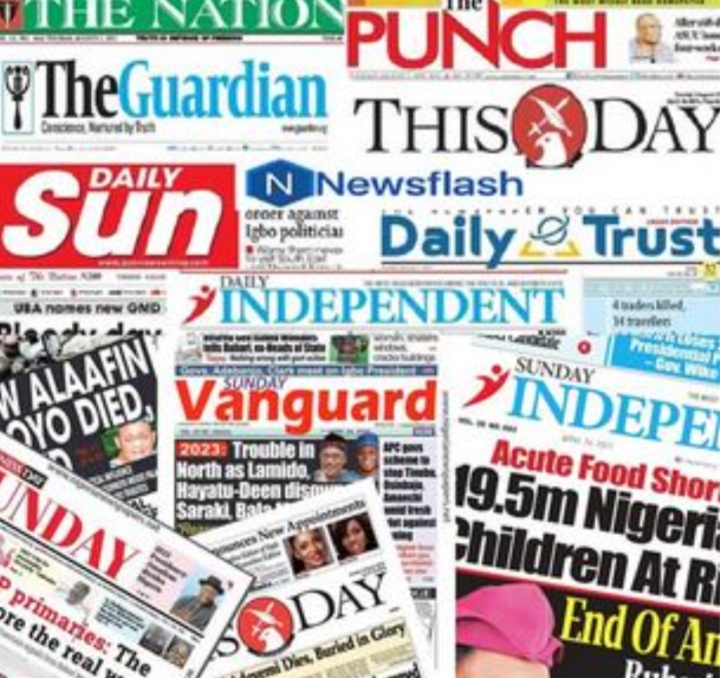
Top News Headlines for the Week That Was: Monday, October 12, to Saturday, October 17, 2026
Nigeria’s political landscape, the rising cost of living, electoral controversies and persistent security challenges dominated the news this week.
From the growing controversy over the 2027 election candidates’ list released by the Independent National Electoral Commission (INEC) to the expansion of President Bola Tinubu’s campaign council, the week’s developments raised fresh questions about political accountability and the future of Nigeria’s democracy.
The extension of Dangote Refinery’s share offer, concerns over electricity supply, the debate over state police and renewed scrutiny of the country’s security challenges also featured prominently.
Here are the major stories that shaped the week.
More Read
1. INEC Candidate List Controversy Raises Questions Ahead of 2027 Elections
The Independent National Electoral Commission came under pressure after several governorship and other candidates were reportedly omitted from its final list for the 2027 general elections.
Among the affected politicians were Isa Pantami in Gombe, Ladi Adebutu in Ogun and Aminu Abdulsalam Gwarzo in Kano.
More Read
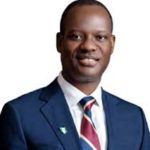
INEC explained that its action followed the Supreme Court’s interpretation of legal requirements governing party membership registers and primary elections.
The commission gave affected parties until October 24 to formally challenge omissions they believe were wrongful.
The controversy has placed electoral transparency and the responsibility of political parties to comply with the law under renewed scrutiny.
Why it matters:
Nigerians need an electoral process in which eligible candidates are treated according to the law and disputes are resolved transparently, without undermining voters’ choices.
2. APC Expands Tinubu’s 2027 Campaign Council, Names Wike, Soludo and Adeleke
More Read
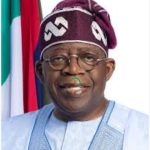
The All Progressives Congress expanded its presidential campaign structure ahead of the 2027 election, naming FCT Minister Nyesom Wike, Anambra State Governor Chukwuma Soludo and Osun State Governor Ademola Adeleke among its campaign coordinators.
Wike was assigned responsibility for Rivers State and the Federal Capital Territory, while Soludo and Adeleke were named coordinators for Anambra and Osun, respectively.
The appointments attracted attention because the three politicians are associated with parties other than the APC.
The development reflects the ruling party’s strategy of building a broad political coalition around Tinubu’s re-election bid.
Why it matters:
The arrangement raises questions about political loyalty, party identity and the interests that guide alliances ahead of a major election. Ultimately, Nigerians will judge political partnerships by their policies, records and proposed solutions to the country’s problems.
3. Wike Attacks Peter Obi Over IDP Camp Visits as 2027 Politics Heats Up
The Minister of the Federal Capital Territory, Nyesom Wike, questioned the motives behind Peter Obi’s visits to internally displaced persons’ camps, suggesting that politicians could use public displays of humility to attract votes.
Wike made the remarks during the Idoma Hall of Fame induction ceremony in Abuja on October 15.
Obi, the Nigeria Democratic Congress (NDC) presidential candidate for 2027, has consistently presented himself as a politician concerned about governance, public spending and the welfare of ordinary Nigerians.
The exchange forms part of the intensifying political debate ahead of the next presidential election.
Why it matters:
Rather than allowing political personalities to dominate the debate, voters deserve serious discussions about insecurity, poverty, education, healthcare, jobs and the cost of living. Politicians should be judged by their records, policies and willingness to serve the public.
4. Kwankwaso Defends Peter Obi After Shettima’s ‘Bogus Statistics’ Remark
The 2027 political contest witnessed another exchange after Vice President Kashim Shettima criticised Peter Obi’s use of economic statistics.
Rabiu Kwankwaso, the NDC vice-presidential candidate, rejected Shettima’s characterisation of Obi, arguing that he had cross-checked figures cited by the former Anambra governor and found most of them accurate.
The exchange has further intensified the debate over economic performance, political messaging and the credibility of competing claims ahead of the 2027 elections.
Why it matters:
Nigerians need facts and verifiable figures to assess government performance. Political leaders should explain economic data clearly and allow independent scrutiny rather than reduce important policy debates to personal attacks.
5. Dangote Refinery Extends ₦2.15 Trillion Share Offer to October 27
Dangote Petroleum Refinery extended its initial public offering by two weeks, moving the closing date from October 13 to October 27, 2026.
The offer comprises 4.1 billion shares priced at ₦525 each, with a potential fundraising value of approximately ₦2.15 trillion.
The extension is intended to give more investors an opportunity to participate in the offer. However, claims about the level of subscriptions should be distinguished from independently verified final figures.
Why it matters:
The offer could widen public participation in a major industrial venture, but investors need transparent disclosures about the company’s financial position, risks, valuation and the terms of the investment. Prospective shareholders should study the offer documents before committing their money.
6. Nigeria’s Inflation Falls to 14.63 Per Cent, but Household Pressure Remains
Nigeria’s headline inflation rate fell to 14.63 per cent in September 2026, down from 15.39 per cent in August, according to figures reported by the National Bureau of Statistics.
The decline offered a positive headline economic indicator amid continuing debate over the Federal Government’s reforms.
However, lower inflation does not automatically mean that prices have returned to previous levels. It generally means that prices are rising more slowly than before.
For households already struggling with food, transport, rent, electricity and school expenses, the distinction is important.
Why it matters:
The real test of economic recovery is whether families can afford essential goods, workers can meet their expenses and small businesses can operate without constant pressure from rising costs.
7. State Police Proposal Faces Setback as 31 State Assemblies Remain Undecided
The proposed constitutional amendment to establish state police encountered a setback after only five of Nigeria’s 36 State Houses of Assembly had approved the proposal as of October 15, according to reports.
The development came amid continuing concerns over kidnappings, insurgency, armed attacks and the safety of travellers and communities.
Supporters of state police argue that decentralised policing could improve local intelligence and response times. Critics, however, have raised concerns about political interference, accountability and the potential misuse of state security structures.
Why it matters:
Nigerians need effective security regardless of the final policing model. Any reform must protect citizens’ rights, establish clear oversight and ensure that security agencies serve the public rather than political interests.
8. Military Plane Crash Victims’ Families Demand Answers
Families of victims of the Nigerian Air Force aircraft crash of October 5 continued to seek information about the tragedy and the support available to them.
A Reuters report published on October 16 said the crash killed all 25 people aboard, including 19 military personnel and six civilians.
Relatives expressed frustration over communication and the limited information they had received.
President Bola Tinubu had ordered an investigation into the crash.
Why it matters:
Beyond the immediate loss of lives, the incident raises questions about aviation safety, communication with bereaved families and the need for a credible investigation. The public deserves a clear account of what happened and what measures will prevent similar tragedies.
9. INEC’s Voter Register Display and PVC Collection Put Voters on Alert
INEC continued its preparations for the 2027 elections through voter-register display and PVC collection exercises in designated locations.
In the Federal Capital Territory, the commission announced an exercise across 62 Registration Area Centres, with collection arrangements also extending to area council offices.
The exercise was intended to allow voters to check their registration details and collect available PVCs.
Why it matters:
Voters should confirm their names, photographs and polling-unit information rather than wait until election day to discover a problem. Electoral authorities must also provide clear information and accessible procedures for resolving errors.
10. Federal Government Promises Better Electricity Supply Amid Tariff Concerns
The Federal Government renewed assurances about improving electricity supply and said there was no plan for an immediate tariff increase, according to reports published on October 16.
The Minister of Power, Joseph Tegbe, made the remarks during a groundbreaking ceremony for five mini-grid projects in Oyo State, with a combined capacity of 17.7 megawatts.
The announcement comes as households and businesses continue to grapple with the cost of electricity, fuel for generators and unreliable power supply.
Why it matters:
Nigerians need measurable improvements, not promises alone. Reliable electricity at a cost households and businesses can afford remains essential to productivity, employment and economic growth.
11. INEC’s Candidate List Disputes and 2027 Legal Battles Continue
Beyond the immediate controversy over omitted candidates, legal disputes connected to the 2027 elections remained in the headlines.
On October 14, reports indicated that the Federal High Court in Abuja had fixed November 20 to decide an application by former Vice President Atiku Abubakar seeking to amend his case concerning President Tinubu’s NYSC certificate.
The proceedings concern an application to amend the case, not a final judgment on the substantive allegations.
Why it matters:
Election-related litigation should be resolved through due process and credible evidence. Nigerians deserve accurate reporting that distinguishes allegations, applications, court decisions and proven facts.
12. Nigeria’s Security Crisis Remains a Major Test for Government
Security continued to feature prominently in national discussions, with attention on kidnappings, attacks in vulnerable communities and the proposed expansion of policing arrangements.
President Tinubu’s directive to security agencies to prioritise the rescue of kidnapped victims also featured in reports during the week.
While official directives are important, families and communities need to see results in the form of rescued victims, safer roads, reduced attacks and effective action against criminal networks.
Why it matters:
Security is one of government’s most fundamental responsibilities. Nigerians should be able to travel, attend school, conduct business and sleep without persistent fear of violence or abduction.
THE WEEK IN PERSPECTIVE
The week of October 12–17, 2026, highlighted the issues likely to shape Nigeria’s political debate as the country moves towards the 2027 general elections.
INEC’s candidate-list controversy raised questions about electoral administration and compliance with the law.
The APC’s expanded campaign council demonstrated the importance of political alliances, while the exchanges involving Wike, Obi,
Kwankwaso and Shettima showed how quickly the presidential contest is taking shape.
On the economic front, the decline in headline inflation offered a positive indicator, but households continue to need meaningful relief from the cost of essential goods and services.
Dangote Refinery’s extended share offer also brought investment opportunities and the importance of informed financial decisions into focus.
Meanwhile, security challenges, the military aircraft crash and continuing concerns over electricity supply reminded Nigerians that progress must be measured by results that people can experience in their everyday lives.
For ordinary citizens, the central questions remain straightforward:
Are food, transport and other essential expenses becoming more affordable?
Are Nigerians safer in their homes and on the highways?
Is electricity becoming more reliable and affordable?
Are public institutions transparent and accountable?
Are political parties offering credible solutions ahead of 2027?
These are the issues that should matter most in the national conversation.
Headlineswave.ng will continue to monitor the developments that affect Nigerians, scrutinise claims by public officials and give attention to the concerns of ordinary citizens.
Stay connected to Headlineswave.ng for credible news, public-interest reporting, politics, business, security and the stories that matter to you.
This weekly roundup summarises selected developments reported during the stated period. Political claims and allegations are attributed to their respective sources and should not be treated as established facts unless independently verified.
Headlineswave News Desk prepared this roundup using published reports from Nigerian media organisations and international news agencies. Readers should consult the linked original reports for additional details and subsequent updates.