

Top News Headlines for the Week That Was.
Nigeria’s political landscape, rising cost of living and persistent security challenges dominated the headlines this week.
From a fresh petrol price intervention by the Federal Government to the rescue of abducted prospective corps members and preparations for the 2027 general elections, the developments raised important questions about governance, public safety and the future of the country.
Here are the major stories that shaped the week.
1. FG Introduces 30-Day Petrol Discount Amid Public Anger Over High Prices
More Read
The Federal Government introduced a 30-day petrol discount at Nigerian National Petroleum Company Limited (NNPCL) filling stations in response to growing concerns over the high cost of fuel.
The discount was reported at ₦66 per litre, while the government proposed a price cap of approximately ₦1,350 per litre.
The intervention triggered debate over whether the measure would provide meaningful relief to households and businesses or amount to a temporary response to mounting public pressure.
More Read

Opposition figures and critics questioned the adequacy of the intervention, with the Nigeria Democratic Congress (NDC) describing the policy as tokenism and deceit.
The central question remains whether a temporary discount can ease the wider cost-of-living crisis confronting Nigerians.
2. Twenty Abducted Prospective NYSC Members Regain Freedom in Imo
Twenty prospective National Youth Service Corps members and another abducted person regained their freedom on October 7 following a coordinated security operation in Imo State.
The victims were abducted on October 1 while travelling towards their NYSC orientation camps.
Their disappearance generated widespread anxiety among their families and renewed concerns about the safety of travellers on Nigerian highways.
More Read
Channels Television reported that the rescued victims were taken to a DSS medical facility in Owerri for medical attention and checks.
Their release brought relief to their families, but the incident again highlighted the need for stronger highway security and more effective action against kidnapping.
3. ISWAP Attacks Military Base in Borno, Soldiers Killed
Nigeria’s security challenges remained in focus following an attack by Islamic State West Africa Province (ISWAP) militants on a military base in the Kukawa area of Borno State.
The Associated Press reported on October 7 that a senior military officer put the number of soldiers killed at 10, while the military said troops repelled the assault and killed more than 25 militants.
The attack underscored the continuing threat posed by insurgent groups in the North-East, despite sustained military operations.
The development renewed attention on the protection of military installations, the safety of troops and the wider challenge of restoring lasting peace to affected communities.
4. INEC Begins PVC Distribution Ahead of 2027 Elections
The Independent National Electoral Commission (INEC) commenced a seven-day exercise on October 9 to display the preliminary voter register, entertain claims and objections, and distribute Permanent Voter Cards from an earlier phase of voter registration.
The exercise, scheduled to run until October 15, is part of preparations for the 2027 general elections.
In Plateau State, INEC announced that the exercise would take place across the state’s 207 Registration Areas.
Registered voters were urged to verify their names, photographs, dates of birth and polling-unit details and to collect available PVCs.
The exercise represents an important step towards the next general election, but its success will depend on effective voter education, accessible registration services and the credibility of the final voter register.
5. Tinubu’s 2027 Re-Election Campaign Flag-Off Fixed for October 24
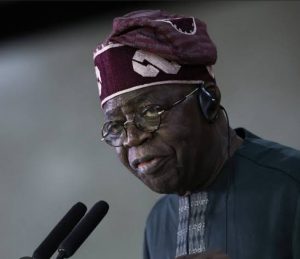
The All Progressives Congress (APC) announced that President Bola Tinubu would flag off his 2027 re-election campaign in Kaduna on October 24.
The announcement was made by Abdulaziz Yari, Director-General of the APC Presidential Campaign Council, following a briefing with the President on campaign preparations.
The planned campaign comes amid continuing public debate over economic reforms, fuel prices, household incomes and insecurity.
As the political contest gathers momentum, the administration will face questions about its record, while opposition parties will be under pressure to convince voters that they can offer a credible alternative.
6. Opposition Challenges Government Over Petrol Policy
The new petrol discount generated fresh political exchanges, with opposition figures questioning the government’s economic approach.
Former Vice President Atiku Abubakar criticised the intervention, arguing that the government had adopted part of his proposed approach to fuel costs without incorporating what he considered essential elements.
The NDC also criticised the policy, describing it as tokenism.
The debate reflects a wider disagreement over how to manage fuel prices under a market-based system while protecting households and businesses from sudden price increases.
For ordinary Nigerians, the decisive test will be whether transport fares, food prices and other essential expenses become more affordable.
7. Federal Government Shelves Immediate Ban on Solar Panel Imports
The Federal Government shelved plans for an immediate ban on solar panel imports, acknowledging concerns about the country’s capacity to meet demand through local manufacturing.
The decision, reported by Punch on October 9, is significant for households and businesses seeking alternatives to unreliable electricity supply and expensive conventional energy.
An immediate import restriction could have raised equipment costs before domestic manufacturers were ready to supply the market at the required scale.
The development highlights the challenge of balancing industrial policy, local production and affordable access to energy solutions.
8. Military Aircraft Crash Triggers National Mourning
A military aircraft crash in Ondo State on October 5 drew national attention and prompted President Bola Tinubu to declare three days of mourning.
Reuters reported that the aircraft was an Air Force ATR-42 and that 25 people on board died. The incident was followed by calls for an investigation into the circumstances surrounding the crash.
The tragedy brought renewed attention to aviation safety, military operational risks and the importance of transparent investigations into serious accidents.
The loss of military personnel is a reminder of the risks faced by those serving the country.
9. Opposition Unity Remains a Major Question Ahead of 2027
Political debate over the next presidential election continued throughout the week, with attention on the prospects of Peter Obi, Atiku Abubakar and President Tinubu.
Former Cross River State Governor Donald Duke warned that opposition candidates could struggle if they failed to unite, arguing that a divided opposition could improve the ruling party’s chances.
The disagreement reflects a fundamental question ahead of 2027: whether opposition parties can build a common strategy capable of attracting voters across regional, ethnic and political boundaries.
For voters, the contest will also be about economic opportunity, security, public services and accountability.
10. Cost of Living Remains at the Centre of National Debate
The petrol discount and continuing arguments over economic policy kept the cost of living firmly in the national conversation.
Although the government has defended its economic reforms, many Nigerians continue to judge economic performance by the price of food, transportation, electricity and other necessities.
The debate is likely to intensify as the 2027 elections approach.
For millions of households, the most important economic indicators are not simply official statistics but whether wages can meet expenses, businesses can survive and families can afford a decent standard of living.
THE WEEK IN PERSPECTIVE
The week of October 4–10, 2026, offered a snapshot of the issues likely to shape Nigeria’s political and economic future: insecurity, fuel prices, electoral preparations and the continuing struggle to improve living standards.
The rescue of the abducted prospective corps members was welcome news, but the attack in Borno showed that major security concerns remain unresolved. INEC’s PVC exercise also placed a practical responsibility on eligible voters to verify their details and prepare for the next election.
Meanwhile, the petrol discount has intensified scrutiny of the government’s economic choices and raised questions about how sustainable relief can be delivered to citizens.
As political parties prepare for 2027, Nigerians will ultimately judge their leaders by results: safer communities, more affordable living, reliable public services and opportunities for ordinary people to improve their lives.
Headlineswave.ng will continue to monitor the developments that matter to Nigerians, with particular attention to public accountability, credible reporting and the everyday experiences of citizens.