

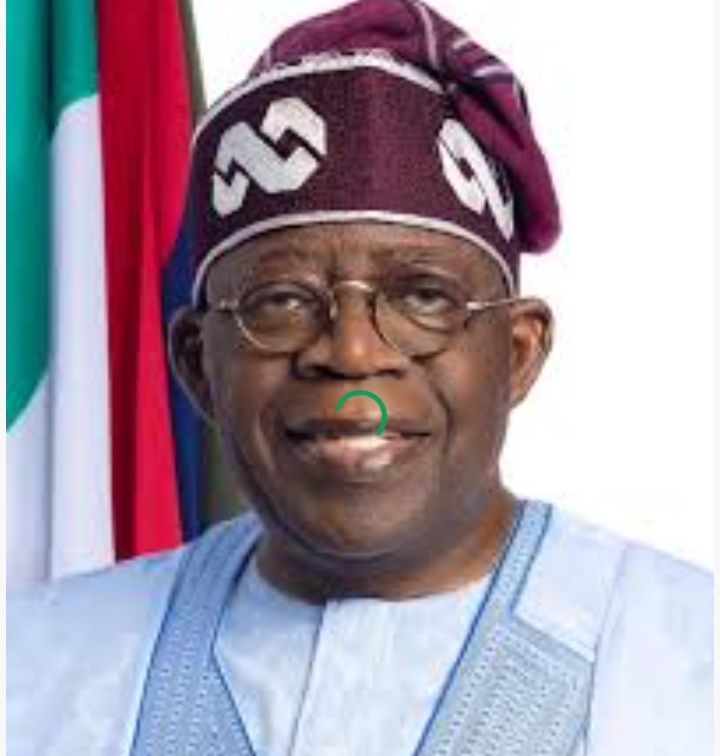
THREE UNGA ABSENCES: WHAT IS TINUBU TELLING NIGERIANS?
A president can delegate his duties. But when delegation becomes a pattern, Nigerians have every right to ask questions.
There is nothing unconstitutional about President Bola Ahmed Tinubu sending Vice President Kashim Shettima to represent Nigeria at the United Nations General Assembly.
The Vice President is constitutionally empowered to act for the President when required, and Nigeria remains represented at the 81st UN General Assembly in New York.
But that is not the whole story.
The uncomfortable part is the pattern.
President Tinubu attended the 78th UN General Assembly in 2023.
More Read

He did not attend the 79th in 2024.
He did not attend the 80th in 2025.
And now, in 2026, he will again not attend.
More Read
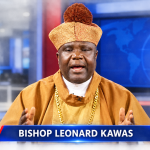
Three consecutive UNGA absences.
That is no longer a one-off scheduling decision. It is a pattern — and patterns in public office deserve scrutiny.
The Presidency says there is no problem.
President Tinubu is concentrating on domestic priorities, including the economy and security, while Vice President Shettima will adequately represent Nigeria in New York.
But Nigerians are entitled to ask a simple question:
Why does Nigeria’s President repeatedly choose not to personally attend one of the world’s most important annual gatherings of heads of government?
More Read
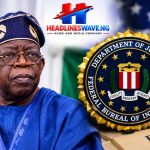
UNGA is not just another foreign trip
The United Nations General Assembly is not merely about delivering a speech.
It is one of the few occasions when presidents, prime ministers, diplomats, international financial institutions, development partners and global investors converge in one place.
The formal speeches matter.
The meetings outside the chamber can matter even more.
Nigeria’s delegation will still participate. Shettima is expected to deliver Nigeria’s national statement and hold bilateral engagements on economic diplomacy, development, climate finance and international cooperation.
So, no, Nigeria has not disappeared from the United Nations.
But representation is not the same thing as presidential presence.
A Vice President can represent the country.
Only the President can represent the Presidency.
And when the President repeatedly stays away from a gathering where other heads of government are physically present,
Nigerians are entitled to know why.
The Presidency says it is about domestic work
PThe official explanation is that Tinubu’s attention is needed at home, particularly on the economy and security.
That explanation deserves to be heard.
But it also deserves to be tested.
Nigeria’s economic problems do not stop at Abuja.
Our debt negotiations, investment drive, trade relationships, development financing, climate financing and international partnerships all have foreign-policy dimensions.
Security does too.
So the argument that the President must remain home because Nigeria has domestic problems is not, by itself, conclusive.
Sometimes the best place to advance domestic interests is precisely where the world’s decision-makers have gathered.
That is why the Presidency should explain the calculation behind the repeated absence rather than simply telling Nigerians that nothing is wrong.
And then came the change of expectation
This year’s episode becomes even more interesting because there had been public expectations that Tinubu would attend the 81st UNGA.
He ultimately directed Shettima to lead the delegation.
The Presidency now says the decision has nothing to do with any restriction on Tinubu’s ability to travel to the United States. Presidential aide Ademola Osodi expressly rejected that suggestion, saying there is “absolutely no impediment” to the President travelling to America.
That statement is important.
Because once government has publicly ruled out a particular explanation, it should also be prepared to provide Nigerians with the explanation it considers correct.
Otherwise, the vacuum will inevitably be filled by speculation.
And governments should know by now that information vacuums rarely remain empty.
What about Tinubu’s health?
This is where Headlineswave must be particularly responsible.
There have been persistent public discussions about the President’s health.
But absence from UNGA is not medical evidence.
It does not establish that Tinubu is ill.
It does not establish that he is incapacitated.
It does not establish that he lacks the capacity to govern.
Any publication that presents those conclusions as fact without credible medical evidence would be crossing the line from journalism into speculation.
But there is another side to the argument.
The health of a sitting President is not merely a private matter when it affects the performance of the highest public office in the country.
The Nigerian public is therefore entitled to information sufficient to understand whether its President is consistently able to discharge his constitutional responsibilities.
That is not cruelty.
That is accountability.
And the drug question?
This is another subject where Nigerians deserve facts, not political mythology.
Tinubu’s historical US controversy involving the forfeiture of $460,000 has repeatedly been weaponised in Nigerian politics.
The issue has resurfaced in connection with a US Freedom of Information dispute over records relating to the historical matter.
But let us be precise.
The current case is a civil records-disclosure dispute, not a criminal prosecution of
President Tinubu, and the Presidency says no US court has found him guilty of criminal wrongdoing.
That distinction matters.
Headlineswave will not transform an allegation into a conviction.
Neither will we pretend the controversy does not exist.
The responsible position is simple:
Release what can lawfully be released. Explain what can be explained. Let evidence, not political loyalty, determine the historical record.
Nigeria has suffered enough from a political culture in which every uncomfortable fact is either weaponised by opponents or buried by supporters.
The real issue is confidence
For us at Headlineswave, the bigger issue is not whether Tinubu attended one particular UN meeting.
It is confidence in the presidency.
A President is not an ordinary public employee.
The office carries enormous responsibility — domestically and internationally.
When the President travels, Nigerians ask why.
When he does not travel, Nigerians ask why.
When he delegates, Nigerians ask why.
That is democracy.
The answer should not always be political abuse, conspiracy theories or insults from government spokesmen and supporters.
Sometimes the answer should simply be:
Here is what happened. Here is why we made the decision. Here is the evidence.
That is how public confidence is built.
Three absences deserve more than “nothing to see here”
There is nothing wrong with President
Tinubu delegating Vice President Shettima.
There is also nothing wrong with Nigerians questioning the decision.
Both things can be true.
What becomes troubling is when legitimate questions are treated as though asking them is itself an act of disloyalty.
The Presidency says Tinubu’s absence does not diminish Nigeria’s international standing.
Perhaps not.
Nigeria is bigger than one man.
The Nigerian state will continue to function.
Its diplomats will continue to negotiate.
Its Vice President will continue to represent it.
But the President’s physical presence at major international gatherings can carry political and diplomatic value that delegation does not completely reproduce.
That is not an insult to Shettima.
It is simply a fact about presidential diplomacy.
HEADLINESWAVE PROGNOSIS
The prognosis is not that Tinubu’s three UNGA absences prove illness.
They do not.
It is not that they prove incapacity.
They do not.
It is not that they prove anything about the historical drug allegations.
They do not.
What they demonstrate is something simpler:
The Presidency has created a legitimate accountability question that cannot be permanently answered by saying that the Vice President is representing Nigeria.
The Vice President’s representation answers who is in New York.
It does not fully answer why the President is not there.
And after three consecutive years, that distinction matters.
President Tinubu has the right to delegate.
Nigerians have the right to question.
The Presidency has the responsibility to explain.
That is the bargain of democratic government.
A government that demands trust must also understand that trust is not produced by asking citizens to stop asking questions.
Sometimes, the most patriotic question a citizen can ask is simply: WHY?