

7 Takeaways From Tinubu’s Kaduna Campaign Flag-Off: Hunger, Poverty and the Battle for 2027
President blames opposition for hardship, promises prosperity and urges Nigerians to renew his mandate as economic concerns take centre stage
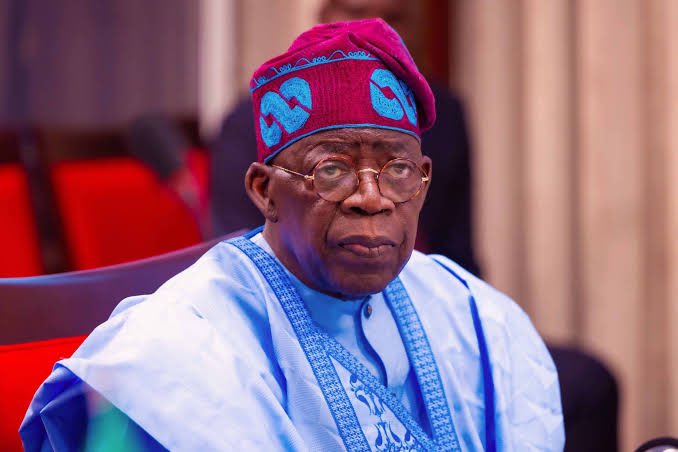
President Bola Ahmed Tinubu officially launched the All Progressives Congress (APC) presidential campaign for the 2027 general election in Kaduna on Saturday, October 24, defending his administration’s economic policies while asking Nigerians to give him a second term.
Addressing supporters at the Ranchers Bees Stadium, also known as Kaduna Township Stadium, Tinubu accused opposition parties of creating the hunger and poverty they now criticise his government over.
“I hear my opponents talking about hunger and poverty. Who created it? They did! They created hunger, they created poverty. We are trying to eradicate it,” the President said.
More Read
The statement immediately placed the question of responsibility for Nigeria’s economic hardship at the centre of the emerging campaign debate.
A review of the President’s remarks and the political issues surrounding the rally reveals seven important takeaways.
1. Tinubu has made hunger and poverty a campaign battleground
More Read
The President’s decision to directly challenge the opposition over hunger and poverty signals that the economy will be a major issue in the 2027 election.
Tinubu maintained that his administration was working to eradicate hardship and promised prosperity if re-elected.
However, his argument raises a fundamental question: how will Nigerians measure the success of his economic policies against their everyday experiences with food prices, transportation costs, housing and other essential expenses?
The President’s assertion that the opposition created the hardship is a political claim. Its validity must be assessed against the economic decisions and performance of successive administrations, including the APC government that has been in power since 2015.
2. The question of accountability is unlikely to disappear
Tinubu’s remarks place responsibility for the country’s economic difficulties on his political opponents, but his administration must also answer questions about its own policies.
More Read
Since assuming office in May 2023, the President has pursued major economic reforms, including the removal of petrol subsidies and changes to the foreign-exchange system.
The government has defended these measures as necessary to address structural weaknesses, improve public finances and strengthen the economy.
Nevertheless, the reforms have been accompanied by substantial cost-of-living pressures.
For voters, the debate is not simply about who inherited the problems. It is also about whether the government’s decisions are producing tangible improvements in living standards.
3. The economic record will face close scrutiny
Tinubu promised prosperity, consistency, growth, recovery and opportunity during the rally.
Those promises will be measured against the economic realities facing Nigerian households.
Although some economic indicators have improved since the introduction of the reforms, improvements in headline figures do not automatically translate into affordable food, cheaper transport or increased purchasing power for ordinary citizens.
The distinction is important: a reduction in inflation means prices are rising more slowly, not necessarily that prices have fallen.
The government’s challenge is to demonstrate that economic stabilisation is translating into meaningful relief for households and businesses.
4. The APC is presenting a united political front
Tinubu praised APC governors for paying workers’ salaries and implementing development programmes in their states.
The rally also featured prominent party figures, including Vice President Kashim Shettima, campaign Director-General Abdulaziz Yari, Senate President Godswill Akpabio and APC National Chairman Nentawe Yilwatda.
The gathering demonstrated the party’s organisational mobilisation at the start of its presidential campaign.
However, the performance of individual state governments varies, and the President’s praise of APC governors should be assessed against verifiable records of infrastructure delivery, public services, salary payments and economic development.
5. Kaduna puts the North-West prominently in focus
The choice of Kaduna for the campaign flag-off underlines the strategic importance of northern Nigeria to the APC’s national mobilisation.
Vice President Kashim Shettima appealed to northern voters to support Tinubu, citing the President’s past political support for northern leaders, including former President Muhammadu Buhari.
This appeal suggests that the APC intends to draw on political relationships and established party structures as it seeks another mandate.
Nevertheless, a large rally cannot by itself establish the level of public support across Kaduna State or the wider North-West.
Campaign attendance, voter sentiment and election results are distinct measures.
6. The campaign’s public presentation has also attracted scrutiny
Reports and online discussions surrounding campaign billboards and security arrangements in Kaduna have raised questions about the presentation of the President’s campaign.
The deployment of security personnel to protect political advertising, where confirmed, does not by itself demonstrate public hostility or support for a candidate.
Any claim that residents have rejected the campaign, or that a particular incident reflects the wider mood of Kaduna, requires independent verification.
The wider issue for journalists is to distinguish observable events from political interpretations and online speculation.
7. The contest is being framed around continuity versus alternatives
Tinubu urged eligible Nigerians to obtain their Permanent Voter Cards (PVCs) and vote for APC candidates at the presidential, governorship, National Assembly and state House of Assembly levels.
He also warned supporters against what he described as misleading opposition claims, arguing that his administration offered Nigerians more than its opponents could provide.
The opposition, meanwhile, has challenged the government’s handling of the economy.
Former Vice President Atiku Abubakar criticised Tinubu’s attempt to blame opposition parties for hunger and poverty, arguing that Nigerians were entitled to demand accountability from the government over the cost of living, insecurity and public expenditure.
The resulting political debate will require all sides to explain their records, policy proposals and plans for addressing the country’s challenges.
What does the Kaduna rally tell Nigerians?
The APC’s campaign has begun with a clear message: Tinubu wants voters to judge his administration by its promised economic recovery and continuity, while holding previous governments and opposition parties responsible for some of the country’s longstanding problems.
But the President’s opponents are asking a different question: after more than three years in office, what concrete improvements can Nigerians point to in their daily lives?
The answers will depend on verifiable economic data, the security situation, the delivery of public services and the credibility of the alternatives presented by opposition parties.
The Kaduna rally has therefore opened a debate that extends beyond campaign speeches. It is a debate about responsibility, results and what Nigerians should expect from the government they elect.

Headlineswave.ng reviewed reports published by Channels Television, TheCable, The Punch, The Guardian and Reuters on Tinubu’s October 24, 2026, campaign flag-off in Kaduna. Direct quotations are attributed to the President, while contested political claims are presented as claims rather than established facts.