

Top News Headlines For The Week That Was: Sunday 1 To Saturday 7 November, 2026
Good morning, Nigeria!
Welcome to another edition of The Week That Was, Headlineswave.ng’s weekly review of the major stories that shaped conversations across Nigeria and beyond.
Read Also FG Begins ₦50,000 Monthly Relief Payments to Nigerians: Check How to Access it With These USSD Codes
It was a dramatic week in Nigerian politics, with a major court judgment throwing the African Democratic Congress (ADC) into fresh uncertainty, raising questions about Atiku Abubakar’s 2027 presidential ambition and the future of the opposition coalition.
More Read
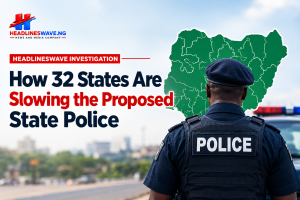
The week also witnessed renewed debate over Nigeria’s growing debt, significant developments in the proposed establishment of state police, fresh security concerns, questions about electoral credibility and developments affecting the economy and public welfare.
Here are the major stories that made the headlines between Sunday, November 1 and Saturday, November 7, 2026.
TOP HEADLINES OF THE WEEK
More Read

A. Politics And Governance
1. Court Sacks David Mark-Led ADC Leadership, Nullifies Atiku’s 2027 Candidacy
A Federal High Court in Abuja delivered one of the week’s biggest political shocks by nullifying the David Mark-led interim leadership of the African Democratic Congress and decisions taken under its authority, including the process that produced Atiku Abubakar as the party’s presidential candidate.
The judgment has plunged the opposition party into fresh uncertainty ahead of the 2027 general elections.
The ADC has rejected the development and approached the Court of Appeal, seeking to overturn the judgment and obtain a stay of execution.
Why it matters: The case goes beyond the political future of Atiku and David Mark. It raises important questions about internal party democracy, opposition politics and the ability of Nigerians to exercise their democratic choices.
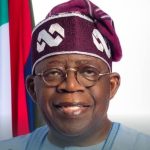
2. Atiku Challenges Tinubu, Insists Nothing Will Stop His 2027 Presidential Ambition
Former Vice-President Atiku Abubakar has declared that he will not abandon his presidential ambition despite the court judgment affecting his emergence as the ADC candidate.
Atiku challenged President Bola Tinubu to meet the opposition at the polls in a free, fair and credible contest.
His comments have further intensified the political atmosphere surrounding the 2027 elections.
Why it matters: Nigeria’s democracy depends on credible elections, competitive political parties and an environment where opposition candidates can freely participate in the electoral process.
3. ADC Heads To Appeal Court, Seeks Stay Of Execution Of Judgment
The David Mark-led faction of the ADC has formally appealed the Federal High Court judgment and asked the appellate court to suspend its implementation pending the determination of the appeal.
The party has also urged INEC not to take steps that could prejudice the ongoing legal proceedings.
Meanwhile, rival party stakeholders have questioned the legitimacy of candidates produced under the dissolved interim leadership.
Why it matters: The appellate court’s decision could significantly shape the ADC’s participation in the 2027 elections and determine the direction of the opposition coalition.
4. State Police Bill Clears Major Hurdle As 28 State Assemblies Approve Amendment
Nigeria moved closer to the establishment of state police after 28 state Houses of Assembly approved the constitutional amendment required to advance the proposal.
The development clears the constitutional threshold for the amendment to proceed to the next stage.
Supporters believe decentralised policing could improve intelligence gathering and responses to local security threats.
However, concerns remain over political interference, funding, accountability and possible abuse of state-controlled security institutions.
Why it matters: State police could fundamentally change Nigeria’s security architecture. But the success of the reform will depend on adequate safeguards against political misuse and human rights violations.
B. Security And National Affairs
5. Military Rejects Ceasefire With Boko Haram, ISWAP
You can Also Read 2027: Outrage As Voters At Gov. Okpebholo’s Polling Unit Allegedly Jump From 397 To 4,783; INEC Asked To Explain
The Nigerian military has ruled out a ceasefire arrangement with Boko Haram and ISWAP, insisting that operations against insurgents will continue.
The position comes amid persistent security challenges in the North-East and renewed attacks on military formations and vulnerable communities.
Why it matters: Nigerians need lasting security, not temporary assurances. The military must translate its operations into measurable improvements in the safety of citizens.
6. INEC Flags 268 Voter Records Over Suspected AI-Generated Photographs
The Independent National Electoral Commission has flagged 268 records in its preliminary voter register over suspected artificial intelligence-generated photographs and other irregularities.
The development comes as the commission begins preparations for the 2027 general elections.
Why it matters: A credible voters’ register is fundamental to credible elections. INEC must ensure that technology strengthens electoral integrity rather than creates new opportunities for manipulation.
7. Peter Obi’s Convoy Attack In Calabar Sparks Security Concerns
Reports emerged during the week of an attack involving the convoy of former Labour Party presidential candidate Peter Obi in Calabar, Cross River State.
Police subsequently arrested a suspect in connection with the incident.
The development attracted political attention, particularly against the background of rising political activities ahead of the 2027 elections.
Why it matters: Political disagreements must never translate into violence or intimidation. All political actors must be able to campaign and engage citizens without fear.
C. Economy And Business
8. Tinubu Withdraws Earlier Loan Request, Seeks Approval For Fresh $7.7 Billion External Borrowing
President Bola Tinubu has withdrawn an earlier external borrowing proposal of approximately $20.5 billion and €1.05 billion and submitted a fresh request seeking approval for $7.7 billion in external loans.
The proposed borrowing is intended to finance part of the 2026 budget deficit and support projects in infrastructure, agriculture, healthcare, education, defence and other sectors.
The request has been referred to relevant Senate committees for consideration.
Why it matters: Nigeria’s borrowing decisions have serious implications for future generations. Nigerians deserve transparency about the cost of these loans, repayment obligations and the actual benefits expected from the projects they will finance.
9. Government Savings Rise To ₦3.56 Trillion Amid Fresh Borrowing Plans
A report by Agora Policy indicated that the federal, state and local governments recorded combined savings of ₦3.56 trillion from Federation Account revenues between January and September 2026.
The reported savings have generated fresh discussions about public finance management, revenue allocation and the government’s continued reliance on borrowing.
Why it matters: Nigerians deserve to understand why governments continue to seek additional loans while significant public revenue is reportedly being saved. Transparency and responsible fiscal management must remain priorities.
D. Health And Social Development
10. NCDC Continues Monitoring Of 62 Contacts Following Imported Ebola Case
The Nigeria Centre for Disease Control and Prevention reported that monitoring of 62 contacts identified following an imported Ebola case was expected to conclude by November 13, 2026.
The agency maintained that surveillance and public health monitoring activities were ongoing.
Why it matters: Public health preparedness requires early detection, transparent communication and effective disease surveillance. Nigerians must receive timely and reliable information during public health emergencies.
11. Federal Government Releases Guidelines For ₦50,000 Monthly Relief Support
The Federal Government’s proposed ₦50,000 monthly relief intervention for eligible Nigerians attracted public attention during the week, with information released on how prospective beneficiaries could check their eligibility through designated payment channels.
However, questions remain about the programme’s reach, implementation, duration and the number of Nigerians expected to benefit.
Why it matters: Social intervention programmes must deliver genuine relief to vulnerable households. Government must provide clear eligibility criteria and transparent information about actual payments.
E. Other Major Developments
12. NYSC Disowns Uche Nnaji’s Certificate In Court
The National Youth Service Corps told a Federal High Court that it did not issue the NYSC certificate attributed to former Minister of Innovation, Science and Technology, Uche Nnaji.
An NYSC official reportedly identified discrepancies in the document during testimony in the ongoing case.
The former minister has pleaded not guilty to the charges against him.
Why it matters: Public office holders must be held to high standards of integrity. At the same time, allegations must be determined through due process and the courts must be allowed to complete their work.
THE WEEK IN PERSPECTIVE
The events of the past seven days have once again exposed some of the fundamental challenges confronting Nigeria.
The ADC leadership crisis has brought the question of opposition politics and democratic space to the centre of national conversation. The judiciary’s decisions must be respected, but the right of political parties to seek legal remedies and the right of citizens to choose their leaders must also be protected.
On the economic front, the fresh $7.7 billion borrowing request raises legitimate questions about the country’s debt obligations and the effectiveness of public spending.
On security, Nigerians continue to demand more than announcements of military operations. They want to live in communities where children can attend school, farmers can access their farms and families can sleep without fear.
And as preparations for the 2027 elections gather momentum, INEC must demonstrate that it is capable of conducting elections that Nigerians can trust.
Ultimately, the real test of leadership is not the number of political victories recorded, loans secured or promises made. It is whether ordinary citizens experience meaningful improvements in their lives.
Nigeria belongs to all of us. Its democracy must work for the people, its resources must serve the people, and those entrusted with public office must remain accountable to the people.

At Headlineswave.ng, we believe journalism must go beyond announcing events. It must examine the issues, ask difficult questions and hold public institutions accountable.
Our commitment remains people-centred journalism that gives voice to the concerns, aspirations and struggles of ordinary Nigerians.
Stay informed. Stay ahead.
Visit Headlineswave.ng every day for verified news, politics, business, security, Metro, entertainment and sports.
This roundup is based on reports published by established Nigerian and international news organisations between November 1 and November 7, 2026.
It is a selection of significant developments during the week and is not intended to represent every story published. Court proceedings, allegations and political claims are presented with appropriate attribution and should not be interpreted as final judicial findings.